<?xml version='1.0' encoding='UTF-8'?>
<?xml-stylesheet type="text/xsl" href="http://feeds.feedblitz.com/feedblitz_atom.xslt"?><feed xmlns='http://www.w3.org/2005/Atom' xmlns:openSearch='http://a9.com/-/spec/opensearchrss/1.0/' xmlns:blogger='http://schemas.google.com/blogger/2008' xmlns:georss='http://www.georss.org/georss' xmlns:gd="http://schemas.google.com/g/2005" xmlns:thr='http://purl.org/syndication/thread/1.0' xmlns:feedburner="http://rssnamespace.org/feedburner/ext/1.0">
<meta xmlns="http://www.w3.org/1999/xhtml" name="robots" content="noindex" /><id>tag:blogger.com,1999:blog-4789967485427743653</id><updated>2026-04-25T13:57:34.445-05:00</updated><category term="student success"/><category term="brain-based learning"/><category term="images"/><category term="content"/><category term="organization"/><category term="graphics"/><category term="student resource"/><category term="reading comprehension"/><category term="design"/><category term="anatomy"/><category term="chunking"/><category term="teacher resource"/><category term="update"/><category term="assessment"/><category term="behind-the-scenes"/><category term="general"/><category term="terminology"/><category term="physiology"/><category term="cost"/><category term="distance learning"/><category term="pandemic teaching"/><category term="blog"/><category term="clinical applications"/><category term="homeostasis"/><category term="neuroscience"/><category term="chemistry"/><category term="pathology"/><category term="stress"/><category term="inclusion"/><title>Anatomy &amp; Physiology</title><subtitle type='html'>Author&amp;#39;s notes, insights, and tips for teaching with PATTON Anatomy &amp;amp; Physiology text and learning suite</subtitle><link rel='http://schemas.google.com/g/2005#feed' type='application/atom+xml' href='http://pattonap.blogspot.com/feeds/posts/default'/><link rel='self' type='application/atom+xml' href='http://www.blogger.com/feeds/4789967485427743653/posts/default?redirect=false'/><link rel='alternate' type='text/html' href='http://pattonap.blogspot.com/'/><link rel='hub' href='http://pubsubhubbub.appspot.com/'/><link rel='next' type='application/atom+xml' href='http://www.blogger.com/feeds/4789967485427743653/posts/default?start-index=26&amp;max-results=25&amp;redirect=false'/><author><name>Kevin Patton</name><uri>http://www.blogger.com/profile/15202042487646206423</uri><email>noreply@blogger.com</email><gd:image rel='http://schemas.google.com/g/2005#thumbnail' width='32' height='32' src='//blogger.googleusercontent.com/img/b/R29vZ2xl/AVvXsEgj08ijJLEz-i8tl26UQ1c-NVYtOi_NVkP0Kzj0zIo13mfYZdC7_QJ_lgoOe3R_c-iuDXoYlgyghLRazlmJARO1h3BeORIWBkj_FAIFLzZAlIxk4XEKHGl9SKA7FTMTgMs/s113/Headshots+2018+TAA+Conference-Headshots-0006-500px.png'/></author><generator version='7.00' uri='http://www.blogger.com'>Blogger</generator><openSearch:totalResults>48</openSearch:totalResults><openSearch:startIndex>1</openSearch:startIndex><openSearch:itemsPerPage>25</openSearch:itemsPerPage>
<entry>
<feedburner:origLink>http://pattonap.blogspot.com/2022/03/active-concept-maps-help-students-make.html</feedburner:origLink><id>tag:blogger.com,1999:blog-4789967485427743653.post-5483876445809319693</id><published>2022-03-28T13:00:00.002-05:00</published><updated>2022-03-28T13:26:23.507-05:00</updated><category scheme="http://www.blogger.com/atom/ns#" term="brain-based learning"/><category scheme="http://www.blogger.com/atom/ns#" term="chemistry"/><category scheme="http://www.blogger.com/atom/ns#" term="graphics"/><category scheme="http://www.blogger.com/atom/ns#" term="images"/><category scheme="http://www.blogger.com/atom/ns#" term="student resource"/><category scheme="http://www.blogger.com/atom/ns#" term="student success"/><title type='text'>Active Concept Maps Help Students Make Connections</title><content type='html'><![CDATA[<p>&nbsp;</p>We all know that&nbsp;<b>concept maps help students learn</b>&nbsp;anatomy and physiology in at least two ways.
<br>
<br>One way is when we use concept maps to teach principles in a visual manner that clearly&nbsp;<b>shows relationships among several ideas.</b>&nbsp;Students thus clearly see how to organize their thoughts about connected ideas as they&nbsp;<b>construct their own conceptual frameworks</b>&nbsp;as they learn.
<br>
<br>Another way concept maps help students learn is&nbsp;<b>when they build their own concept maps</b>&nbsp;from what they already know about anatomy and physiology. Concept-map-making can thus be a&nbsp;<b>powerful study tool.&nbsp;</b>However, students without prior experience with concept maps often have a difficult time getting started. A few good examples of concept maps that relate to the ideas they are learning in your course are all they need to get&nbsp;<b>a good start in making their own.</b>
<br>
<br>Starting with this edition of&nbsp;<i style="font-weight: bold;"><b style="font-style: normal;"><a href="http://feeds.feedblitz.com/~/t/0/0/pattonap/~https://aandp.info/PattonAP-11e"><i>Patton Anatomy &amp; Physiology</i></a></b>&nbsp;</i><span style="font-weight: bold;">we are providing&nbsp;<b><i>Active Concept Maps</i></b>&nbsp;in the&nbsp;<i>Student Resources&nbsp;</i>in&nbsp;<a href="http://feeds.feedblitz.com/~/t/0/0/pattonap/~evolve.elsevier.com/" target="_blank">Evolve</a>.&nbsp;</span><div><span style="font-weight: bold;">
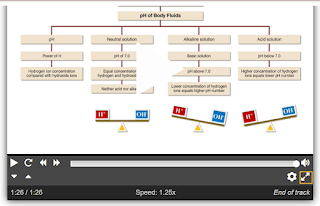
<br></span>Each&nbsp;<b><i>Active Concept Map</i></b>&nbsp;is an animated video of a concept map presented in a similar style to the concept maps used throughout the text of&nbsp;<b><a href="http://feeds.feedblitz.com/~/t/0/0/pattonap/~https://aandp.info/PattonAP-11e"><i>Patton Anatomy &amp; Physiology</i></a></b>. However, these concept maps are "active" in&nbsp;the sense that they build from a single block as <b>the narrator walks the viewer through each related concept</b>&nbsp;that appears as the concept map branches and grows.
<br>
<br>The block-by-block guided walk-through of a major concept will&nbsp;<b>help students understand what they have read and heard in class more deeply.</b>&nbsp;It will also model for students&nbsp;<b>how they can build their own concept maps&nbsp;</b>for other sets of related ideas that they encounter in your course.
<br>
<br>Perhaps most importantly, the&nbsp;<b><i>Active Concept Maps</i></b>&nbsp;will provide a template for&nbsp;<b>how to think in a "connected" way</b>&nbsp;about the major concepts of the anatomy and physiology course. For many of our challenged students, this is an especially important skill they must develop to succeed.
<br>
<br><div>Here's a&nbsp;<a href="http://feeds.feedblitz.com/~/t/0/0/pattonap/~https://www.dropbox.com/s/34rbadb6amoiwtk/AP11-activeconceptmap-pH-movie-2022-03-27_13-40-36.mp4?dl=0" target="_blank">brief video walk-through</a>&nbsp;that shows where to find&nbsp;<b><i>Active Concept Maps</i></b>&nbsp;in&nbsp;<a href="http://feeds.feedblitz.com/~/t/0/0/pattonap/~evolve.elsevier.com/" target="_blank">Evolve</a>&nbsp;and how they work:<div style="clear: both; text-align: center;"><a href="http://feeds.feedblitz.com/~/t/0/0/pattonap/~https://www.dropbox.com/s/34rbadb6amoiwtk/AP11-activeconceptmap-pH-movie-2022-03-27_13-40-36.mp4?dl=0" style="margin-left: 1em; margin-right: 1em;" target="_blank"><img alt="active concept map still image" border="0" data-original-height="547" data-original-width="850" height="206" src="https://blogger.googleusercontent.com/img/b/R29vZ2xl/AVvXsEi5wx14iN14p0hSawViQ1S_dIn5TLR9trl1ZM6ekf29lBCRZjZRN-3dhTWf7iwrKS2HpV8Y2S8UHro8RAuDyQzv8zA4A8SuzXo9vXyvB5ttKFSS-AD6K6HeKtvUu8JqlhrmiAd49eJV-wuLk7SuugzV9HbklFoywnpLnQVDBPNfqXel3WZHNULCjYPWFQ/w320-h206/ap11-activeconceptmap-pH-still-2022-03-27_13-25-25.png" width="320" /></a></div></div><div>
<br></div><div>
<br></div><div style="text-align: center;">
<br></div></div><Img align="left" border="0" height="1" width="1" alt="" style="border:0;float:left;margin:0;padding:0;width:1px!important;height:1px!important;" hspace="0" src="https://feeds.feedblitz.com/~/i/687977878/0/pattonap">
<div style="clear:both;padding-top:0.2em;"><a href="https://feeds.feedblitz.com/_/28/687977878/pattonap"><img height="20" src="https://assets.feedblitz.com/i/fblike20.png" style="border:0;margin:0;padding:0;"></a>&#160;<a href="https://feeds.feedblitz.com/_/29/687977878/pattonap,https%3a%2f%2ffeeds.feedblitz.com%2f-%2f687977876%2f0%2fpattonap.png"><img height="20" src="https://assets.feedblitz.com/i/pinterest20.png" style="border:0;margin:0;padding:0;"></a>&#160;<a href="https://feeds.feedblitz.com/_/24/687977878/pattonap"><img height="20" src="https://assets.feedblitz.com/i/x.png" style="border:0;margin:0;padding:0;"></a>&#160;<a href="https://feeds.feedblitz.com/_/19/687977878/pattonap"><img height="20" src="https://assets.feedblitz.com/i/email20.png" style="border:0;margin:0;padding:0;"></a>&#160;<a href="https://feeds.feedblitz.com/_/20/687977878/pattonap"><img height="20" src="https://assets.feedblitz.com/i/rss20.png" style="border:0;margin:0;padding:0;"></a>&#160;<a rel="NOFOLLOW" title="View Comments" href="http://pattonap.blogspot.com/2022/03/active-concept-maps-help-students-make.html#comment-form"><img height="20" style="border:0;margin:0;padding:0;" src="https://assets.feedblitz.com/i/comments20.png"></a>&#160;<a title="Follow Comments via RSS" href="http://pattonap.blogspot.com/feeds/5483876445809319693/comments/default"><img height="20" style="border:0;margin:0;padding:0;" src="https://assets.feedblitz.com/i/commentsrss20.png"></a>&nbsp;
<div style="clear:left;"><a rel="NOFOLLOW" href="http://pattonap.blogspot.com/2022/03/active-concept-maps-help-students-make.html#comment-form"><h3>Comments</h3></a><ul><li><a rel="NOFOLLOW" href="http://pattonap.blogspot.com/2022/03/active-concept-maps-help-students-make.html#comment-form">Comments</a></li></ul></div><h3 style="clear:left;padding-top:10px">Related Stories</h3><ul><li><a rel="NOFOLLOW" href="http://pattonap.blogspot.com/2015/04/netters-3d-interactive-anatomy-provides.html">Netter's 3D Interactive Anatomy Provides a Multimodal Learning Experience</a></li><li><a rel="NOFOLLOW" href="http://pattonap.blogspot.com/2018/09/the-new-adaptive-quizzing-tool-is.html">The New Adaptive Quizzing Tool Is Available!</a></li><li><a rel="NOFOLLOW" href="http://pattonap.blogspot.com/2017/06/using-your-textbook-to-teach-up-in.html">Using Your Textbook to 'Teach Up' in Anatomy and Physiology</a></li></ul>&#160;</div>]]>
</content><link rel='replies' type='application/atom+xml' href='http://pattonap.blogspot.com/feeds/5483876445809319693/comments/default' title='Post Comments'/><link rel='replies' type='text/html' href='https://feeds.feedblitz.com/~/687977878/0/pattonap.html#comment-form' title='0 Comments'/><link rel='edit' type='application/atom+xml' href='http://www.blogger.com/feeds/4789967485427743653/posts/default/5483876445809319693'/><link rel='self' type='application/atom+xml' href='http://www.blogger.com/feeds/4789967485427743653/posts/default/5483876445809319693'/><link rel='alternate' type='text/html' href='https://feeds.feedblitz.com/~/687977878/0/pattonap.html' title='Active Concept Maps Help Students Make Connections'/><author><name>Kevin Patton</name><uri>http://www.blogger.com/profile/15202042487646206423</uri><email>noreply@blogger.com</email><gd:image rel='http://schemas.google.com/g/2005#thumbnail' width='32' height='32' src='//blogger.googleusercontent.com/img/b/R29vZ2xl/AVvXsEgj08ijJLEz-i8tl26UQ1c-NVYtOi_NVkP0Kzj0zIo13mfYZdC7_QJ_lgoOe3R_c-iuDXoYlgyghLRazlmJARO1h3BeORIWBkj_FAIFLzZAlIxk4XEKHGl9SKA7FTMTgMs/s113/Headshots+2018+TAA+Conference-Headshots-0006-500px.png'/></author><media:thumbnail xmlns:media="http://search.yahoo.com/mrss/" url="https://feeds.feedblitz.com/-/687977876/0/pattonap.png" height="72" width="72"/><thr:total>0</thr:total>
<feedburner:origEnclosureLink>https://blogger.googleusercontent.com/img/b/R29vZ2xl/AVvXsEi5wx14iN14p0hSawViQ1S_dIn5TLR9trl1ZM6ekf29lBCRZjZRN-3dhTWf7iwrKS2HpV8Y2S8UHro8RAuDyQzv8zA4A8SuzXo9vXyvB5ttKFSS-AD6K6HeKtvUu8JqlhrmiAd49eJV-wuLk7SuugzV9HbklFoywnpLnQVDBPNfqXel3WZHNULCjYPWFQ/s72-w320-h206-c/ap11-activeconceptmap-pH-still-2022-03-27_13-25-25.png</feedburner:origEnclosureLink>
</entry>
<entry>
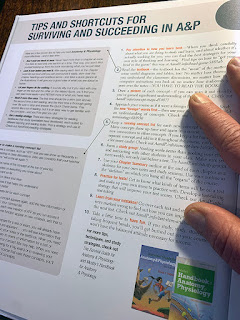
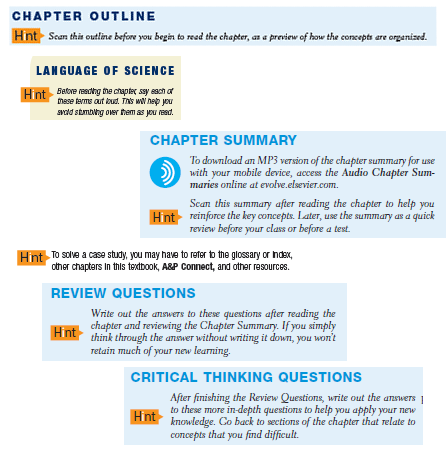
<feedburner:origLink>http://pattonap.blogspot.com/2022/03/tips-and-shortcuts-for-surviving-and.html</feedburner:origLink><id>tag:blogger.com,1999:blog-4789967485427743653.post-3000784027616992496</id><published>2022-03-10T15:12:00.000-06:00</published><updated>2022-03-10T15:12:21.304-06:00</updated><category scheme="http://www.blogger.com/atom/ns#" term="brain-based learning"/><category scheme="http://www.blogger.com/atom/ns#" term="reading comprehension"/><category scheme="http://www.blogger.com/atom/ns#" term="student success"/><category scheme="http://www.blogger.com/atom/ns#" term="terminology"/><title type='text'>Tips and Shortcuts for Surviving and Succeeding in A&amp;P</title><content type='html'><![CDATA[<p>A feature of&nbsp;<b><a href="http://feeds.feedblitz.com/~/t/0/0/pattonap/~https://aandp.info/PattonAP-11e"><i>Patton Anatomy &amp; Physiology</i></a>&nbsp;</b>that is often overlooked by faculty, but&nbsp;<b>loved by beginning anatomy and physiology students</b>&nbsp;is called&nbsp;</p><p style="text-align: center;"><b><i>Tips and Shortcuts for Surviving and Succeeding in A&amp;P.</i></b></p><p>As soon as an A&amp;P student unwraps and&nbsp;<b>opens their new textbook,&nbsp;</b>they flip over that&nbsp;<a href="http://feeds.feedblitz.com/~/t/0/0/pattonap/~https://en.wikipedia.org/wiki/Endpaper">endpaper</a>&nbsp;and find this&nbsp;<b>one-page guide&nbsp;</b>on how to get started on the&nbsp;<b>path to success.</b>&nbsp;That one page is loaded with great&nbsp;<b>study tips&nbsp;</b>and&nbsp;<b>how-to-read-a-textbook</b>&nbsp;guidance organized in an intuitive, graphic manner.&nbsp;</p><div style="clear: both; text-align: center;"><a href="http://feeds.feedblitz.com/~/t/0/0/pattonap/~https://blogger.googleusercontent.com/img/a/AVvXsEghaN09KAL87oo9Ma8AVjeqnHpLdQD4ChoxF01StayYE7Vr9iMVa8PgbWcXW5X9-Y43j3coP9ZnT6oCkMSIM83282t9rVIo4s2vsBLkCAJFzpiDYUXgG6vRR7u4TipzX9N8X9za7k3R8eyOB2R-YbIfKbzICGd4HXDCDKZzJMRHRmVPqABT_WAAFNFMOg=s800" imageanchor="1" style="margin-left: 1em; margin-right: 1em;"><img border="0" data-original-height="800" data-original-width="600" height="320" src="https://blogger.googleusercontent.com/img/a/AVvXsEghaN09KAL87oo9Ma8AVjeqnHpLdQD4ChoxF01StayYE7Vr9iMVa8PgbWcXW5X9-Y43j3coP9ZnT6oCkMSIM83282t9rVIo4s2vsBLkCAJFzpiDYUXgG6vRR7u4TipzX9N8X9za7k3R8eyOB2R-YbIfKbzICGd4HXDCDKZzJMRHRmVPqABT_WAAFNFMOg=s320" width="240" /></a></div><p>From&nbsp;<b>metacognition&nbsp;</b>to<b>&nbsp;tackling new terminology</b>&nbsp;to&nbsp;<b>retrieval practice,&nbsp;</b>this guide uses simple language to quickly outline the key strategies needed to&nbsp;<b>succeed in A&amp;P.</b></p><p>This guide also give faculty a place to quickly send students asking for study advice. And it gives faculty a&nbsp;<b>place to find quick and easy tips for them to share&nbsp;</b>in class or in a syllabus or course website.</p><p></p><div style="clear: both; text-align: center;"><a href="http://feeds.feedblitz.com/~/t/0/0/pattonap/~https://blogger.googleusercontent.com/img/a/AVvXsEgoWxHg7x6vzvfMWgzWRZbMLxYJaXiJXkCcvAQpdClGZSfKUpTchPLlvWsg4Av3ssC2nIFJYXvvDumw1889S_M3qX5aQJ0gsWwqGI1Avv5EgMrCnPKqsTdHp2f9mhC_7cwyWoJ7uEWZ8gN9mnIDf-vZn5eNshHdB7dY2_-C5ZGkd6YZHRMYTxi7j31uXA" style="margin-left: 1em; margin-right: 1em;"><img alt="" data-original-height="43" data-original-width="84" height="36" src="https://blogger.googleusercontent.com/img/a/AVvXsEgoWxHg7x6vzvfMWgzWRZbMLxYJaXiJXkCcvAQpdClGZSfKUpTchPLlvWsg4Av3ssC2nIFJYXvvDumw1889S_M3qX5aQJ0gsWwqGI1Avv5EgMrCnPKqsTdHp2f9mhC_7cwyWoJ7uEWZ8gN9mnIDf-vZn5eNshHdB7dY2_-C5ZGkd6YZHRMYTxi7j31uXA=w69-h36" width="69" /></a></div><p></p><p>Embedded throughout each chapter are brief&nbsp;<b>Hints&nbsp;</b>that&nbsp;<b>remind students&nbsp;</b>to use these strategies just at the&nbsp;<b>moment they need them.</b>&nbsp;Read more about these&nbsp;<b>Hints&nbsp;</b>at&nbsp;<a href="http://feeds.feedblitz.com/~/t/0/0/pattonap/~https://pattonap.blogspot.com/2015/05/embedded-hints-improve-reading.html"><b>Embedded Hints Improve Reading</b>&nbsp;<b>Comprehension</b></a>.</p><p><b><a href="http://feeds.feedblitz.com/~/t/0/0/pattonap/~https://aandp.info/PattonAP-11e"><i>Patton Anatomy &amp; Physiology</i></a>&nbsp;</b>is a textbook that is truly focused on <b>helping students succeed!</b></p><p><b>
<br></b></p><Img align="left" border="0" height="1" width="1" alt="" style="border:0;float:left;margin:0;padding:0;width:1px!important;height:1px!important;" hspace="0" src="https://feeds.feedblitz.com/~/i/685723752/0/pattonap">
<div style="clear:both;padding-top:0.2em;"><a href="https://feeds.feedblitz.com/_/28/685723752/pattonap"><img height="20" src="https://assets.feedblitz.com/i/fblike20.png" style="border:0;margin:0;padding:0;"></a>&#160;<a href="https://feeds.feedblitz.com/_/29/685723752/pattonap,https%3a%2f%2ffeeds.feedblitz.com%2f-%2f685723750%2f0%2fpattonap"><img height="20" src="https://assets.feedblitz.com/i/pinterest20.png" style="border:0;margin:0;padding:0;"></a>&#160;<a href="https://feeds.feedblitz.com/_/24/685723752/pattonap"><img height="20" src="https://assets.feedblitz.com/i/x.png" style="border:0;margin:0;padding:0;"></a>&#160;<a href="https://feeds.feedblitz.com/_/19/685723752/pattonap"><img height="20" src="https://assets.feedblitz.com/i/email20.png" style="border:0;margin:0;padding:0;"></a>&#160;<a href="https://feeds.feedblitz.com/_/20/685723752/pattonap"><img height="20" src="https://assets.feedblitz.com/i/rss20.png" style="border:0;margin:0;padding:0;"></a>&#160;<a rel="NOFOLLOW" title="View Comments" href="http://pattonap.blogspot.com/2022/03/tips-and-shortcuts-for-surviving-and.html#comment-form"><img height="20" style="border:0;margin:0;padding:0;" src="https://assets.feedblitz.com/i/comments20.png"></a>&#160;<a title="Follow Comments via RSS" href="http://pattonap.blogspot.com/feeds/3000784027616992496/comments/default"><img height="20" style="border:0;margin:0;padding:0;" src="https://assets.feedblitz.com/i/commentsrss20.png"></a>&nbsp;
<div style="clear:left;"><a rel="NOFOLLOW" href="http://pattonap.blogspot.com/2022/03/tips-and-shortcuts-for-surviving-and.html#comment-form"><h3>Comments</h3></a><ul><li><a rel="NOFOLLOW" href="http://pattonap.blogspot.com/2022/03/tips-and-shortcuts-for-surviving-and.html#comment-form">Comments</a></li></ul></div><h3 style="clear:left;padding-top:10px">Related Stories</h3><ul><li><a rel="NOFOLLOW" href="http://pattonap.blogspot.com/2018/03/new-unit-pre-tests-help-jump-start.html">New Unit Pre-Tests Help Jump-Start Student Learning</a></li><li><a rel="NOFOLLOW" href="http://pattonap.blogspot.com/2022/03/active-concept-maps-help-students-make.html">Active Concept Maps Help Students Make Connections</a></li><li><a rel="NOFOLLOW" href="http://pattonap.blogspot.com/2018/09/the-new-adaptive-quizzing-tool-is.html">The New Adaptive Quizzing Tool Is Available!</a></li></ul>&#160;</div>]]>
</content><link rel='replies' type='application/atom+xml' href='http://pattonap.blogspot.com/feeds/3000784027616992496/comments/default' title='Post Comments'/><link rel='replies' type='text/html' href='https://feeds.feedblitz.com/~/685723752/0/pattonap.html#comment-form' title='0 Comments'/><link rel='edit' type='application/atom+xml' href='http://www.blogger.com/feeds/4789967485427743653/posts/default/3000784027616992496'/><link rel='self' type='application/atom+xml' href='http://www.blogger.com/feeds/4789967485427743653/posts/default/3000784027616992496'/><link rel='alternate' type='text/html' href='https://feeds.feedblitz.com/~/685723752/0/pattonap.html' title='Tips and Shortcuts for Surviving and Succeeding in A&amp;P'/><author><name>Kevin Patton</name><uri>http://www.blogger.com/profile/15202042487646206423</uri><email>noreply@blogger.com</email><gd:image rel='http://schemas.google.com/g/2005#thumbnail' width='32' height='32' src='//blogger.googleusercontent.com/img/b/R29vZ2xl/AVvXsEgj08ijJLEz-i8tl26UQ1c-NVYtOi_NVkP0Kzj0zIo13mfYZdC7_QJ_lgoOe3R_c-iuDXoYlgyghLRazlmJARO1h3BeORIWBkj_FAIFLzZAlIxk4XEKHGl9SKA7FTMTgMs/s113/Headshots+2018+TAA+Conference-Headshots-0006-500px.png'/></author><media:thumbnail xmlns:media="http://search.yahoo.com/mrss/" url="https://feeds.feedblitz.com/-/685723750/0/pattonap" height="72" width="72"/><thr:total>0</thr:total>
<feedburner:origEnclosureLink>https://blogger.googleusercontent.com/img/a/AVvXsEghaN09KAL87oo9Ma8AVjeqnHpLdQD4ChoxF01StayYE7Vr9iMVa8PgbWcXW5X9-Y43j3coP9ZnT6oCkMSIM83282t9rVIo4s2vsBLkCAJFzpiDYUXgG6vRR7u4TipzX9N8X9za7k3R8eyOB2R-YbIfKbzICGd4HXDCDKZzJMRHRmVPqABT_WAAFNFMOg=s72-c</feedburner:origEnclosureLink>
</entry>
<entry>
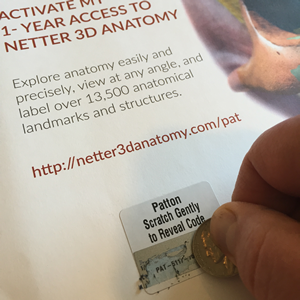
<feedburner:origLink>http://pattonap.blogspot.com/2021/10/netter-3d-anatomynow-better-than-ever.html</feedburner:origLink><id>tag:blogger.com,1999:blog-4789967485427743653.post-1166787909163078803</id><published>2021-10-21T17:29:00.002-05:00</published><updated>2021-10-21T17:36:36.033-05:00</updated><title type='text'>Netter 3D Anatomy—Now Better Than Ever!</title><content type='html'><![CDATA[<p>We've been offering <a href="http://feeds.feedblitz.com/~/t/0/0/pattonap/~https://aandp.info/netter3D-anatomy-aa058f" target="_blank"><b><i>Netter 3D Anatomy</i></b></a> as a supplement to <b><a href="http://feeds.feedblitz.com/~/t/0/0/pattonap/~https://aandp.info/PattonAP-11e"><i>Patton Anatomy &amp; Physiology</i></a>&nbsp;at no added cost&nbsp;</b>through the past few editions. Faculty and students alike have enjoyed the adventures they've undertaken as they explore the various regions of the human body using three-dimensional, dissectible images. That won't change in the new 11the edition. <b>Or will it?!</b></p><p>The availability of&nbsp;<a href="http://feeds.feedblitz.com/~/t/0/0/pattonap/~https://aandp.info/netter3D-anatomy-aa058f" target="_blank"><b><i>Netter 3D Anatomy</i></b></a>&nbsp;will still be there. And it will continue to be offered at <b>no added cost </b>to students. But it<b> will be better </b>in several ways.&nbsp;</p><div>You probably already know the name of&nbsp;<a href="http://feeds.feedblitz.com/~/t/0/0/pattonap/~my-ap.us/1aIGNvX"><b>Frank Netter</b></a>, the brilliant and widely respected anatomy and medical illustrator. &nbsp;Dubbed "the Michelangelo of medicine" by the&nbsp;<i>Saturday Evening Post</i>, Netter revolutionized how anatomy is learned and taught through visual depictions. His work is&nbsp;<b>realistic, yet clear and uncluttered.&nbsp;</b>&nbsp;And it is&nbsp;<b>beautiful</b>.</div><div>
<br></div><div><div style="clear: both; text-align: center;"><a href="http://feeds.feedblitz.com/~/t/0/0/pattonap/~https://blogger.googleusercontent.com/img/b/R29vZ2xl/AVvXsEhZFfyFiN2kYTnJUEPOUMOJnjjx5965cQCjA5_vjgYMTblZZO-FIrKCLY6in6ZHbivMsuJm3Vs865y1OvYnsXPkGfi4dIYFWPO1jBnYUBTSXFELdNXom3ab6Rrc7qyXiHO6oF59-1hlpUBU/" style="margin-left: 1em; margin-right: 1em;"><img alt="" data-original-height="128" data-original-width="383" height="107" src="https://blogger.googleusercontent.com/img/b/R29vZ2xl/AVvXsEhZFfyFiN2kYTnJUEPOUMOJnjjx5965cQCjA5_vjgYMTblZZO-FIrKCLY6in6ZHbivMsuJm3Vs865y1OvYnsXPkGfi4dIYFWPO1jBnYUBTSXFELdNXom3ab6Rrc7qyXiHO6oF59-1hlpUBU/" width="320" /></a></div>
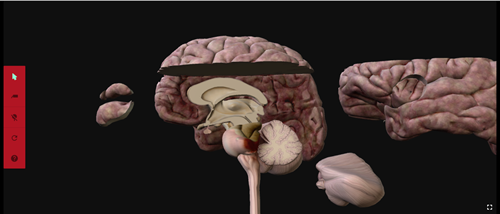
<br><a href="http://feeds.feedblitz.com/~/t/0/0/pattonap/~https://aandp.info/netter3D-anatomy-aa058f" target="_blank"><b><i>Netter 3D Anatomy</i></b></a>&nbsp;adapts Netter's vast library of anatomical art to a&nbsp;<i><a href="http://feeds.feedblitz.com/~/t/0/0/pattonap/~my-ap.us/1yIhlBW">gamification</a></i>&nbsp;environment&nbsp;to make the study of Netter's "virtual" anatomy&nbsp;<b>highly engaging</b>. &nbsp;The environment does this by melding 3D versions of anatomical structures with the ability to manipulate them in real time—thus&nbsp;<b>adding the fourth dimension</b>&nbsp;of time.&nbsp;&nbsp;</div><p><a href="http://feeds.feedblitz.com/~/t/0/0/pattonap/~https://aandp.info/netter3D-anatomy-aa058f" target="_blank"><b><i>Netter 3D Anatomy</i></b></a>&nbsp;uses&nbsp;<b>advanced gaming&nbsp;technology</b>&nbsp;and&nbsp;<b>interactive 3D anatomy models</b>&nbsp;to learn, review, and teach anatomy. That's still true, but many improvements have been made to the ease-of-access and functionality of the platform.&nbsp;</p><p>Students using&nbsp;<b><a href="http://feeds.feedblitz.com/~/t/0/0/pattonap/~https://aandp.info/PattonAP-11e"><i>Patton Anatomy &amp; Physiology</i></a></b>&nbsp;will no longer have to create a separate account and login through a separate system. It'll all be contained within the <i><a href="http://feeds.feedblitz.com/~/t/0/0/pattonap/~https://evolve.elsevier.com" target="_blank">Evolve Student Resources</a></i> that <b>students already use</b>—and have logged into—for all their other textbook tools and resources. As instructors, we know how important a single-login system can be for our students.</p><p>Students and instructors will find that the <b>ease of use </b>of&nbsp;<a href="http://feeds.feedblitz.com/~/t/0/0/pattonap/~https://aandp.info/netter3D-anatomy-aa058f" target="_blank"><b><i>Netter 3D Anatomy</i></b></a>&nbsp;has improved tremendously. We worked closely with the developer, wearing our teacher hats, then wearing our student hats, to make sure that <b>any obstacles to easy use are eliminated.</b> And we're very happy with the results!</p><div>Because each user is "in control" as they zoom, twist, pull apart, unwrap, peel away, and pan, this program also&nbsp;<b>adds the&nbsp;<i>kinesthetic</i>&nbsp;dimension</b>&nbsp;characteristic of the best "virtual reality" experiences. Users can add or remove labels at will. This&nbsp;<b>multimodal approach</b>&nbsp;implements principles of&nbsp;<b>brain-based learning</b>&nbsp;a a way that gives the user the enjoyment of playing an exploratory game.</div><div>
<br></div><div>Professors can also use this tool in the classroom or lab to&nbsp;<b>demonstrate anatomical relationships in a way that 2D illustrations, plastic models, and even dissection specimens cannot.</b>&nbsp;&nbsp;For example, layers of the GI wall can be easily peeled away to demonstrate each coat. &nbsp;The skull bones can be pulled apart—then put back together—to help students quickly learn this tricky part of the skeleton.&nbsp;</div><div>
<br></div><div>Something new in&nbsp;<b><a href="http://feeds.feedblitz.com/~/t/0/0/pattonap/~https://aandp.info/PattonAP-11e"><i>Patton Anatomy &amp; Physiology</i></a></b>&nbsp;is that we've added <b>guided explorations</b> to the&nbsp;<a href="http://feeds.feedblitz.com/~/t/0/0/pattonap/~https://aandp.info/netter3D-anatomy-aa058f" target="_blank"><b><i>Netter 3D Anatomy</i></b></a>&nbsp;platform. These are developed in key areas with our own students in mind. They walk users through a specific set of concepts. This not only guides learning, it also gives students practice in using the platform so that they can be more confident about striking out on their own to explore other areas of the body.</div><div>
<br></div><div>The really cool thing about using&nbsp;<a href="http://feeds.feedblitz.com/~/t/0/0/pattonap/~https://aandp.info/netter3D-anatomy-aa058f" target="_blank"><b><i>Netter 3D Anatomy</i></b></a>&nbsp;as a teaching tool is that each student can recreate—and extend—this experience&nbsp;<b>on their own</b>&nbsp;during individual or group time! This is a perfect tool to use in remote learning. If you suddenly have to shift to fully remote, you students will already have an interactive tool they can use independently!</div><div>
<br></div><div>Oh—did I mention?—<a href="http://feeds.feedblitz.com/~/t/0/0/pattonap/~https://aandp.info/netter3D-anatomy-aa058f" target="_blank"><b><i>Netter 3D Anatomy</i></b></a>&nbsp;is provided at <b>no additional cost to students!</b></div><div>
<br></div><div>Enough of me jabbering away about it—why not have your&nbsp;<a href="http://feeds.feedblitz.com/~/t/0/0/pattonap/~https://evolve.elsevier.com/education/replocator-home/">Elsevier Educational Solutions Consultant</a>&nbsp;give you a&nbsp;<b>free, personalized demonstration.</b></div><div><b>
<br></b></div><div><b><div style="clear: both; text-align: center;"><a href="http://feeds.feedblitz.com/~/t/0/0/pattonap/~https://blogger.googleusercontent.com/img/b/R29vZ2xl/AVvXsEiKnMeFF8HXfTwY7ONJq4vjUy70cQvWT8jZnhGfFXN50p1fuyFcMjXQ1HnjKVJhO5PxHSXN5iwjV4ar3Cqv6AliUitbO01UIfzrzOkjUFXzKlQrQLqvLibuzIZ5DP3-Khhhi05G__QQjoAY/" style="margin-left: 1em; margin-right: 1em;"><img alt="" data-original-height="467" data-original-width="644" height="290" src="https://blogger.googleusercontent.com/img/b/R29vZ2xl/AVvXsEiKnMeFF8HXfTwY7ONJq4vjUy70cQvWT8jZnhGfFXN50p1fuyFcMjXQ1HnjKVJhO5PxHSXN5iwjV4ar3Cqv6AliUitbO01UIfzrzOkjUFXzKlQrQLqvLibuzIZ5DP3-Khhhi05G__QQjoAY/w400-h290/image.png" width="400" /></a></div>
<br>
<br></b></div><div><b>
<br></b></div><div></div><Img align="left" border="0" height="1" width="1" alt="" style="border:0;float:left;margin:0;padding:0;width:1px!important;height:1px!important;" hspace="0" src="https://feeds.feedblitz.com/~/i/670497202/0/pattonap">
<div style="clear:both;padding-top:0.2em;"><a href="https://feeds.feedblitz.com/_/28/670497202/pattonap"><img height="20" src="https://assets.feedblitz.com/i/fblike20.png" style="border:0;margin:0;padding:0;"></a>&#160;<a href="https://feeds.feedblitz.com/_/29/670497202/pattonap,https%3a%2f%2ffeeds.feedblitz.com%2f-%2f873595043%2f0%2fpattonap"><img height="20" src="https://assets.feedblitz.com/i/pinterest20.png" style="border:0;margin:0;padding:0;"></a>&#160;<a href="https://feeds.feedblitz.com/_/24/670497202/pattonap"><img height="20" src="https://assets.feedblitz.com/i/x.png" style="border:0;margin:0;padding:0;"></a>&#160;<a href="https://feeds.feedblitz.com/_/19/670497202/pattonap"><img height="20" src="https://assets.feedblitz.com/i/email20.png" style="border:0;margin:0;padding:0;"></a>&#160;<a href="https://feeds.feedblitz.com/_/20/670497202/pattonap"><img height="20" src="https://assets.feedblitz.com/i/rss20.png" style="border:0;margin:0;padding:0;"></a>&#160;<a rel="NOFOLLOW" title="View Comments" href="http://pattonap.blogspot.com/2021/10/netter-3d-anatomynow-better-than-ever.html#comment-form"><img height="20" style="border:0;margin:0;padding:0;" src="https://assets.feedblitz.com/i/comments20.png"></a>&#160;<a title="Follow Comments via RSS" href="http://pattonap.blogspot.com/feeds/1166787909163078803/comments/default"><img height="20" style="border:0;margin:0;padding:0;" src="https://assets.feedblitz.com/i/commentsrss20.png"></a>&nbsp;
<div style="clear:left;"><a rel="NOFOLLOW" href="http://pattonap.blogspot.com/2021/10/netter-3d-anatomynow-better-than-ever.html#comment-form"><h3>Comments</h3></a><ul><li><a rel="NOFOLLOW" href="http://pattonap.blogspot.com/2021/10/netter-3d-anatomynow-better-than-ever.html#comment-form">Comments</a></li></ul></div>&#160;</div>]]>
</content><link rel='replies' type='application/atom+xml' href='http://pattonap.blogspot.com/feeds/1166787909163078803/comments/default' title='Post Comments'/><link rel='replies' type='text/html' href='https://feeds.feedblitz.com/~/670497202/0/pattonap.html#comment-form' title='0 Comments'/><link rel='edit' type='application/atom+xml' href='http://www.blogger.com/feeds/4789967485427743653/posts/default/1166787909163078803'/><link rel='self' type='application/atom+xml' href='http://www.blogger.com/feeds/4789967485427743653/posts/default/1166787909163078803'/><link rel='alternate' type='text/html' href='https://feeds.feedblitz.com/~/670497202/0/pattonap.html' title='Netter 3D Anatomy—Now Better Than Ever!'/><author><name>Kevin Patton</name><uri>http://www.blogger.com/profile/15202042487646206423</uri><email>noreply@blogger.com</email><gd:image rel='http://schemas.google.com/g/2005#thumbnail' width='32' height='32' src='//blogger.googleusercontent.com/img/b/R29vZ2xl/AVvXsEgj08ijJLEz-i8tl26UQ1c-NVYtOi_NVkP0Kzj0zIo13mfYZdC7_QJ_lgoOe3R_c-iuDXoYlgyghLRazlmJARO1h3BeORIWBkj_FAIFLzZAlIxk4XEKHGl9SKA7FTMTgMs/s113/Headshots+2018+TAA+Conference-Headshots-0006-500px.png'/></author><media:thumbnail xmlns:media="http://search.yahoo.com/mrss/" url="https://feeds.feedblitz.com/-/873595043/0/pattonap" height="72" width="72"/><thr:total>0</thr:total>
<feedburner:origEnclosureLink>https://blogger.googleusercontent.com/img/b/R29vZ2xl/AVvXsEhZFfyFiN2kYTnJUEPOUMOJnjjx5965cQCjA5_vjgYMTblZZO-FIrKCLY6in6ZHbivMsuJm3Vs865y1OvYnsXPkGfi4dIYFWPO1jBnYUBTSXFELdNXom3ab6Rrc7qyXiHO6oF59-1hlpUBU/s72-c</feedburner:origEnclosureLink>
</entry>
<entry>
<feedburner:origLink>http://pattonap.blogspot.com/2021/08/the-lymphatic-system-deserves-its-own.html</feedburner:origLink><id>tag:blogger.com,1999:blog-4789967485427743653.post-7263165081247401149</id><published>2021-08-21T12:52:00.001-05:00</published><updated>2021-09-10T11:24:06.665-05:00</updated><title type='text'>The Lymphatic System Deserves Its Own Chapter</title><content type='html'><![CDATA[<p></p><div style="clear: both; text-align: center;"><a href="http://feeds.feedblitz.com/~/t/0/0/pattonap/~https://blogger.googleusercontent.com/img/b/R29vZ2xl/AVvXsEgV05FHQ47qTc75Cm36wKTqxvk2GdSKBYTgOSWmhx32NktNdSaZ-la0yl1_OhBbTluSq6JkELQHeN_0fNiHN2fcEQCJMdzhJ6YGXmTAV9LaLb8fK1OqgL9NUV0USvXuIexWnNgLsMdM4kxp/s1200/AP+lymphatic+chapter.png" style="margin-left: 1em; margin-right: 1em;"><img border="0" data-original-height="670" data-original-width="1200" height="179" src="https://blogger.googleusercontent.com/img/b/R29vZ2xl/AVvXsEgV05FHQ47qTc75Cm36wKTqxvk2GdSKBYTgOSWmhx32NktNdSaZ-la0yl1_OhBbTluSq6JkELQHeN_0fNiHN2fcEQCJMdzhJ6YGXmTAV9LaLb8fK1OqgL9NUV0USvXuIexWnNgLsMdM4kxp/s320/AP+lymphatic+chapter.png" width="320" /></a></div>
<br>
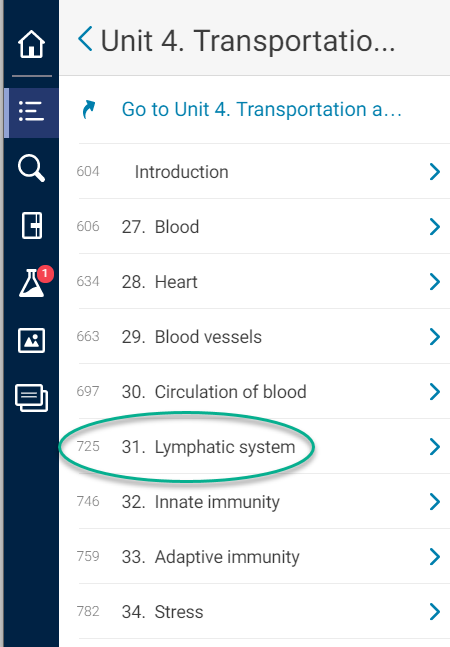
<br>&nbsp;A social media thread I ran across recently laments that the<b> lymphatic system is an undervalued and undertaught </b>topic in the anatomy and physiology curriculum. <b>That puzzles me.</b><p></p><p>Admittedly, I don't bring up the lymphatic system a lot in my day-to-day conversations. Not even in chats with other A&amp;P enthusiasts. But <b>it does come up <i>sometimes</i></b> in conversations about teaching or learning A&amp;P. And when it does, I think the usual reaction involves some variety of <b>love for the lymphatic system. </b>So I'm puzzled.</p><p>In our&nbsp;<b><i><a href="http://feeds.feedblitz.com/~/t/0/0/pattonap/~PattonAP.org" target="_blank">Patton Anatomy &amp; Physiology</a></i></b>&nbsp;textbook, the <b>lymphatic system certainly gets the love and attention it deserves. </b>In fact, we feel that it <b>deserves its own chapter! </b>Unlike most A&amp;P textbooks,&nbsp;<b><i><a href="http://feeds.feedblitz.com/~/t/0/0/pattonap/~PattonAP.org" target="_blank">Patton Anatomy &amp; Physiology</a></i></b>&nbsp;has a separate <i>Lymphatic System</i> chapter that follows <i>Blood, Heart, Blood Vessels,</i> and <i>Circulation of Blood </i>chapters and precedes the chapters <i>Innate Immunity, Adaptive Immunity, and Stress.</i></p><div style="clear: both; text-align: center;"><a href="http://feeds.feedblitz.com/~/t/0/0/pattonap/~https://blogger.googleusercontent.com/img/b/R29vZ2xl/AVvXsEji4GwDTETnV2tP-nop460W81Ro_iLVhLcuitueNFFCgG6FC9ob7EznkBH6rMUo423gDg1xnwEEcMmLwoZQeR9ONaKv2pJ5gtiIn3eyXmY0FvZ3EQgaa6A_dfYp9HpymROyevClc4Pvf_AI/s647/Lymphatic+in+Contents+2021-08-21_11-04-50.png" style="margin-left: 1em; margin-right: 1em;"><img border="0" data-original-height="647" data-original-width="450" height="400" src="https://blogger.googleusercontent.com/img/b/R29vZ2xl/AVvXsEji4GwDTETnV2tP-nop460W81Ro_iLVhLcuitueNFFCgG6FC9ob7EznkBH6rMUo423gDg1xnwEEcMmLwoZQeR9ONaKv2pJ5gtiIn3eyXmY0FvZ3EQgaa6A_dfYp9HpymROyevClc4Pvf_AI/w279-h400/Lymphatic+in+Contents+2021-08-21_11-04-50.png" width="279" /></a></div><div style="clear: both; text-align: left;">That placement of the chapter puts it in exactly that <b>spot in the story where we want it.</b> That is, our story of the lymphatic system picks up the story of circulation begun in the <i>Circulation of Blood</i> chapter by explaining where the excess fluid left out of venous return goes. It goes back to the bloodstream via an <b>elegant lymphatic drainage system.</b>&nbsp;</div><div style="clear: both; text-align: left;">
<br></div><div style="clear: both; text-align: left;">But wait! <b>There's more! </b>That fluid being returned to the bloodstream from the tissues is filtered in the lymph nodes before joining the blood supply. Which then allows us to <b>introduce the concept of immunity</b> and the lymphatic system's key role as a <b>partner in the immune system.&nbsp;</b></div><div style="clear: both; text-align: left;">
<br></div><div style="clear: both; text-align: left;">The next chapters <i>Innate Immunity</i> and<i> Adaptive Immunity </i>then pick up that part of the story after the <i>Lymphatic System </i>chapter. Then, after all those parts of the story set the final pieces needed, the <i>Stress</i> chapter integrates diverse concepts learned in previous chapters into a <b>big picture of how our body deals with the world.</b></div><div style="clear: both; text-align: left;">
<br></div><div style="clear: both; text-align: left;">Although that social media thread lamenting that the lymphatic system is undervalued and undertaught puzzles me on one level, I <i>wholeheartedly</i> agree that the <b>lymphatic system deserves any love we do give it.</b> In the eleventh edition of&nbsp;<b><i><a href="http://feeds.feedblitz.com/~/t/0/0/pattonap/~PattonAP.org" target="_blank">Patton Anatomy &amp; Physiology</a></i></b>, available November 2021, we've added a <b>bit more love</b> by adding a brief description of the emerging concept of the <b>glymphatic system.</b> And, in our usual style, we generally refined and clarified our story of the amazing lymphatic system.</div><div style="clear: both; text-align: left;">
<br></div><div style="clear: both; text-align: left;">Check out the <b>heavily illustrated </b>story of the lymphatic system in <b><i><a href="http://feeds.feedblitz.com/~/t/0/0/pattonap/~PattonAP.org" target="_blank">Patton Anatomy &amp; Physiology</a>.</i></b>&nbsp;I think you'll agree that we really do show this system some love.</div><p></p><Img align="left" border="0" height="1" width="1" alt="" style="border:0;float:left;margin:0;padding:0;width:1px!important;height:1px!important;" hspace="0" src="https://feeds.feedblitz.com/~/i/663330730/0/pattonap">
<div style="clear:both;padding-top:0.2em;"><a href="https://feeds.feedblitz.com/_/28/663330730/pattonap"><img height="20" src="https://assets.feedblitz.com/i/fblike20.png" style="border:0;margin:0;padding:0;"></a>&#160;<a href="https://feeds.feedblitz.com/_/29/663330730/pattonap,https%3a%2f%2ffeeds.feedblitz.com%2f-%2f873595046%2f0%2fpattonap.png"><img height="20" src="https://assets.feedblitz.com/i/pinterest20.png" style="border:0;margin:0;padding:0;"></a>&#160;<a href="https://feeds.feedblitz.com/_/24/663330730/pattonap"><img height="20" src="https://assets.feedblitz.com/i/x.png" style="border:0;margin:0;padding:0;"></a>&#160;<a href="https://feeds.feedblitz.com/_/19/663330730/pattonap"><img height="20" src="https://assets.feedblitz.com/i/email20.png" style="border:0;margin:0;padding:0;"></a>&#160;<a href="https://feeds.feedblitz.com/_/20/663330730/pattonap"><img height="20" src="https://assets.feedblitz.com/i/rss20.png" style="border:0;margin:0;padding:0;"></a>&#160;<a rel="NOFOLLOW" title="View Comments" href="http://pattonap.blogspot.com/2021/08/the-lymphatic-system-deserves-its-own.html#comment-form"><img height="20" style="border:0;margin:0;padding:0;" src="https://assets.feedblitz.com/i/comments20.png"></a>&#160;<a title="Follow Comments via RSS" href="http://pattonap.blogspot.com/feeds/7263165081247401149/comments/default"><img height="20" style="border:0;margin:0;padding:0;" src="https://assets.feedblitz.com/i/commentsrss20.png"></a>&nbsp;
<div style="clear:left;"><a rel="NOFOLLOW" href="http://pattonap.blogspot.com/2021/08/the-lymphatic-system-deserves-its-own.html#comment-form"><h3>Comments</h3></a><ul><li><a rel="NOFOLLOW" href="https://pattonap.blogspot.com/2021/08/the-lymphatic-system-deserves-its-own.html?showComment=1662177417085#c4619363418997062885">I was looking for this information from a long tim...</a> <i>by Garry Methews <a href="https://www.blogger.com/profile/04092951897877738950">https://www.blogger.com/profile/04092951897877738950</a></i><li><a rel="NOFOLLOW" href="https://pattonap.blogspot.com/2021/08/the-lymphatic-system-deserves-its-own.html?showComment=1640854157241#c6410754855697288251">Thanks for sharing this informative content, Lymph...</a> <i>by ziadyen <a href="https://www.blogger.com/profile/02694230405711336399">https://www.blogger.com/profile/02694230405711336399</a></i></ul></div>&#160;</div>]]>
</content><link rel='replies' type='application/atom+xml' href='http://pattonap.blogspot.com/feeds/7263165081247401149/comments/default' title='Post Comments'/><link rel='replies' type='text/html' href='https://feeds.feedblitz.com/~/663330730/0/pattonap.html#comment-form' title='2 Comments'/><link rel='edit' type='application/atom+xml' href='http://www.blogger.com/feeds/4789967485427743653/posts/default/7263165081247401149'/><link rel='self' type='application/atom+xml' href='http://www.blogger.com/feeds/4789967485427743653/posts/default/7263165081247401149'/><link rel='alternate' type='text/html' href='https://feeds.feedblitz.com/~/663330730/0/pattonap.html' title='The Lymphatic System Deserves Its Own Chapter'/><author><name>Kevin Patton</name><uri>http://www.blogger.com/profile/15202042487646206423</uri><email>noreply@blogger.com</email><gd:image rel='http://schemas.google.com/g/2005#thumbnail' width='32' height='32' src='//blogger.googleusercontent.com/img/b/R29vZ2xl/AVvXsEgj08ijJLEz-i8tl26UQ1c-NVYtOi_NVkP0Kzj0zIo13mfYZdC7_QJ_lgoOe3R_c-iuDXoYlgyghLRazlmJARO1h3BeORIWBkj_FAIFLzZAlIxk4XEKHGl9SKA7FTMTgMs/s113/Headshots+2018+TAA+Conference-Headshots-0006-500px.png'/></author><media:thumbnail xmlns:media="http://search.yahoo.com/mrss/" url="https://feeds.feedblitz.com/-/873595046/0/pattonap.png" height="72" width="72"/><thr:total>2</thr:total>
<feedburner:origEnclosureLink>https://blogger.googleusercontent.com/img/b/R29vZ2xl/AVvXsEgV05FHQ47qTc75Cm36wKTqxvk2GdSKBYTgOSWmhx32NktNdSaZ-la0yl1_OhBbTluSq6JkELQHeN_0fNiHN2fcEQCJMdzhJ6YGXmTAV9LaLb8fK1OqgL9NUV0USvXuIexWnNgLsMdM4kxp/s72-c/AP+lymphatic+chapter.png</feedburner:origEnclosureLink>
</entry>
<entry>
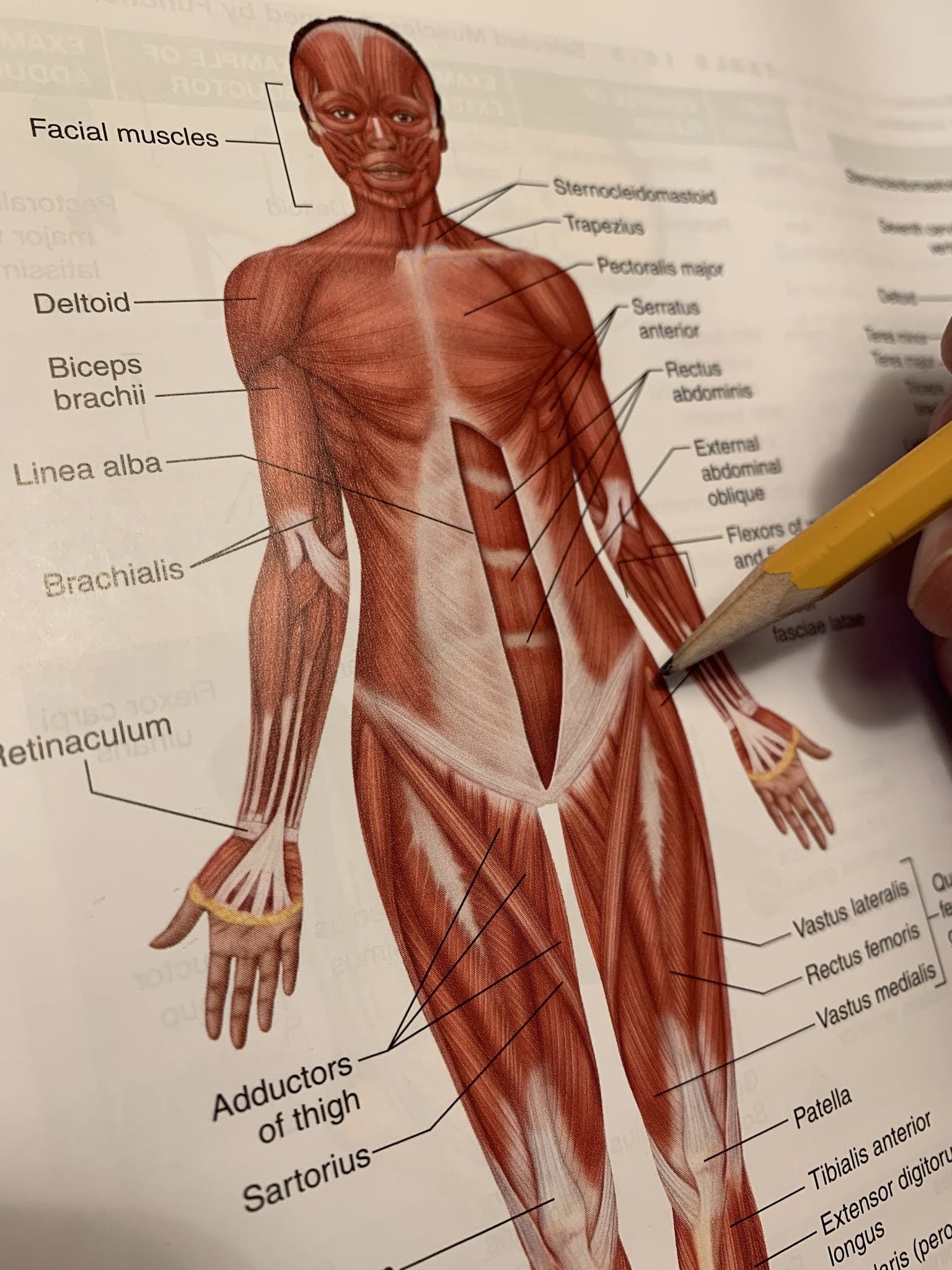
<feedburner:origLink>http://pattonap.blogspot.com/2021/06/diverse-representation-in-anatomy.html</feedburner:origLink><id>tag:blogger.com,1999:blog-4789967485427743653.post-3445934214382563864</id><published>2021-06-29T09:01:00.000-05:00</published><updated>2021-06-29T09:01:00.181-05:00</updated><category scheme="http://www.blogger.com/atom/ns#" term="anatomy"/><category scheme="http://www.blogger.com/atom/ns#" term="behind-the-scenes"/><category scheme="http://www.blogger.com/atom/ns#" term="images"/><category scheme="http://www.blogger.com/atom/ns#" term="inclusion"/><category scheme="http://www.blogger.com/atom/ns#" term="student success"/><category scheme="http://www.blogger.com/atom/ns#" term="update"/><title type='text'>Diverse Representation in Anatomy &amp; Physiology</title><content type='html'><![CDATA[<p>From the earliest days of my involvement with the&nbsp;<b><i><a href="http://feeds.feedblitz.com/~/t/0/0/pattonap/~PattonAP.org" target="_blank">Anatomy &amp; Physiology</a></i></b>&nbsp;textbook, I've strived to ensure that the representation of people in the illustration program, the chapter narratives, the examples and cases presented,&nbsp;<b>reflects the diversity of humanity.</b>&nbsp;</p><p><b>My publisher has fully supported </b>my (rather expensive) requests for creating <b>new artwork</b> and shooting <b>new photographs. </b>They have also supported my <b>chapter&nbsp;revisions </b>and have helped me find and revise passages that need improvement.</p><div style="clear: both; text-align: center;"><a href="http://feeds.feedblitz.com/~/t/0/0/pattonap/~https://blogger.googleusercontent.com/img/b/R29vZ2xl/AVvXsEhFY8t6ZUvM7b_wSohOkOmB53IlbDIYFo86LaunoPTYm3LIKQYastayW_NUN07bx40mz_z8QWFPOemwf1YLs9zYJ9r6L9V7T-XUaEnR4p88Vdc0OA0U_2B-QJkArv1U5dXibPh5wwg2yTao/s2048/IMG_3235.jpg" style="margin-left: 1em; margin-right: 1em;"><img border="0" data-original-height="2048" data-original-width="1536" height="320" src="https://blogger.googleusercontent.com/img/b/R29vZ2xl/AVvXsEhFY8t6ZUvM7b_wSohOkOmB53IlbDIYFo86LaunoPTYm3LIKQYastayW_NUN07bx40mz_z8QWFPOemwf1YLs9zYJ9r6L9V7T-XUaEnR4p88Vdc0OA0U_2B-QJkArv1U5dXibPh5wwg2yTao/s320/IMG_3235.jpg" /></a></div>
<br><p>
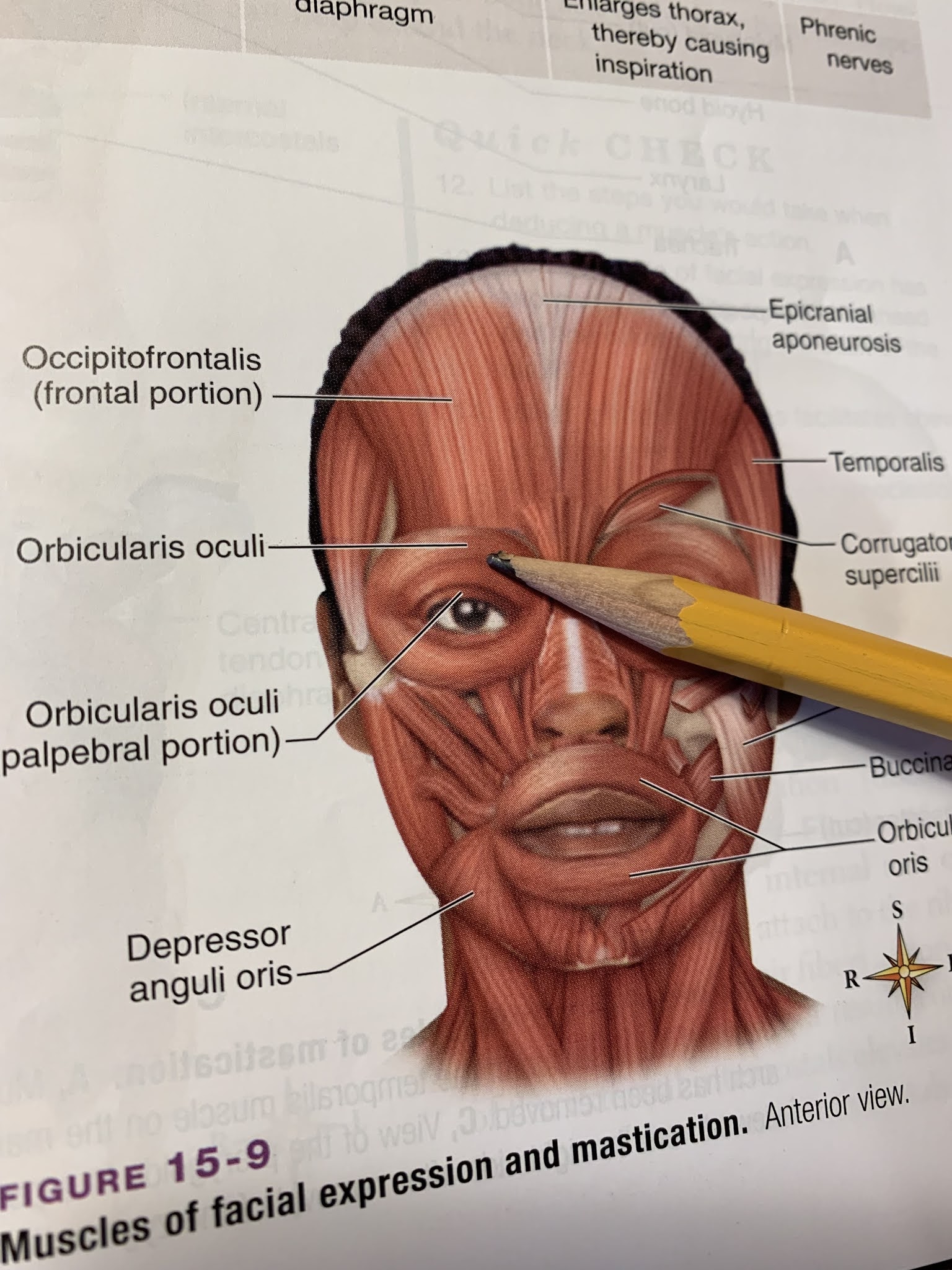
<br></p><h3 style="text-align: left;"><span style="font-weight: normal;">Why is this important?&nbsp;</span></h3><p>Our students—my readers and users of the textbook—must <b>see themselves </b>and their <b>lived experiences</b> reflected in this textbook and other learning materials. If they cannot, then it's difficult for them to see themselves <b>fully accepted</b> as part of the humanity that we explore in the anatomy and physiology course. This perceived lack of acceptance is a <b>very real barrier to learning.</b> When they cannot easily see themselves as part of the world of A&amp;P, then it's also a barrier for students as they pursue their <b>career path.&nbsp;</b></p><p>Diverse representation in&nbsp;<b><i><a href="http://feeds.feedblitz.com/~/t/0/0/pattonap/~PattonAP.org" target="_blank">Anatomy &amp; Physiology</a></i></b>&nbsp;is also important because students must develop an understanding, acceptance, and appreciation of the <b>normal variation and diversity among the human population</b> if they are to be successful as healthcare and athletic professionals.&nbsp;</p><p>The seventh edition of&nbsp;<b><i><a href="http://feeds.feedblitz.com/~/t/0/0/pattonap/~PattonAP.org" target="_blank">Anatomy &amp; Physiology</a></i></b>&nbsp;marked the moment when diverse and inclusive representation became <b>a goal of every revision cycle</b>. In the tenth edition, we were able to significantly diversify our photo collection and anatomical illustrations.&nbsp;</p><p>For example, in the tenth edition, we were <b>among the first</b> to use Black female subjects for the key illustrations of human musculature—overturning centuries of white males serving that role.</p><div style="clear: both; text-align: center;"><a href="http://feeds.feedblitz.com/~/t/0/0/pattonap/~https://blogger.googleusercontent.com/img/b/R29vZ2xl/AVvXsEhEP3ZdEMMq8EG7mUrF9lVNHfBHLQCuTkppNmtNTWQltfewrdsvC0FhvgmSEllHMZOmFkt5TExk9dMKeaQL0TeiiLPLWfi8OY4cbTOjYKEfjoJNTwSTpwKhJLVOLxVI1LhmjFlwbkkVv0XA/s2048/IMG_3234.jpg" style="margin-left: 1em; margin-right: 1em;"><img border="0" data-original-height="2048" data-original-width="1536" height="320" src="https://blogger.googleusercontent.com/img/b/R29vZ2xl/AVvXsEhEP3ZdEMMq8EG7mUrF9lVNHfBHLQCuTkppNmtNTWQltfewrdsvC0FhvgmSEllHMZOmFkt5TExk9dMKeaQL0TeiiLPLWfi8OY4cbTOjYKEfjoJNTwSTpwKhJLVOLxVI1LhmjFlwbkkVv0XA/s320/IMG_3234.jpg" /></a></div>
<br><p>
<br></p><p>Diversity and inclusion has been a primary goal of the upcoming eleventh edition of&nbsp;<a href="http://feeds.feedblitz.com/~/t/0/0/pattonap/~PattonAP.org" style="font-style: italic; font-weight: bold;" target="_blank">Anatomy &amp; Physiology</a><b style="font-style: italic;">, </b>as well.&nbsp;As we review our page proofs and make our final tweaks, we continue our strong effort to make our textbook <b>one of the most inclusive </b>science textbooks on the market.</p><p>However, as much as we have made admirable progress and maintained our lead in this area, we still have <b>a long way to go.</b> It's a daunting task. And the path is not always clear. The resources are not always available. Our awareness is still expanding. Nonetheless, I think you'll be pleased with the new edition when it is published later this year.&nbsp;</p><p>And I hope you'll join us in pointing out where we've made good progress and where we still need to improve. <b>We're in this together.</b></p><Img align="left" border="0" height="1" width="1" alt="" style="border:0;float:left;margin:0;padding:0;width:1px!important;height:1px!important;" hspace="0" src="https://feeds.feedblitz.com/~/i/655913580/0/pattonap">
<div style="clear:both;padding-top:0.2em;"><a href="https://feeds.feedblitz.com/_/28/655913580/pattonap"><img height="20" src="https://assets.feedblitz.com/i/fblike20.png" style="border:0;margin:0;padding:0;"></a>&#160;<a href="https://feeds.feedblitz.com/_/29/655913580/pattonap,https%3a%2f%2ffeeds.feedblitz.com%2f-%2f873595049%2f0%2fpattonap.jpg"><img height="20" src="https://assets.feedblitz.com/i/pinterest20.png" style="border:0;margin:0;padding:0;"></a>&#160;<a href="https://feeds.feedblitz.com/_/24/655913580/pattonap"><img height="20" src="https://assets.feedblitz.com/i/x.png" style="border:0;margin:0;padding:0;"></a>&#160;<a href="https://feeds.feedblitz.com/_/19/655913580/pattonap"><img height="20" src="https://assets.feedblitz.com/i/email20.png" style="border:0;margin:0;padding:0;"></a>&#160;<a href="https://feeds.feedblitz.com/_/20/655913580/pattonap"><img height="20" src="https://assets.feedblitz.com/i/rss20.png" style="border:0;margin:0;padding:0;"></a>&#160;<a rel="NOFOLLOW" title="View Comments" href="http://pattonap.blogspot.com/2021/06/diverse-representation-in-anatomy.html#comment-form"><img height="20" style="border:0;margin:0;padding:0;" src="https://assets.feedblitz.com/i/comments20.png"></a>&#160;<a title="Follow Comments via RSS" href="http://pattonap.blogspot.com/feeds/3445934214382563864/comments/default"><img height="20" style="border:0;margin:0;padding:0;" src="https://assets.feedblitz.com/i/commentsrss20.png"></a>&nbsp;
<div style="clear:left;"><a rel="NOFOLLOW" href="http://pattonap.blogspot.com/2021/06/diverse-representation-in-anatomy.html#comment-form"><h3>Comments</h3></a><ul><li><a rel="NOFOLLOW" href="http://pattonap.blogspot.com/2021/06/diverse-representation-in-anatomy.html#comment-form">Comments</a></li></ul></div><h3 style="clear:left;padding-top:10px">Related Stories</h3><ul><li><a rel="NOFOLLOW" href="http://pattonap.blogspot.com/2018/03/new-unit-pre-tests-help-jump-start.html">New Unit Pre-Tests Help Jump-Start Student Learning</a></li><li><a rel="NOFOLLOW" href="http://pattonap.blogspot.com/2018/02/new-10th-edition-of-pattons-textbook-is.html">New 10th Edition of Patton's A&P textbook is now available!</a></li><li><a rel="NOFOLLOW" href="http://pattonap.blogspot.com/2022/03/active-concept-maps-help-students-make.html">Active Concept Maps Help Students Make Connections</a></li></ul>&#160;</div>]]>
</content><link rel='replies' type='application/atom+xml' href='http://pattonap.blogspot.com/feeds/3445934214382563864/comments/default' title='Post Comments'/><link rel='replies' type='text/html' href='https://feeds.feedblitz.com/~/655913580/0/pattonap.html#comment-form' title='0 Comments'/><link rel='edit' type='application/atom+xml' href='http://www.blogger.com/feeds/4789967485427743653/posts/default/3445934214382563864'/><link rel='self' type='application/atom+xml' href='http://www.blogger.com/feeds/4789967485427743653/posts/default/3445934214382563864'/><link rel='alternate' type='text/html' href='https://feeds.feedblitz.com/~/655913580/0/pattonap.html' title='Diverse Representation in Anatomy &amp; Physiology'/><author><name>Kevin Patton</name><uri>http://www.blogger.com/profile/15202042487646206423</uri><email>noreply@blogger.com</email><gd:image rel='http://schemas.google.com/g/2005#thumbnail' width='32' height='32' src='//blogger.googleusercontent.com/img/b/R29vZ2xl/AVvXsEgj08ijJLEz-i8tl26UQ1c-NVYtOi_NVkP0Kzj0zIo13mfYZdC7_QJ_lgoOe3R_c-iuDXoYlgyghLRazlmJARO1h3BeORIWBkj_FAIFLzZAlIxk4XEKHGl9SKA7FTMTgMs/s113/Headshots+2018+TAA+Conference-Headshots-0006-500px.png'/></author><media:thumbnail xmlns:media="http://search.yahoo.com/mrss/" url="https://feeds.feedblitz.com/-/873595049/0/pattonap.jpg" height="72" width="72"/><thr:total>0</thr:total>
<feedburner:origEnclosureLink>https://blogger.googleusercontent.com/img/b/R29vZ2xl/AVvXsEhFY8t6ZUvM7b_wSohOkOmB53IlbDIYFo86LaunoPTYm3LIKQYastayW_NUN07bx40mz_z8QWFPOemwf1YLs9zYJ9r6L9V7T-XUaEnR4p88Vdc0OA0U_2B-QJkArv1U5dXibPh5wwg2yTao/s72-c/IMG_3235.jpg</feedburner:origEnclosureLink>
</entry>
<entry>
<feedburner:origLink>http://pattonap.blogspot.com/2021/03/stress-deserves-its-own-chapter.html</feedburner:origLink><id>tag:blogger.com,1999:blog-4789967485427743653.post-3161682054182625978</id><published>2021-03-31T15:00:00.001-05:00</published><updated>2021-03-31T15:00:04.595-05:00</updated><category scheme="http://www.blogger.com/atom/ns#" term="behind-the-scenes"/><category scheme="http://www.blogger.com/atom/ns#" term="chunking"/><category scheme="http://www.blogger.com/atom/ns#" term="content"/><category scheme="http://www.blogger.com/atom/ns#" term="neuroscience"/><category scheme="http://www.blogger.com/atom/ns#" term="organization"/><category scheme="http://www.blogger.com/atom/ns#" term="pathology"/><category scheme="http://www.blogger.com/atom/ns#" term="physiology"/><category scheme="http://www.blogger.com/atom/ns#" term="stress"/><category scheme="http://www.blogger.com/atom/ns#" term="update"/><title type='text'>Stress Deserves Its Own Chapter</title><content type='html'><![CDATA[<p>One of the advantages of organizing anatomy and physiology concepts into <b>short, modular chapters </b>is that it gives us more <b>flexibility in teaching.</b> It also permits us to focus on important topics that are often buried within a large chapter that covers many subtopics.&nbsp; Taking this advantage,&nbsp;<b><i><a href="http://feeds.feedblitz.com/~/t/0/0/pattonap/~PattonAP.org" target="_blank">Anatomy &amp; Physiology</a></i></b>&nbsp;puts the clinically<b> important concepts of stress</b> into a single,<b> independent chapter.</b></p><p></p><div style="clear: both; text-align: center;"><a href="http://feeds.feedblitz.com/~/t/0/0/pattonap/~https://blogger.googleusercontent.com/img/b/R29vZ2xl/AVvXsEjjd2xmRAh4PNw_v_ATtEHt9EN11Ljjp_FXiv_AFiWPrj72KL_m7uS36kPLN3uCSNevjBJ-yDJmIGYjHZ0aTA8Vn2XYx__3fBQqLFCDe56PnhusIVUYYQhePdx0gCadUSDlWEHIUCDc8YAI/s2048/hand-person-people-girl-woman-hair-840008-pxhere.com.jpg" imageanchor="1" style="margin-left: 1em; margin-right: 1em;"><img border="0" data-original-height="1367" data-original-width="2048" height="268" src="https://blogger.googleusercontent.com/img/b/R29vZ2xl/AVvXsEjjd2xmRAh4PNw_v_ATtEHt9EN11Ljjp_FXiv_AFiWPrj72KL_m7uS36kPLN3uCSNevjBJ-yDJmIGYjHZ0aTA8Vn2XYx__3fBQqLFCDe56PnhusIVUYYQhePdx0gCadUSDlWEHIUCDc8YAI/w400-h268/hand-person-people-girl-woman-hair-840008-pxhere.com.jpg" width="400" /></a></div><p>
<br></p>The <b>concepts of stress interconnect </b>with concepts of neuroscience, endocrinology, immunology, and many others—covered in diverse chapters of a textbook and diverse modules of an A&amp;P course. Putting the core concepts of stress into its own independent chapter means that the instructor has more flexibility in where they place in their own course structure—into their <b>own unique telling of the story </b>of the human body.<p></p><p>Our book was <b>the first A&amp;P textbook to have an independent stress chapter. </b>Since its introduction, we've been keeping the content up to date and relevant to student learning—and to the clinical applications of stress they'll be making in their professional courses and careers.&nbsp;</p><p>More recently, we enlisted the advice of the late <b>Dr. Bruce McEwen, </b>an icon of the modern concepts of human stress and it's real-life implications. Contributing author <b>Dr. Peggie Williamson </b>and I used Bruce's advice and his generous stack of resources to give our stress chapter a <b>major refresh and update. </b>You will find that <b>the engaging story-of-stress approach </b>remains, but with the more recent parts of that story reflected with greater clarity and relevance.</p><p>We need not let the concepts of stress be stressors themselves in our teaching and learning. Using the stress chapter in&nbsp;<i style="font-weight: bold;"><a href="http://feeds.feedblitz.com/~/t/0/0/pattonap/~PattonAP.org" target="_blank">Anatomy &amp; Physiology</a>—</i>a reader favorite—can help us all <b>better understand the pivotal role stress can have in wellness and disease.</b></p><Img align="left" border="0" height="1" width="1" alt="" style="border:0;float:left;margin:0;padding:0;width:1px!important;height:1px!important;" hspace="0" src="https://feeds.feedblitz.com/~/i/648069108/0/pattonap">
<div style="clear:both;padding-top:0.2em;"><a href="https://feeds.feedblitz.com/_/28/648069108/pattonap"><img height="20" src="https://assets.feedblitz.com/i/fblike20.png" style="border:0;margin:0;padding:0;"></a>&#160;<a href="https://feeds.feedblitz.com/_/29/648069108/pattonap,https%3a%2f%2ffeeds.feedblitz.com%2f-%2f873595052%2f0%2fpattonap.jpg"><img height="20" src="https://assets.feedblitz.com/i/pinterest20.png" style="border:0;margin:0;padding:0;"></a>&#160;<a href="https://feeds.feedblitz.com/_/24/648069108/pattonap"><img height="20" src="https://assets.feedblitz.com/i/x.png" style="border:0;margin:0;padding:0;"></a>&#160;<a href="https://feeds.feedblitz.com/_/19/648069108/pattonap"><img height="20" src="https://assets.feedblitz.com/i/email20.png" style="border:0;margin:0;padding:0;"></a>&#160;<a href="https://feeds.feedblitz.com/_/20/648069108/pattonap"><img height="20" src="https://assets.feedblitz.com/i/rss20.png" style="border:0;margin:0;padding:0;"></a>&#160;<a rel="NOFOLLOW" title="View Comments" href="http://pattonap.blogspot.com/2021/03/stress-deserves-its-own-chapter.html#comment-form"><img height="20" style="border:0;margin:0;padding:0;" src="https://assets.feedblitz.com/i/comments20.png"></a>&#160;<a title="Follow Comments via RSS" href="http://pattonap.blogspot.com/feeds/3161682054182625978/comments/default"><img height="20" style="border:0;margin:0;padding:0;" src="https://assets.feedblitz.com/i/commentsrss20.png"></a>&nbsp;
<div style="clear:left;"><a rel="NOFOLLOW" href="http://pattonap.blogspot.com/2021/03/stress-deserves-its-own-chapter.html#comment-form"><h3>Comments</h3></a><ul><li><a rel="NOFOLLOW" href="http://pattonap.blogspot.com/2021/03/stress-deserves-its-own-chapter.html#comment-form">Comments</a></li></ul></div><h3 style="clear:left;padding-top:10px">Related Stories</h3><ul><li><a rel="NOFOLLOW" href="http://pattonap.blogspot.com/2021/03/your-modular-anatomy-physiology-textbook.html">Your Modular Anatomy &amp; Physiology Textbook</a></li><li><a rel="NOFOLLOW" href="http://pattonap.blogspot.com/2020/06/pandemic-scramble-keeping-it-simple.html">Pandemic Scramble: Keeping It Simple</a></li><li><a rel="NOFOLLOW" href="http://pattonap.blogspot.com/2018/03/new-unit-pre-tests-help-jump-start.html">New Unit Pre-Tests Help Jump-Start Student Learning</a></li></ul>&#160;</div>]]>
</content><link rel='replies' type='application/atom+xml' href='http://pattonap.blogspot.com/feeds/3161682054182625978/comments/default' title='Post Comments'/><link rel='replies' type='text/html' href='https://feeds.feedblitz.com/~/648069108/0/pattonap.html#comment-form' title='0 Comments'/><link rel='edit' type='application/atom+xml' href='http://www.blogger.com/feeds/4789967485427743653/posts/default/3161682054182625978'/><link rel='self' type='application/atom+xml' href='http://www.blogger.com/feeds/4789967485427743653/posts/default/3161682054182625978'/><link rel='alternate' type='text/html' href='https://feeds.feedblitz.com/~/648069108/0/pattonap.html' title='Stress Deserves Its Own Chapter'/><author><name>Kevin Patton</name><uri>http://www.blogger.com/profile/15202042487646206423</uri><email>noreply@blogger.com</email><gd:image rel='http://schemas.google.com/g/2005#thumbnail' width='32' height='32' src='//blogger.googleusercontent.com/img/b/R29vZ2xl/AVvXsEgj08ijJLEz-i8tl26UQ1c-NVYtOi_NVkP0Kzj0zIo13mfYZdC7_QJ_lgoOe3R_c-iuDXoYlgyghLRazlmJARO1h3BeORIWBkj_FAIFLzZAlIxk4XEKHGl9SKA7FTMTgMs/s113/Headshots+2018+TAA+Conference-Headshots-0006-500px.png'/></author><media:thumbnail xmlns:media="http://search.yahoo.com/mrss/" url="https://feeds.feedblitz.com/-/873595052/0/pattonap.jpg" height="72" width="72"/><thr:total>0</thr:total>
<feedburner:origEnclosureLink>https://blogger.googleusercontent.com/img/b/R29vZ2xl/AVvXsEjjd2xmRAh4PNw_v_ATtEHt9EN11Ljjp_FXiv_AFiWPrj72KL_m7uS36kPLN3uCSNevjBJ-yDJmIGYjHZ0aTA8Vn2XYx__3fBQqLFCDe56PnhusIVUYYQhePdx0gCadUSDlWEHIUCDc8YAI/s72-w400-h268-c/hand-person-people-girl-woman-hair-840008-pxhere.com.jpg</feedburner:origEnclosureLink>
</entry>
<entry>
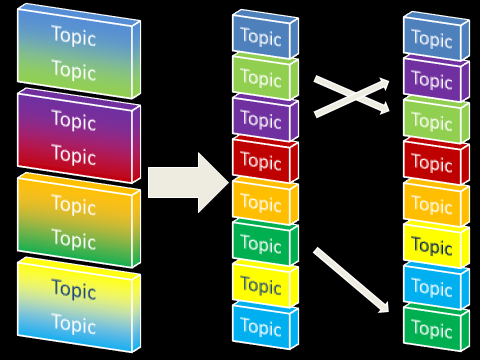
<feedburner:origLink>http://pattonap.blogspot.com/2021/03/your-modular-anatomy-physiology-textbook.html</feedburner:origLink><id>tag:blogger.com,1999:blog-4789967485427743653.post-2335212864420318249</id><published>2021-03-22T15:00:00.000-05:00</published><updated>2021-03-22T15:00:04.975-05:00</updated><category scheme="http://www.blogger.com/atom/ns#" term="chunking"/><category scheme="http://www.blogger.com/atom/ns#" term="content"/><category scheme="http://www.blogger.com/atom/ns#" term="cost"/><category scheme="http://www.blogger.com/atom/ns#" term="design"/><category scheme="http://www.blogger.com/atom/ns#" term="organization"/><category scheme="http://www.blogger.com/atom/ns#" term="stress"/><title type='text'>Your Modular Anatomy &amp; Physiology Textbook</title><content type='html'><![CDATA[<p>Ever dreamed of <b>rearranging the order of topics in your course. </b>That is, have you ever wanted to shift the order of topics as they are presented in your textbook to <b>fit the way you tell your story</b> of the human body? <b>Without the obstacles </b>of assigning a half-chapter here and the other half-chapter there—and possibly causing some students to get a bit lost?</p><p>Yeah, me too. That's why I've worked hard to move away from the gigantic-chapter model we see in most A&amp;P textbooks to the <b>modular model </b>in our&nbsp;<b><i><a href="http://feeds.feedblitz.com/~/t/0/0/pattonap/~PattonAP.org" target="_blank">Anatomy &amp; Physiology</a></i></b>&nbsp;textbook. Instead of the usual 20-something large chapters commonly seen, our textbook has 48 chapters—but about the same number of pages as all the others. That is, those <b>gigantic chapters have been broken down into smaller bits.</b></p><p>Besides the advantage of making our <b>reading assignments less intimidating</b> for students, the arrangement of concepts in smaller chapters also means that it is far easier for any instructor to <b>move things around a bit </b>to better suit their particular telling of the A&amp;P story.&nbsp;</p><div style="clear: both; text-align: center;"><a href="http://feeds.feedblitz.com/~/t/0/0/pattonap/~https://blogger.googleusercontent.com/img/b/R29vZ2xl/AVvXsEifX6N6Wx2l6kYd7IJoE54RX_S5O4JfY2pkf60XUGvqTFjMnMRWDZ3HMR5uiCtv4YhhYYF7raE2xS-oIYYitAixU67ezUOFZHR4pLDqZPMpOg48jhYEzuo2MJLneq9G0Fe52QpCqPGHUi3n/s480/Chunking2-KPatton.png" imageanchor="1" style="margin-left: 1em; margin-right: 1em;"><img border="0" data-original-height="360" data-original-width="480" src="https://blogger.googleusercontent.com/img/b/R29vZ2xl/AVvXsEifX6N6Wx2l6kYd7IJoE54RX_S5O4JfY2pkf60XUGvqTFjMnMRWDZ3HMR5uiCtv4YhhYYF7raE2xS-oIYYitAixU67ezUOFZHR4pLDqZPMpOg48jhYEzuo2MJLneq9G0Fe52QpCqPGHUi3n/s320/Chunking2-KPatton.png" width="320" /></a></div>
<br><p>For example, because the <b>introduction to homeostasis </b>is its own short chapter, faculty have the choice to move it's place in the course to the very beginning—before all those directional terms and cavities, and so forth Or one could move it a bit later in the course, after the foundational chemistry, cell, and tissue coverage to just prior to beginning covering the first body system.&nbsp;</p><p>The short <b>stress chapter</b> could be moved earlier or later in the course, without having to separate it out of another larger chapter that covers other topics as well.&nbsp;</p><p>One could even decide to have students learn the <b>appendicular skeleton first, </b>before getting to that intimidating skull and vertebral column.&nbsp;</p><p>If you've not looked at the Patton&nbsp;<b><i><a href="http://feeds.feedblitz.com/~/t/0/0/pattonap/~PattonAP.org" target="_blank">Anatomy &amp; Physiology</a></i></b>&nbsp;text in a while, this might be a good time to check it out and think about it's modular structure may be <b>a better fit for your A&amp;P course.</b></p><p>You may want to learn more about the story of our smaller chapters by reading these brief posts:</p><p></p><ul style="text-align: left;"><li><a href="http://feeds.feedblitz.com/~/t/0/0/pattonap/~https://pattonap.blogspot.com/2015/09/chunking-content-provides-flexibility.html" target="_blank">Chunking Content Provides Flexibility</a></li><li><a href="http://feeds.feedblitz.com/~/t/0/0/pattonap/~https://pattonap.blogspot.com/2014/11/reducing-text-anxiety.html" target="_blank">Reducing Text Anxiety</a></li><li><a href="http://feeds.feedblitz.com/~/t/0/0/pattonap/~https://pattonap.blogspot.com/2014/11/chunking-chapters-by-numbers.html" target="_blank">Chunking Chapters - By the Numbers</a></li><li><a href="http://feeds.feedblitz.com/~/t/0/0/pattonap/~https://pattonap.blogspot.com/2014/11/homeostasis-deserves-its-own-chapter.html" target="_blank">Homeostasis Deserves Its Own Chapter</a></li></ul><p></p><p>
<br></p><Img align="left" border="0" height="1" width="1" alt="" style="border:0;float:left;margin:0;padding:0;width:1px!important;height:1px!important;" hspace="0" src="https://feeds.feedblitz.com/~/i/647377122/0/pattonap">
<div style="clear:both;padding-top:0.2em;"><a href="https://feeds.feedblitz.com/_/28/647377122/pattonap"><img height="20" src="https://assets.feedblitz.com/i/fblike20.png" style="border:0;margin:0;padding:0;"></a>&#160;<a href="https://feeds.feedblitz.com/_/29/647377122/pattonap,https%3a%2f%2ffeeds.feedblitz.com%2f-%2f873595055%2f0%2fpattonap.png"><img height="20" src="https://assets.feedblitz.com/i/pinterest20.png" style="border:0;margin:0;padding:0;"></a>&#160;<a href="https://feeds.feedblitz.com/_/24/647377122/pattonap"><img height="20" src="https://assets.feedblitz.com/i/x.png" style="border:0;margin:0;padding:0;"></a>&#160;<a href="https://feeds.feedblitz.com/_/19/647377122/pattonap"><img height="20" src="https://assets.feedblitz.com/i/email20.png" style="border:0;margin:0;padding:0;"></a>&#160;<a href="https://feeds.feedblitz.com/_/20/647377122/pattonap"><img height="20" src="https://assets.feedblitz.com/i/rss20.png" style="border:0;margin:0;padding:0;"></a>&#160;<a rel="NOFOLLOW" title="View Comments" href="http://pattonap.blogspot.com/2021/03/your-modular-anatomy-physiology-textbook.html#comment-form"><img height="20" style="border:0;margin:0;padding:0;" src="https://assets.feedblitz.com/i/comments20.png"></a>&#160;<a title="Follow Comments via RSS" href="http://pattonap.blogspot.com/feeds/2335212864420318249/comments/default"><img height="20" style="border:0;margin:0;padding:0;" src="https://assets.feedblitz.com/i/commentsrss20.png"></a>&nbsp;
<div style="clear:left;"><a rel="NOFOLLOW" href="http://pattonap.blogspot.com/2021/03/your-modular-anatomy-physiology-textbook.html#comment-form"><h3>Comments</h3></a><ul><li><a rel="NOFOLLOW" href="http://pattonap.blogspot.com/2021/03/your-modular-anatomy-physiology-textbook.html#comment-form">Comments</a></li></ul></div><h3 style="clear:left;padding-top:10px">Related Stories</h3><ul><li><a rel="NOFOLLOW" href="http://pattonap.blogspot.com/2021/03/stress-deserves-its-own-chapter.html">Stress Deserves Its Own Chapter</a></li><li><a rel="NOFOLLOW" href="http://pattonap.blogspot.com/2020/06/pandemic-scramble-keeping-it-simple.html">Pandemic Scramble: Keeping It Simple</a></li><li><a rel="NOFOLLOW" href="http://pattonap.blogspot.com/2015/09/chunking-content-provides-flexibility.html">Chunking Content Provides Flexibility</a></li></ul>&#160;</div>]]>
</content><link rel='replies' type='application/atom+xml' href='http://pattonap.blogspot.com/feeds/2335212864420318249/comments/default' title='Post Comments'/><link rel='replies' type='text/html' href='https://feeds.feedblitz.com/~/647377122/0/pattonap.html#comment-form' title='0 Comments'/><link rel='edit' type='application/atom+xml' href='http://www.blogger.com/feeds/4789967485427743653/posts/default/2335212864420318249'/><link rel='self' type='application/atom+xml' href='http://www.blogger.com/feeds/4789967485427743653/posts/default/2335212864420318249'/><link rel='alternate' type='text/html' href='https://feeds.feedblitz.com/~/647377122/0/pattonap.html' title='Your Modular Anatomy &amp; Physiology Textbook'/><author><name>Kevin Patton</name><uri>http://www.blogger.com/profile/15202042487646206423</uri><email>noreply@blogger.com</email><gd:image rel='http://schemas.google.com/g/2005#thumbnail' width='32' height='32' src='//blogger.googleusercontent.com/img/b/R29vZ2xl/AVvXsEgj08ijJLEz-i8tl26UQ1c-NVYtOi_NVkP0Kzj0zIo13mfYZdC7_QJ_lgoOe3R_c-iuDXoYlgyghLRazlmJARO1h3BeORIWBkj_FAIFLzZAlIxk4XEKHGl9SKA7FTMTgMs/s113/Headshots+2018+TAA+Conference-Headshots-0006-500px.png'/></author><media:thumbnail xmlns:media="http://search.yahoo.com/mrss/" url="https://feeds.feedblitz.com/-/873595055/0/pattonap.png" height="72" width="72"/><thr:total>0</thr:total>
<feedburner:origEnclosureLink>https://blogger.googleusercontent.com/img/b/R29vZ2xl/AVvXsEifX6N6Wx2l6kYd7IJoE54RX_S5O4JfY2pkf60XUGvqTFjMnMRWDZ3HMR5uiCtv4YhhYYF7raE2xS-oIYYitAixU67ezUOFZHR4pLDqZPMpOg48jhYEzuo2MJLneq9G0Fe52QpCqPGHUi3n/s72-c/Chunking2-KPatton.png</feedburner:origEnclosureLink>
</entry>
<entry>
<feedburner:origLink>http://pattonap.blogspot.com/2020/06/pandemic-scramble-keeping-it-simple.html</feedburner:origLink><id>tag:blogger.com,1999:blog-4789967485427743653.post-8640416687768204268</id><published>2020-06-22T08:15:00.003-05:00</published><updated>2020-06-22T08:15:06.044-05:00</updated><category scheme="http://www.blogger.com/atom/ns#" term="assessment"/><category scheme="http://www.blogger.com/atom/ns#" term="chunking"/><category scheme="http://www.blogger.com/atom/ns#" term="content"/><category scheme="http://www.blogger.com/atom/ns#" term="design"/><category scheme="http://www.blogger.com/atom/ns#" term="distance learning"/><category scheme="http://www.blogger.com/atom/ns#" term="organization"/><category scheme="http://www.blogger.com/atom/ns#" term="pandemic teaching"/><category scheme="http://www.blogger.com/atom/ns#" term="student success"/><title type='text'>Pandemic Scramble: Keeping It Simple</title><content type='html'><![CDATA[In my opinion, the <b>big mistake</b> that professors commonly make when moving an on-campus course to remote teaching is to <b>make things more complicated than they need to be</b>. That unnecessary complexity stems from the idea that one must take their entire course, including every element and detail, and move it more or less "as is" to an online environment. I think we get much better outcomes if we strive to keep it simple.<div>
<br></div><div>First, <b>"remote" need not always be "online."</b> There are a lot of learning opportunities to be had with reading and retrieval practice assignments from the Patton&nbsp;<b><i><a href="http://feeds.feedblitz.com/~/t/0/0/pattonap/~PattonAP.org" target="_blank">Anatomy &amp; Physiology</a></i></b>&nbsp;textbook. Students have invested a lot in acquiring this resource and a large team has worked together to make it an effective learning tool. Now's a great time to do better by our students by helping them engage fully in both <b>reading</b> and <b>raiding</b> their textbook.&nbsp;</div><div>
<br></div><div><div style="clear: both; text-align: center;"><a href="http://feeds.feedblitz.com/~/t/0/0/pattonap/~https://blogger.googleusercontent.com/img/b/R29vZ2xl/AVvXsEgdrpAbt1WlbO6nbWmbTRG2gRv8k_fFqWTjKQCGsZqekwMOjNktBA3Dxlpt9_yBn2AjIv7c9nOQVuHEbp9lKWSQqV3CSIzPPJN8p1c6coauCZvYlskPntKweBHTTIBlCP2obRBdwLBw2vkA/s800/branch-sharp-wood-warm-trunk-tool-1233390-pxhere.com.jpg" imageanchor="1" style="clear: left; float: left; margin-bottom: 1em; margin-right: 1em;"><img border="0" data-original-height="533" data-original-width="800" src="https://blogger.googleusercontent.com/img/b/R29vZ2xl/AVvXsEgdrpAbt1WlbO6nbWmbTRG2gRv8k_fFqWTjKQCGsZqekwMOjNktBA3Dxlpt9_yBn2AjIv7c9nOQVuHEbp9lKWSQqV3CSIzPPJN8p1c6coauCZvYlskPntKweBHTTIBlCP2obRBdwLBw2vkA/s320/branch-sharp-wood-warm-trunk-tool-1233390-pxhere.com.jpg" width="320" /></a></div>Second, now is a great time to <b>revisit our learning outcomes and compare those to our course design.</b> Most of us keep adding more expected outcomes, and therefore more content, to our courses over the years. As we consider various learning activities, we often add them rather than replace existing activities. Our course becomes bloated, complex, and heavier than it needs to be. So my advice is to prune, prune, prune to the main outcomes—the <b>truly essential concepts</b>—of our A&amp;P course. Then, and only then, are we ready to move to remote teaching.</div><div>
<br></div><div>Third, rather than simply digitize our course components—recording lectures, converting tests and quizzes to online formats, etc.—we should <b>rethink our course design.</b> I suggest trimming back on what we are telling and showing showing students and rely more on their own discovery. And <b>resisting the urge to use every last one of the cool toys</b> that our instructional designers are helping us to discover.</div><div>
<br></div><div>What I mean by that is focusing our recorded lectures on the <b>hard-to-understand "pain points" </b>of A&amp;P. And even then, we should consider trimming our narrative down to half or less of that 50-minute time block that we are used to. Then taking those shorter lectures and <b>chunking them into even smaller, bite-sized pieces.</b></div><div>
<br></div><div>We can also substitute those occasional, mind-bending summative tests with <b>frequent, low-stakes formative tests</b> by using the our learning management system's online quizzing engine. This leverages the <b>learning benefits of retrieval practice</b> by shifting the work of learning to the student—where it belongs. This approach also makes light work of learning, thus avoiding a burdensome load during this time of stress and uncertainty.</div><div>
<br></div><div>To learn more about these suggestions and more, watch my video presentation <b><i><a href="http://feeds.feedblitz.com/~/t/0/0/pattonap/~https://theapprofessor.org/seminar-simple-ideas.html" target="_blank">Simple Ideas for Moving to Remote Learning</a></i></b> or listen to an <a href="http://feeds.feedblitz.com/~/t/0/0/pattonap/~https://theapprofessor.org/podcast-episode-67.html" target="_blank"><b>audio version</b></a> from my podcast.</div><div>
<br></div><div>
<br></div>
<div style="text-align: center;"><iframe allow="accelerometer; autoplay; encrypted-media; gyroscope; picture-in-picture" allowfullscreen="" frameborder="0" height="315" src="https://www.youtube.com/embed/feW9Kcwhm1I" width="560"></iframe></div><div style="text-align: center;">
<br></div><div style="text-align: center;">
<br></div>
<iframe allowfullscreen="" height="90" mozallowfullscreen="" msallowfullscreen="" oallowfullscreen="" scrolling="no" src="http://html5-player.libsyn.com/embed/episode/id/14034374/height/90/theme/custom/thumbnail/yes/direction/backward/render-playlist/no/custom-color/de7108/stats-code/pattonap/" style="border: none;" webkitallowfullscreen="" width="100%"></iframe>
<div>
<br></div><div style="text-align: center;"><a href="http://feeds.feedblitz.com/~/t/0/0/pattonap/~https://theapprofessor.org/pandemicteaching.html" target="_blank">Don't forget all the tips I have for you at my&nbsp;<b>Pandemic Teaching Resources</b>&nbsp;page.</a></div><Img align="left" border="0" height="1" width="1" alt="" style="border:0;float:left;margin:0;padding:0;width:1px!important;height:1px!important;" hspace="0" src="https://feeds.feedblitz.com/~/i/628363420/0/pattonap">
<div style="clear:both;padding-top:0.2em;"><a href="https://feeds.feedblitz.com/_/28/628363420/pattonap"><img height="20" src="https://assets.feedblitz.com/i/fblike20.png" style="border:0;margin:0;padding:0;"></a>&#160;<a href="https://feeds.feedblitz.com/_/29/628363420/pattonap,https%3a%2f%2ffeeds.feedblitz.com%2f-%2f873595058%2f0%2fpattonap.jpg"><img height="20" src="https://assets.feedblitz.com/i/pinterest20.png" style="border:0;margin:0;padding:0;"></a>&#160;<a href="https://feeds.feedblitz.com/_/24/628363420/pattonap"><img height="20" src="https://assets.feedblitz.com/i/x.png" style="border:0;margin:0;padding:0;"></a>&#160;<a href="https://feeds.feedblitz.com/_/19/628363420/pattonap"><img height="20" src="https://assets.feedblitz.com/i/email20.png" style="border:0;margin:0;padding:0;"></a>&#160;<a href="https://feeds.feedblitz.com/_/20/628363420/pattonap"><img height="20" src="https://assets.feedblitz.com/i/rss20.png" style="border:0;margin:0;padding:0;"></a>&#160;<a rel="NOFOLLOW" title="View Comments" href="http://pattonap.blogspot.com/2020/06/pandemic-scramble-keeping-it-simple.html#comment-form"><img height="20" style="border:0;margin:0;padding:0;" src="https://assets.feedblitz.com/i/comments20.png"></a>&#160;<a title="Follow Comments via RSS" href="http://pattonap.blogspot.com/feeds/8640416687768204268/comments/default"><img height="20" style="border:0;margin:0;padding:0;" src="https://assets.feedblitz.com/i/commentsrss20.png"></a>&nbsp;
<div style="clear:left;"><a rel="NOFOLLOW" href="http://pattonap.blogspot.com/2020/06/pandemic-scramble-keeping-it-simple.html#comment-form"><h3>Comments</h3></a><ul><li><a rel="NOFOLLOW" href="https://pattonap.blogspot.com/2020/06/pandemic-scramble-keeping-it-simple.html?showComment=1623056106484#c7613268532574482989">I started on COPD Herbal treatment from Ultimate L...</a> <i>by Florence <a href="https://www.blogger.com/profile/03247616144267009897">https://www.blogger.com/profile/03247616144267009897</a></i></ul></div><h3 style="clear:left;padding-top:10px">Related Stories</h3><ul><li><a rel="NOFOLLOW" href="http://pattonap.blogspot.com/2021/03/your-modular-anatomy-physiology-textbook.html">Your Modular Anatomy &amp; Physiology Textbook</a></li><li><a rel="NOFOLLOW" href="http://pattonap.blogspot.com/2017/05/where-are-learning-objectives.html">Where Are the Learning Objectives?!</a></li><li><a rel="NOFOLLOW" href="http://pattonap.blogspot.com/2015/09/chunking-content-provides-flexibility.html">Chunking Content Provides Flexibility</a></li></ul>&#160;</div>]]>
</content><link rel='replies' type='application/atom+xml' href='http://pattonap.blogspot.com/feeds/8640416687768204268/comments/default' title='Post Comments'/><link rel='replies' type='text/html' href='https://feeds.feedblitz.com/~/628363420/0/pattonap.html#comment-form' title='1 Comments'/><link rel='edit' type='application/atom+xml' href='http://www.blogger.com/feeds/4789967485427743653/posts/default/8640416687768204268'/><link rel='self' type='application/atom+xml' href='http://www.blogger.com/feeds/4789967485427743653/posts/default/8640416687768204268'/><link rel='alternate' type='text/html' href='https://feeds.feedblitz.com/~/628363420/0/pattonap.html' title='Pandemic Scramble: Keeping It Simple'/><author><name>Kevin Patton</name><uri>http://www.blogger.com/profile/15202042487646206423</uri><email>noreply@blogger.com</email><gd:image rel='http://schemas.google.com/g/2005#thumbnail' width='32' height='32' src='//blogger.googleusercontent.com/img/b/R29vZ2xl/AVvXsEgj08ijJLEz-i8tl26UQ1c-NVYtOi_NVkP0Kzj0zIo13mfYZdC7_QJ_lgoOe3R_c-iuDXoYlgyghLRazlmJARO1h3BeORIWBkj_FAIFLzZAlIxk4XEKHGl9SKA7FTMTgMs/s113/Headshots+2018+TAA+Conference-Headshots-0006-500px.png'/></author><media:thumbnail xmlns:media="http://search.yahoo.com/mrss/" url="https://feeds.feedblitz.com/-/873595058/0/pattonap.jpg" height="72" width="72"/><thr:total>1</thr:total>
<feedburner:origEnclosureLink>https://blogger.googleusercontent.com/img/b/R29vZ2xl/AVvXsEgdrpAbt1WlbO6nbWmbTRG2gRv8k_fFqWTjKQCGsZqekwMOjNktBA3Dxlpt9_yBn2AjIv7c9nOQVuHEbp9lKWSQqV3CSIzPPJN8p1c6coauCZvYlskPntKweBHTTIBlCP2obRBdwLBw2vkA/s72-c/branch-sharp-wood-warm-trunk-tool-1233390-pxhere.com.jpg</feedburner:origEnclosureLink>
</entry>
<entry>
<feedburner:origLink>http://pattonap.blogspot.com/2020/06/pandemic-scramble-use-netters-3d.html</feedburner:origLink><id>tag:blogger.com,1999:blog-4789967485427743653.post-8331092247634081559</id><published>2020-06-15T08:15:00.008-05:00</published><updated>2020-06-15T13:40:07.642-05:00</updated><category scheme="http://www.blogger.com/atom/ns#" term="anatomy"/><category scheme="http://www.blogger.com/atom/ns#" term="assessment"/><category scheme="http://www.blogger.com/atom/ns#" term="cost"/><category scheme="http://www.blogger.com/atom/ns#" term="distance learning"/><category scheme="http://www.blogger.com/atom/ns#" term="images"/><category scheme="http://www.blogger.com/atom/ns#" term="pandemic teaching"/><category scheme="http://www.blogger.com/atom/ns#" term="student resource"/><category scheme="http://www.blogger.com/atom/ns#" term="teacher resource"/><title type='text'>Pandemic Scramble: Use Netter&#39;s 3D Anatomy Included with Your Textbook</title><content type='html'><![CDATA[A big part of the still-in-progress "pandemic scramble" of trying to get our A&amp;P course from is on-campus venue to a <b>remote or semi-remote format</b> is grappling with <b>finding a good tool</b> to teach the anatomy that we usually teach in a lab.&nbsp; Many of my colleagues are looking here and there and everywhere for just the right tool. A tool at an <b>affordable</b> price.<div>
<br></div><div>Guess what? If you and your students are using the Patton <b><i><a href="http://feeds.feedblitz.com/~/t/0/0/pattonap/~PattonAP.org" target="_blank">Anatomy &amp; Physiology </a></i></b>textbook in your course, you already have a great tool! <b>At no extra cost!</b> Really. No new licenses. No subscriptions. No extra fees. Not only that, there's nothing for you to arrange in order for your students to have it. They already have it!</div><div>
<br></div><div><a href="http://feeds.feedblitz.com/~/t/0/0/pattonap/~https://blogger.googleusercontent.com/img/b/R29vZ2xl/AVvXsEj5kXgH4wEFRyNks_WF7bmBzJ7UkZmPzxtC4EceRkEOLRoiSIukbZSusSEKwiBdaCPoCOE-98GxbzRxbJJvHRKzXRpOEV-6OzO_LLn0LK661p0Jhf8tqHKEU-2Fs3dmbybkmOhYDo_uoZ7H/s300/IMG_1104.png" style="clear: right; float: right; margin-bottom: 1em; margin-left: 1em; text-align: center;"><img alt="Netter's 3D Anatomy scratch-off access code" border="0" data-original-height="300" data-original-width="300" height="200" src="https://blogger.googleusercontent.com/img/b/R29vZ2xl/AVvXsEj5kXgH4wEFRyNks_WF7bmBzJ7UkZmPzxtC4EceRkEOLRoiSIukbZSusSEKwiBdaCPoCOE-98GxbzRxbJJvHRKzXRpOEV-6OzO_LLn0LK661p0Jhf8tqHKEU-2Fs3dmbybkmOhYDo_uoZ7H/w200-h200/IMG_1104.png" width="200" /></a></div><div>Open the book and on the page facing the inside front cover, you'll see the scratch-off label for <i><b>Netter's 3D Anatomy</b></i>. Use the access code and you'll unlock a beautiful set of anatomy tools based on the famous illustrations by <b><a href="http://feeds.feedblitz.com/~/t/0/0/pattonap/~https://en.wikipedia.org/wiki/Frank_H._Netter" target="_blank">Frank H. Netter</a></b> and his successors. Rendered in three dimensions, these amazing illustrations of the structures of the human body can be <b>moved and rotated</b> around easily to see them from <b>any angle</b>. Structures can also be <b>pulled apart </b>and put back together, thus making this platform a true <b>virtual dissection tool.&nbsp;</b></div><div><b>
<br></b></div><div>Now might be a good time to review my post&nbsp;<b><a href="http://feeds.feedblitz.com/~/t/0/0/pattonap/~pattonap.blogspot.com/2015/04/netters-3d-interactive-anatomy-provides.html" target="_blank">Netter's 3D Interactive Anatomy Provides a Multimodal Learning Experience</a>.</b></div><div>
<br></div><div>But how does one use&nbsp;<b style="font-style: italic;">Netter's 3D Anatomy </b>in teaching a course—especially when trying to replicate an in-lab learning experience? There are many options, but here are a few to <b>spark your own creative solutions:</b></div><div><ul><li>Use your <b>"lab list" of required structures</b> to identify in a dissection—or develop such a list—and assign students to find them, just as they would in a "wet" dissection.
<br>
<br></li><li>Consider having students take screen shots of their work and compile their own <b>"guide to the body."
<br></b>
<br></li><li>Take <b>your own screen shots</b>—perhaps even a narrated video screen shot—to guide students through each region you'd like to have them "dissect" on their own.
<br>
<br></li><li>Use captured screen shots to produce a <b>virtual dissection quiz.</b>
<br>
<br></li><li>Assign students a set of structures to "teach" the class, and let them share their screens and <b>walk the rest of the class through</b> their assigned structures.&nbsp;</li></ul><div style="clear: both; text-align: center;"><a href="http://feeds.feedblitz.com/~/t/0/0/pattonap/~https://blogger.googleusercontent.com/img/b/R29vZ2xl/AVvXsEjZuLVxzObm58JFixgsKq91qh5WPkHSgK5ucyblEOVQws9S0cZggoroYkXU8cQU5lKUP8MKfyFZhMTWGKyfSH-9yAIOmbZ7MDY4r0zmorXhz9obmTNGpNvB4Wz1-VvHahb4-wmQhgRW7vzq/s500/2020-06-14_14-11-28.png" style="margin-left: 1em; margin-right: 1em;"><img alt="Netter's 3D Anatomy screen capture of brain dissection" border="0" data-original-height="214" data-original-width="500" height="171" src="https://blogger.googleusercontent.com/img/b/R29vZ2xl/AVvXsEjZuLVxzObm58JFixgsKq91qh5WPkHSgK5ucyblEOVQws9S0cZggoroYkXU8cQU5lKUP8MKfyFZhMTWGKyfSH-9yAIOmbZ7MDY4r0zmorXhz9obmTNGpNvB4Wz1-VvHahb4-wmQhgRW7vzq/w400-h171/2020-06-14_14-11-28.png" width="400" /></a></div><div>
<br></div><div>I use <b><i><a href="http://feeds.feedblitz.com/~/t/0/0/pattonap/~https://my-ap.us/TechSmith" target="_blank">Snagit</a></i></b>&nbsp;by <i>TechSmith</i> for my screen captures—both still and video—because I've become comfortable with its many features, such as <b>easy markups</b> of screen captures. However, you can use any screen capture tool—including the one probably already installed in your system.</div></div><div>
<br></div><div>Have any other ideas for using&nbsp;<b style="font-style: italic;">Netter's 3D Anatomy </b>in your course? Just go to the <b><a href="http://feeds.feedblitz.com/~/t/0/0/pattonap/~pattonap.blogspot.com/2020/06/pandemic-scramble-use-netters-3d.html" target="_blank">bottom of this post</a></b> at the&nbsp;<b><i><a href="http://feeds.feedblitz.com/~/t/0/0/pattonap/~PattonAP.org" target="_blank">Anatomy &amp; Physiology</a></i></b>&nbsp;blog and share your idea!</div><div>
<br></div><div><a href="http://feeds.feedblitz.com/~/t/0/0/pattonap/~https://theapprofessor.org/pandemicteaching.html" target="_blank">Don't forget all the tips I have for you at my <b>Pandemic Teaching Resources</b> page.</a></div><div>
<br></div><Img align="left" border="0" height="1" width="1" alt="" style="border:0;float:left;margin:0;padding:0;width:1px!important;height:1px!important;" hspace="0" src="https://feeds.feedblitz.com/~/i/627525036/0/pattonap">
<div style="clear:both;padding-top:0.2em;"><a href="https://feeds.feedblitz.com/_/28/627525036/pattonap"><img height="20" src="https://assets.feedblitz.com/i/fblike20.png" style="border:0;margin:0;padding:0;"></a>&#160;<a href="https://feeds.feedblitz.com/_/29/627525036/pattonap,https%3a%2f%2ffeeds.feedblitz.com%2f-%2f873595061%2f0%2fpattonap.png"><img height="20" src="https://assets.feedblitz.com/i/pinterest20.png" style="border:0;margin:0;padding:0;"></a>&#160;<a href="https://feeds.feedblitz.com/_/24/627525036/pattonap"><img height="20" src="https://assets.feedblitz.com/i/x.png" style="border:0;margin:0;padding:0;"></a>&#160;<a href="https://feeds.feedblitz.com/_/19/627525036/pattonap"><img height="20" src="https://assets.feedblitz.com/i/email20.png" style="border:0;margin:0;padding:0;"></a>&#160;<a href="https://feeds.feedblitz.com/_/20/627525036/pattonap"><img height="20" src="https://assets.feedblitz.com/i/rss20.png" style="border:0;margin:0;padding:0;"></a>&#160;<a rel="NOFOLLOW" title="View Comments" href="http://pattonap.blogspot.com/2020/06/pandemic-scramble-use-netters-3d.html#comment-form"><img height="20" style="border:0;margin:0;padding:0;" src="https://assets.feedblitz.com/i/comments20.png"></a>&#160;<a title="Follow Comments via RSS" href="http://pattonap.blogspot.com/feeds/8331092247634081559/comments/default"><img height="20" style="border:0;margin:0;padding:0;" src="https://assets.feedblitz.com/i/commentsrss20.png"></a>&nbsp;
<div style="clear:left;"><a rel="NOFOLLOW" href="http://pattonap.blogspot.com/2020/06/pandemic-scramble-use-netters-3d.html#comment-form"><h3>Comments</h3></a><ul><li><a rel="NOFOLLOW" href="https://pattonap.blogspot.com/2020/06/pandemic-scramble-use-netters-3d.html?showComment=1619290221901#c6099743630259743769">Superbly written article, if only all offered the ...</a> <i>by dalvinbrown41 <a href="https://www.blogger.com/profile/02278267700404747505">https://www.blogger.com/profile/02278267700404747505</a></i></ul></div><h3 style="clear:left;padding-top:10px">Related Stories</h3><ul><li><a rel="NOFOLLOW" href="http://pattonap.blogspot.com/2020/03/covid-19-scramble-use-your-included.html">Pandemic Scramble: Use Your Included Online A and P Course</a></li><li><a rel="NOFOLLOW" href="http://pattonap.blogspot.com/2015/04/netters-3d-interactive-anatomy-provides.html">Netter's 3D Interactive Anatomy Provides a Multimodal Learning Experience</a></li><li><a rel="NOFOLLOW" href="http://pattonap.blogspot.com/2020/06/pandemic-scramble-keeping-it-simple.html">Pandemic Scramble: Keeping It Simple</a></li></ul>&#160;</div>]]>
</content><link rel='replies' type='application/atom+xml' href='http://pattonap.blogspot.com/feeds/8331092247634081559/comments/default' title='Post Comments'/><link rel='replies' type='text/html' href='https://feeds.feedblitz.com/~/627525036/0/pattonap.html#comment-form' title='1 Comments'/><link rel='edit' type='application/atom+xml' href='http://www.blogger.com/feeds/4789967485427743653/posts/default/8331092247634081559'/><link rel='self' type='application/atom+xml' href='http://www.blogger.com/feeds/4789967485427743653/posts/default/8331092247634081559'/><link rel='alternate' type='text/html' href='https://feeds.feedblitz.com/~/627525036/0/pattonap.html' title='Pandemic Scramble: Use Netter&#39;s 3D Anatomy Included with Your Textbook'/><author><name>Kevin Patton</name><uri>http://www.blogger.com/profile/15202042487646206423</uri><email>noreply@blogger.com</email><gd:image rel='http://schemas.google.com/g/2005#thumbnail' width='32' height='32' src='//blogger.googleusercontent.com/img/b/R29vZ2xl/AVvXsEgj08ijJLEz-i8tl26UQ1c-NVYtOi_NVkP0Kzj0zIo13mfYZdC7_QJ_lgoOe3R_c-iuDXoYlgyghLRazlmJARO1h3BeORIWBkj_FAIFLzZAlIxk4XEKHGl9SKA7FTMTgMs/s113/Headshots+2018+TAA+Conference-Headshots-0006-500px.png'/></author><media:thumbnail xmlns:media="http://search.yahoo.com/mrss/" url="https://feeds.feedblitz.com/-/873595061/0/pattonap.png" height="72" width="72"/><thr:total>1</thr:total>
<feedburner:origEnclosureLink>https://blogger.googleusercontent.com/img/b/R29vZ2xl/AVvXsEj5kXgH4wEFRyNks_WF7bmBzJ7UkZmPzxtC4EceRkEOLRoiSIukbZSusSEKwiBdaCPoCOE-98GxbzRxbJJvHRKzXRpOEV-6OzO_LLn0LK661p0Jhf8tqHKEU-2Fs3dmbybkmOhYDo_uoZ7H/s72-w200-h200-c/IMG_1104.png</feedburner:origEnclosureLink>
</entry>
<entry>
<feedburner:origLink>http://pattonap.blogspot.com/2020/03/covid-19-scramble-use-your-included.html</feedburner:origLink><id>tag:blogger.com,1999:blog-4789967485427743653.post-5572206502694492347</id><published>2020-06-01T08:10:00.002-05:00</published><updated>2020-06-14T15:27:56.072-05:00</updated><category scheme="http://www.blogger.com/atom/ns#" term="cost"/><category scheme="http://www.blogger.com/atom/ns#" term="distance learning"/><category scheme="http://www.blogger.com/atom/ns#" term="pandemic teaching"/><category scheme="http://www.blogger.com/atom/ns#" term="student resource"/><category scheme="http://www.blogger.com/atom/ns#" term="teacher resource"/><title type='text'>Pandemic Scramble: Use Your Included Online A and P Course</title><content type='html'><![CDATA[<b>As we scramble this summer</b>—and possibly through the fall—to shift our A&amp;P course from its usual on-campus venue to remote teaching, let's not forget the tools that we already have at hand. Why go out looking for new tools when <b>we already have all or most of what we need</b> right there in our toolbox?<div><div style="clear: both; text-align: center;">
<br></div>One such tool that we may already have handy is <b><i><a href="http://feeds.feedblitz.com/~/t/0/0/pattonap/~https://my-ap.us/2yOYqfQ" target="_blank">Anatomy &amp; Physiology Online</a></i></b>. This product is <b>packaged at no extra cost</b> with many versions of the <b><i><a href="http://feeds.feedblitz.com/~/t/0/0/pattonap/~https://pattonap.org" target="_blank">Anatomy &amp; Physiology</a></i></b> textbook. Check which version has been adopted in your course to see if the online course is included. If it's not included, check with your&nbsp;<b><a href="http://feeds.feedblitz.com/~/t/0/0/pattonap/~https://my-ap.us/3gPwZns" target="_blank">Elsevier education consultant</a></b>&nbsp;about your options. But mostly likely, you and your students already have it!</div><div>
<br></div><div style="clear: both; text-align: center;"><a href="http://feeds.feedblitz.com/~/t/0/0/pattonap/~https://blogger.googleusercontent.com/img/b/R29vZ2xl/AVvXsEi1qd9c1YDbKiGOawHBq7AeMjKyXaCF4c4Z7TmxhlNm38yuuFx8VltWVMCg-T5Nhq6ChXWeiL9RdDOZ0crHrCWP5qIu7vk6FcJOsXyYyjbhD8t2DWMdbcODYT8zA6Ct-Z4H17mW36n2zJsV/" imageanchor="1" style="margin-left: 1em; margin-right: 1em; text-align: center;"><img alt="woman with tablet computer and dog" border="0" data-original-height="213" data-original-width="320" height="213" src="https://blogger.googleusercontent.com/img/b/R29vZ2xl/AVvXsEi1qd9c1YDbKiGOawHBq7AeMjKyXaCF4c4Z7TmxhlNm38yuuFx8VltWVMCg-T5Nhq6ChXWeiL9RdDOZ0crHrCWP5qIu7vk6FcJOsXyYyjbhD8t2DWMdbcODYT8zA6Ct-Z4H17mW36n2zJsV/w320-h213/girl-woman-puppy-dog-tablet-relax-1070910-pxhere.com+%25281%2529.jpg" width="320" /></a></div><div style="text-align: left;"></div><div>
<br></div><div><i style="font-weight: bold;"><a href="http://feeds.feedblitz.com/~/t/0/0/pattonap/~https://my-ap.us/2yOYqfQ" target="_blank">Anatomy &amp; Physiology Online</a>&nbsp;</i>is a ready-to-go online experience for your students! Let me say that again. <b>Ready. To. Go.</b></div><div><b>
<br></b></div><div>There's nothing to prepare, organize, plan—<i>nothing.&nbsp;</i></div><div><i>
<br></i></div><div>Well, okay, there is <b>one thing</b> you have to do. That is to decide whether you want to import the course into your learning management system and operate it there or instead operate it within Elsevier's learning management system (<i><b><a href="http://feeds.feedblitz.com/~/t/0/0/pattonap/~https://evolve.elsevier.com" target="_blank">Evolve</a></b></i>).</div><div>
<br></div><div>As I recommend in my free eBook <b><i><a href="http://feeds.feedblitz.com/~/t/0/0/pattonap/~https://books2read.com/PandemicTeaching" target="_blank">Pandemic Teaching: A Survival Guide for College Faculty</a></i></b>, a good strategy is to trim back the "extras" and focus on the core concepts that students really need to take with them into their next courses.&nbsp;<a href="http://feeds.feedblitz.com/~/t/0/0/pattonap/~https://my-ap.us/2yOYqfQ" style="font-style: italic; font-weight: bold;" target="_blank">Anatomy &amp; Physiology Online</a><i style="font-weight: bold;">&nbsp;</i>does that for you! Yep, it's already aimed at those core principles from the textbook in a manner well-suited for most courses.</div><div>
<br></div><div>Yeah, okay, maybe if you'd created an online course, you'd have done this or that a bit differently. Perhaps added a bit here or left that other thing out. But this is a&nbsp;<b>pandemic scramble,</b> right? We don't have time now to do it perfectly. But if you do have extra time—an amusing concept—nothing is stopping you from <b>adding other course elements </b>alongside&nbsp;<b><i><a href="http://feeds.feedblitz.com/~/t/0/0/pattonap/~https://my-ap.us/2yOYqfQ" target="_blank">Anatomy &amp; Physiology Online</a>.</i></b></div><div>
<br></div><div>So why invent a wheel <b>you and your students already have?&nbsp;</b><i style="font-weight: bold;"><a href="http://feeds.feedblitz.com/~/t/0/0/pattonap/~https://my-ap.us/2yOYqfQ" target="_blank">Anatomy &amp; Physiology Online</a>&nbsp;</i>seems custom-made for this pandemic scramble we're in right now!</div><div>
<br></div><div>If you need help, contact your <b><a href="http://feeds.feedblitz.com/~/t/0/0/pattonap/~https://my-ap.us/3gPwZns" target="_blank">Elsevier education consultant</a></b> any time.</div><Img align="left" border="0" height="1" width="1" alt="" style="border:0;float:left;margin:0;padding:0;width:1px!important;height:1px!important;" hspace="0" src="https://feeds.feedblitz.com/~/i/625767738/0/pattonap">
<div style="clear:both;padding-top:0.2em;"><a href="https://feeds.feedblitz.com/_/28/625767738/pattonap"><img height="20" src="https://assets.feedblitz.com/i/fblike20.png" style="border:0;margin:0;padding:0;"></a>&#160;<a href="https://feeds.feedblitz.com/_/29/625767738/pattonap,https%3a%2f%2ffeeds.feedblitz.com%2f-%2f873595064%2f0%2fpattonap.jpg"><img height="20" src="https://assets.feedblitz.com/i/pinterest20.png" style="border:0;margin:0;padding:0;"></a>&#160;<a href="https://feeds.feedblitz.com/_/24/625767738/pattonap"><img height="20" src="https://assets.feedblitz.com/i/x.png" style="border:0;margin:0;padding:0;"></a>&#160;<a href="https://feeds.feedblitz.com/_/19/625767738/pattonap"><img height="20" src="https://assets.feedblitz.com/i/email20.png" style="border:0;margin:0;padding:0;"></a>&#160;<a href="https://feeds.feedblitz.com/_/20/625767738/pattonap"><img height="20" src="https://assets.feedblitz.com/i/rss20.png" style="border:0;margin:0;padding:0;"></a>&#160;<a rel="NOFOLLOW" title="View Comments" href="http://pattonap.blogspot.com/2020/03/covid-19-scramble-use-your-included.html#comment-form"><img height="20" style="border:0;margin:0;padding:0;" src="https://assets.feedblitz.com/i/comments20.png"></a>&#160;<a title="Follow Comments via RSS" href="http://pattonap.blogspot.com/feeds/5572206502694492347/comments/default"><img height="20" style="border:0;margin:0;padding:0;" src="https://assets.feedblitz.com/i/commentsrss20.png"></a>&nbsp;
<div style="clear:left;"><a rel="NOFOLLOW" href="http://pattonap.blogspot.com/2020/03/covid-19-scramble-use-your-included.html#comment-form"><h3>Comments</h3></a><ul><li><a rel="NOFOLLOW" href="http://pattonap.blogspot.com/2020/03/covid-19-scramble-use-your-included.html#comment-form">Comments</a></li></ul></div><h3 style="clear:left;padding-top:10px">Related Stories</h3><ul><li><a rel="NOFOLLOW" href="http://pattonap.blogspot.com/2020/06/pandemic-scramble-use-netters-3d.html">Pandemic Scramble: Use Netter's 3D Anatomy Included with Your Textbook</a></li><li><a rel="NOFOLLOW" href="http://pattonap.blogspot.com/2020/06/pandemic-scramble-keeping-it-simple.html">Pandemic Scramble: Keeping It Simple</a></li><li><a rel="NOFOLLOW" href="http://pattonap.blogspot.com/2020/03/covid-19-scramble-adapting-to-remote.html">COVID-19 Scramble: Adapting to Remote Learning, Suddenly</a></li></ul>&#160;</div>]]>
</content><link rel='replies' type='application/atom+xml' href='http://pattonap.blogspot.com/feeds/5572206502694492347/comments/default' title='Post Comments'/><link rel='replies' type='text/html' href='https://feeds.feedblitz.com/~/625767738/0/pattonap.html#comment-form' title='0 Comments'/><link rel='edit' type='application/atom+xml' href='http://www.blogger.com/feeds/4789967485427743653/posts/default/5572206502694492347'/><link rel='self' type='application/atom+xml' href='http://www.blogger.com/feeds/4789967485427743653/posts/default/5572206502694492347'/><link rel='alternate' type='text/html' href='https://feeds.feedblitz.com/~/625767738/0/pattonap.html' title='Pandemic Scramble: Use Your Included Online A and P Course'/><author><name>Kevin Patton</name><uri>http://www.blogger.com/profile/15202042487646206423</uri><email>noreply@blogger.com</email><gd:image rel='http://schemas.google.com/g/2005#thumbnail' width='32' height='32' src='//blogger.googleusercontent.com/img/b/R29vZ2xl/AVvXsEgj08ijJLEz-i8tl26UQ1c-NVYtOi_NVkP0Kzj0zIo13mfYZdC7_QJ_lgoOe3R_c-iuDXoYlgyghLRazlmJARO1h3BeORIWBkj_FAIFLzZAlIxk4XEKHGl9SKA7FTMTgMs/s113/Headshots+2018+TAA+Conference-Headshots-0006-500px.png'/></author><media:thumbnail xmlns:media="http://search.yahoo.com/mrss/" url="https://feeds.feedblitz.com/-/873595064/0/pattonap.jpg" height="72" width="72"/><thr:total>0</thr:total>
<feedburner:origEnclosureLink>https://blogger.googleusercontent.com/img/b/R29vZ2xl/AVvXsEi1qd9c1YDbKiGOawHBq7AeMjKyXaCF4c4Z7TmxhlNm38yuuFx8VltWVMCg-T5Nhq6ChXWeiL9RdDOZ0crHrCWP5qIu7vk6FcJOsXyYyjbhD8t2DWMdbcODYT8zA6Ct-Z4H17mW36n2zJsV/s72-w320-h213-c/girl-woman-puppy-dog-tablet-relax-1070910-pxhere.com+%25281%2529.jpg</feedburner:origEnclosureLink>
</entry>
<entry>
<feedburner:origLink>http://pattonap.blogspot.com/2020/03/covid-19-scramble-adapting-to-remote.html</feedburner:origLink><id>tag:blogger.com,1999:blog-4789967485427743653.post-2213458181916820876</id><published>2020-03-16T17:11:00.001-05:00</published><updated>2020-06-14T15:28:20.748-05:00</updated><category scheme="http://www.blogger.com/atom/ns#" term="behind-the-scenes"/><category scheme="http://www.blogger.com/atom/ns#" term="blog"/><category scheme="http://www.blogger.com/atom/ns#" term="distance learning"/><category scheme="http://www.blogger.com/atom/ns#" term="general"/><category scheme="http://www.blogger.com/atom/ns#" term="pandemic teaching"/><category scheme="http://www.blogger.com/atom/ns#" term="student success"/><category scheme="http://www.blogger.com/atom/ns#" term="teacher resource"/><title type='text'>Pandemic Scramble: Adapting to Remote Learning, Suddenly</title><content type='html'><![CDATA[<div style="clear: both; text-align: center;">
<a href="http://feeds.feedblitz.com/~/t/0/0/pattonap/~https://blogger.googleusercontent.com/img/b/R29vZ2xl/AVvXsEje1rGizWBuL2vLayGrS9E4YWTDPpCQcsqW0vITxbT1FU8iv7Zz-2oViyykdv5paJ49AErk4lLVcs9AgIJBebAbQvwp8zkbNAv1ru-6bFeiTRIxhGZwAGUZObT2umiC4XleYdJl-n1jzm5a/s1600/keep+calm.png" imageanchor="1" style="clear: right; float: right; margin-bottom: 1em; margin-left: 1em;"><img border="0" data-original-height="1350" data-original-width="1080" height="200" src="https://blogger.googleusercontent.com/img/b/R29vZ2xl/AVvXsEje1rGizWBuL2vLayGrS9E4YWTDPpCQcsqW0vITxbT1FU8iv7Zz-2oViyykdv5paJ49AErk4lLVcs9AgIJBebAbQvwp8zkbNAv1ru-6bFeiTRIxhGZwAGUZObT2umiC4XleYdJl-n1jzm5a/s200/keep+calm.png" width="160" /></a></div>
Well, friends, I'll bet <b>most of us didn't see this pandemic coming. </b>Not to the extent of impact it's had on the teaching and learning of anatomy and physiology. But it's here and we're going to roll with the punches and deliver a <b>positive and productive&nbsp;</b>learning experience for our students, right?
<br>

<br>
To help us all get ourselves organized and on the right track as we adapt to suddenly having to move our face-to-face course homes to a remote venue out there in the vast expanse of space, I've assembled a few <b>"get started" resources</b> to help you adapt.
<br>

<br>
<h3>
<b>Quickly Moving to Remote Delivery—The Musical</b></h3>
This is an "emergency" bonus episode of my podcast (<a href="http://feeds.feedblitz.com/~/t/0/0/pattonap/~https://theapprofessor.org/podcast" target="_blank"><i><b>The A&amp;P Professor</b></i></a>). The brief audio presentation presents <b>nineteen tips on how to get started.</b> And there are <b>three A&amp;P songs</b> from my friend and fellow A&amp;P teacher, <b>Greg Crowther.</b> For a <i>sing-along!</i> We could all use a light-hearted sing-along about sodium ions right now, am I right?
<br>

<br>
<div style="clear: both; text-align: center;">
<a href="http://feeds.feedblitz.com/~/t/0/0/pattonap/~https://blogger.googleusercontent.com/img/b/R29vZ2xl/AVvXsEiiCkIcg-nugVJpxP7Hp4Vl3a39G1O0lptchRquTyLfiQ1FMYLT7eu9Y5fzZl1lPebAjZcbQhcunPxOGifRxNgw4rwIwwHGPesE4FtXKn2uvVAS_H3ODVqZsgt6CM3U-Y5JfP3KBwip_FhE/s1600/64b.png" imageanchor="1" style="clear: left; float: left; margin-bottom: 1em; margin-right: 1em;"><img border="0" data-original-height="670" data-original-width="1200" height="111" src="https://blogger.googleusercontent.com/img/b/R29vZ2xl/AVvXsEiiCkIcg-nugVJpxP7Hp4Vl3a39G1O0lptchRquTyLfiQ1FMYLT7eu9Y5fzZl1lPebAjZcbQhcunPxOGifRxNgw4rwIwwHGPesE4FtXKn2uvVAS_H3ODVqZsgt6CM3U-Y5JfP3KBwip_FhE/s200/64b.png" width="200" /></a></div>
Go to&nbsp;<a href="http://feeds.feedblitz.com/~/t/0/0/pattonap/~https://theapprofessor.org/podcast.html" target="_blank"><b>theAPprofessor.org/64b</b></a>&nbsp;for an audio player plus a lot of links and other resources. Or <a href="http://feeds.feedblitz.com/~/t/0/0/pattonap/~https://theapprofessor.org/podcast-subscribe.html" target="_blank"><b>subscribe in your favorite podcast player</b></a> and look for Episode 64b.
<br>

<br>
There is also an earlier episode called <a href="http://feeds.feedblitz.com/~/t/0/0/pattonap/~https://theapprofessor.org/podcast-episode-63b.html"><b>Mid-Winter Winterizing of Our Courses</b></a> meant to help prepare us before this all flooded in upon us. Many of these prep tips are still useful, even as the metaphorical flood waters continue to rise all around us. Go to&nbsp;<a href="http://feeds.feedblitz.com/~/t/0/0/pattonap/~https://theapprofessor.org/podcast-episode-63b.html">theAPprofessor.org/63b</a>
<br>

<br>
<h3>
TEACH Instructor Resources for Anatomy &amp; Physiology</h3>
This little gem has been there all along! Really. In your <b><a href="http://feeds.feedblitz.com/~/t/0/0/pattonap/~https://evolve.elsevier.com/cs/product/9780323553117?role=faculty" target="_blank">Evolve (Instructor) Resources for Anatomy &amp; Physiology 10th Edition.</a>&nbsp; </b>TEACH has all kinds of tips and strategies that can be used to generate ideas for learning activities that can be adapted for remote teaching.
<br>

<br>
Included in TEACH are:
<br>
<ul>
<li><b>Lesson Plans</b></li>
<li><b>Student Handouts</b></li>
<li><b>PowerPoint Slides</b></li>
<li><b>Pretest Questions and Pretest Answers</b></li>
</ul>

<br>
<a href="http://feeds.feedblitz.com/~/t/0/0/pattonap/~https://blogger.googleusercontent.com/img/b/R29vZ2xl/AVvXsEj6ZcV5GvJpVHMyxt-zHwf3S8-pVk8F4A5z-_lmxW-OiwKUSyRvn4kirm0VexPPji9SK2DL6Ssoc61LprT-wUltRS95OOUKWkhH-I8nb_pJNeELc6mQYHjLERunLqqbE8UN7lpWfo_NfpnY/s1600/2020-03-16_14-40-21.png" imageanchor="1" style="clear: left; float: left; margin-bottom: 1em; margin-right: 1em;"><img border="0" data-original-height="410" data-original-width="359" height="200" src="https://blogger.googleusercontent.com/img/b/R29vZ2xl/AVvXsEj6ZcV5GvJpVHMyxt-zHwf3S8-pVk8F4A5z-_lmxW-OiwKUSyRvn4kirm0VexPPji9SK2DL6Ssoc61LprT-wUltRS95OOUKWkhH-I8nb_pJNeELc6mQYHjLERunLqqbE8UN7lpWfo_NfpnY/s200/2020-03-16_14-40-21.png" width="175" /></a>
<br>
If you don't have an Evolve account, then just go to <b><a href="http://feeds.feedblitz.com/~/t/0/0/pattonap/~https://evolve.elsevier.com/">evolve.elsevier.com</a></b> and click on <b>Sign In</b> in the upper right, then click on <b>Create Account</b> near the bottom of the form that pops up. Make sure you apply for a <b>faculty account.</b> It will take a day or so to verify your faculty status. In the search box on the home page, or when you click Catalog at the top, type in <b>Evolve Resources for Anatomy &amp; Physiology 10th Edition</b>, then request access. The TEACH resources will be listed in the <b>Instructor Resources</b> tab.
<br>
<b>
<br></b>
<b>But wait! There's more...</b>
<br>

<br>
<h3>
Teaching Tips</h3>
Also found in your&nbsp;&nbsp;<b><a href="http://feeds.feedblitz.com/~/t/0/0/pattonap/~https://evolve.elsevier.com/cs/product/9780323553117?role=faculty" target="_blank">Evolve (Instructor) Resources for Anatomy &amp; Physiology 10th Edition</a>, </b>a separate sheet of advice—simply called <b>Teaching Tips</b>—supplements the TEACH resources to spark ideas for your transition to remote teaching.<b>&nbsp;&nbsp;</b>
<br>
<b>
<br></b>
Besides the <b>TEACH resources</b> and <b>Teaching Tips</b>, there are all kinds of other resources in your&nbsp;&nbsp;<b><a href="http://feeds.feedblitz.com/~/t/0/0/pattonap/~https://evolve.elsevier.com/cs/product/9780323553117?role=faculty" target="_blank">Evolve (Instructor) Resources for Anatomy &amp; Physiology 10th Edition</a>:</b>
<br>

<br>
<ul>
<li><b>Audience Response Questions—</b>meant for "clicker" systems in a classroom, they can be easily adapted for online presentations to spark student thinking during an online "lecture" or demonstration.</li>
<li><b>Image Collection—</b>contains (labeled and unlabeled) jpeg and PowerPoint versions of each image from the textbook.</li>
<li><b>Test Bank—</b>can be a great resource for quickly constructing online quizzes and reviews. Consider using them for Testing-as-Teaching, a type of retrieval practice mentioned later in this post.</li>
</ul>

<br>
<h3>
The A&amp;P Professor</h3>
<div style="clear: both; text-align: center;">
<a href="http://feeds.feedblitz.com/~/t/0/0/pattonap/~https://blogger.googleusercontent.com/img/b/R29vZ2xl/AVvXsEhU99TnemfqI0gN48XxOBJH_BIM6ardB5YczOdLLW7rzP_t0v-5ixnaVCzDhwXqdmjpzuNgZPnw3xsd1AXmTalyqZhkGkEDqFwQif4H_7zOQ1Gyt8zHtpOD5cq4lm-_L1pyOv5F2jl5y-NA/s1600/your+source.png" imageanchor="1" style="clear: right; float: right; margin-bottom: 1em; margin-left: 1em;"><img border="0" data-original-height="670" data-original-width="1200" height="178" src="https://blogger.googleusercontent.com/img/b/R29vZ2xl/AVvXsEhU99TnemfqI0gN48XxOBJH_BIM6ardB5YczOdLLW7rzP_t0v-5ixnaVCzDhwXqdmjpzuNgZPnw3xsd1AXmTalyqZhkGkEDqFwQif4H_7zOQ1Gyt8zHtpOD5cq4lm-_L1pyOv5F2jl5y-NA/s320/your+source.png" width="320" /></a></div>
I already mentioned&nbsp;<b style="font-style: italic;"><a href="http://feeds.feedblitz.com/~/t/0/0/pattonap/~https://theapprofessor.org/podcast" target="_blank">The A&amp;P Professor</a>&nbsp;</b>podcast, but there is lot more there for you than those "emergency" bonus episodes. It's worth exploring the <b><a href="http://feeds.feedblitz.com/~/t/0/0/pattonap/~https://theapprofessor.org/podcast-list.html">whole list</a></b> for practical tips and advice as you <b>move to remote teaching.</b>&nbsp;The great thing about podcast episodes is that you can listen to them while you are wiping down the surfaces in your home, making your family's meals, and rearranging your stacks of toilet paper. Here are a few selected topics to start with:
<br>

<br>
<ul>
<li>Advice for online teaching</li>
<ul>
<li><a href="http://feeds.feedblitz.com/~/t/0/0/pattonap/~connecting%20in%20the%20distance%20course%20special/" target="_blank">50: Connecting in the Distance Course Special</a>&nbsp;(general advice for staying connected to students remotely—especially important at this time)</li>
<li><a href="http://feeds.feedblitz.com/~/t/0/0/pattonap/~https://theapprofessor.org/podcast-episode-52.html" target="_blank">52:&nbsp;The Case for Case Studies</a>&nbsp;(case studies are a great way to teach remotely)</li>
<li><a href="http://feeds.feedblitz.com/~/t/0/0/pattonap/~caring%20for%20students%20helps%20them%20succeed/" target="_blank">19: Caring for Students Helps Them Succeed</a></li>
</ul>
<li>Handling the chaos</li>
<ul>
<li><a href="http://feeds.feedblitz.com/~/t/0/0/pattonap/~mistakes%20in%20teaching%20anatomy%20%26%20physiology/" target="_blank">63: Mistakes in Teaching Anatomy &amp; Physiology</a>&nbsp;(yep, if we're gonna make a lot of mistakes, this will be when—learn how to handle that)</li>
<li><a href="http://feeds.feedblitz.com/~/t/0/0/pattonap/~the%20case%20for%20transparency/" target="_blank">51: The Case for Transparency</a>&nbsp;(why being up front and honest with our students about what's happening is important)</li>
</ul>
<li>Testing-as-Teaching (retrieval practice)</li>
<ul>
<li><a href="http://feeds.feedblitz.com/~/t/0/0/pattonap/~https://theapprofessor.org/podcast-1-retrieval-practice.html" target="_blank">01:Spaced Retrieval Practice</a></li>
<li><a href="http://feeds.feedblitz.com/~/t/0/0/pattonap/~testing%20as%20a%20teaching%20strategy/" target="_blank">02: Testing As a Teaching Strategy</a></li>
</ul>
</ul>
<div>

<br></div>
<div>
Besides the podcast, <a href="http://feeds.feedblitz.com/~/t/0/0/pattonap/~https://theapprofessor.org/" target="_blank"><b><i>The A&amp;P Professor</i></b></a> website includes other resources, such as online seminars for teaching anatomy and physiology. Here are a couple that may be helpful as this time:</div>
<div>
<ul>
<li><a href="http://feeds.feedblitz.com/~/t/0/0/pattonap/~theapprofessor.org/seminar-online-lectures.html" target="_blank">Online Lecture Previews</a> (can be adapted for any kind of online presentation)</li>
<li><a href="http://feeds.feedblitz.com/~/t/0/0/pattonap/~testing%20as%20teaching/" target="_blank">Testing as Teaching </a>(randomized testing to allow multiple attempts—using retrieval practice for learning)</li>
</ul>
<div>

<br></div>
</div>
<h3>
Free eText</h3>
<b>VitalSource</b> and <b>Elsevier </b>have partnered to provide eText access to students.&nbsp;To assist students at disrupted semester-calendar schools who are losing access to course materials due to COVID-19 campus closures, VitalSource has been joined by Elsevier to offer free access to etexts to students whose classes have moved online from March 16 through May 25, 2020. Students will be able to access the expansive catalog of eTexts from participating publishers through the VitalSource Bookshelf app effective immediately.
<br>

<br>
<ul>
<li><a href="http://feeds.feedblitz.com/~/t/0/0/pattonap/~https://get.vitalsource.com/vitalsource-helps" target="_blank">See the announcement</a></li>
<li><a href="http://feeds.feedblitz.com/~/t/0/0/pattonap/~https://support.vitalsource.com/hc/en-us/categories/360003328673?utm_campaign=2020%20VitalSource%20Helps&amp;utm_source=VitalSource%20Helps%20&amp;utm_medium=landing%20page" target="_blank">FAQs for students and educators</a></li>
<li><a href="http://feeds.feedblitz.com/~/t/0/0/pattonap/~https://support.vitalsource.com/hc/en-us/categories/360003328673?utm_campaign=2020%20VitalSource%20Helps&amp;utm_source=VitalSource%20Helps%20&amp;utm_medium=landing%20page" target="_blank">List of publishers and resellers who are supporting this effort</a></li>
<li><a href="http://feeds.feedblitz.com/~/t/0/0/pattonap/~https://support.vitalsource.com/hc/en-us/articles/360045038573-VitalSource-Helps-Student-and-Instructor-Support" target="_blank">For students who need assistance accessing free etexts</a></li>
</ul>
<div>

<br></div>
<div>
Besides this being useful to students who are "stuck without" their textbooks, it can offer <b>additional opportunities to connect with students</b> in a remote environment.&nbsp;</div>
<div>

<br></div>
<div>
For example, something that I do in an online course I teach is let my students<b> "subscribe" to the highlights and notes</b> in my own copy of the eText version of the textbook.&nbsp;</div>
<div>

<br></div>
<div>
I can mark areas of particular importance, add commentary on what they should be looking at in a section or illustration, and clarify concepts that commonly challenge student learning. This could be particularly useful in "holding the hand" of a confused and dazed student who is trying to adapt to a new learning environment.</div>
<div>

<br></div>
<div style="clear: both; text-align: center;">
<a href="http://feeds.feedblitz.com/~/t/0/0/pattonap/~https://amzn.to/3b20RsZ" style="clear: right; float: right; margin-bottom: 1em; margin-left: 1em;" target="_blank"><img border="0" data-original-height="499" data-original-width="391" height="320" src="https://blogger.googleusercontent.com/img/b/R29vZ2xl/AVvXsEjiSecdhPvM6vtuiYUnR1buzNmQzGUrpkkS-4eWjuJFa2fWIN7NqcC3q1TiD5YqnIpAQgQixeY1xbLZjGjAJ2y_tHju_S_ca9fUsRxrWjgG7ERTHW9VHjWTjdOVLBFPqw1ErsddF9Owja6M/s320/51CoV0MgdLL._SX389_BO1%252C204%252C203%252C200_.jpg" width="250" /></a></div>
<h3>
Coloring Book</h3>
<div>
I've been seeing a lot of advice to folks in general, telling them to sit around as a family and<b> color in their coloring books.</b> That makes a lot of sense in terms of diffusing stress and connecting in a positive way with those with whom we are house-bound.&nbsp;</div>
<div>

<br></div>
<div>
Why not suggest to students to do that, but use <b><a href="http://feeds.feedblitz.com/~/t/0/0/pattonap/~https://amzn.to/3b20RsZ" target="_blank">Mosby's Anatomy &amp; Physiology Coloring Book</a>&nbsp;</b>as one of their coloring books?&nbsp;</div>
<div>

<br></div>
<div>
In a post from my blog <b><i><a href="http://feeds.feedblitz.com/~/t/0/0/pattonap/~https://theapstudent.blogspot.com/" target="_blank">The A&amp;P Student</a>,</i></b> I recommend coloring as a way to study anatomy and physiology in a <b>new and fun way</b>—that also <b>calms the nerves</b>. So their nerves will become calm as they study their nerves! Check out&nbsp;<b><a href="http://feeds.feedblitz.com/~/t/0/0/pattonap/~https://my-ap.us/APcoloringbooks" target="_blank">Coloring Books Are Powerful Study Tools (And They Help Manage Stress)</a></b>.</div>
<div>

<br></div>
<div>

<br></div>
<div>
Okay, whew! That's enough for now, eh? Don't hesitate to reach out if I can be of help to you.&nbsp;</div>

<br>

<br>

<br><Img align="left" border="0" height="1" width="1" alt="" style="border:0;float:left;margin:0;padding:0;width:1px!important;height:1px!important;" hspace="0" src="https://feeds.feedblitz.com/~/i/619924214/0/pattonap">
<div style="clear:both;padding-top:0.2em;"><a href="https://feeds.feedblitz.com/_/28/619924214/pattonap"><img height="20" src="https://assets.feedblitz.com/i/fblike20.png" style="border:0;margin:0;padding:0;"></a>&#160;<a href="https://feeds.feedblitz.com/_/29/619924214/pattonap,https%3a%2f%2ffeeds.feedblitz.com%2f-%2f873595067%2f0%2fpattonap.png"><img height="20" src="https://assets.feedblitz.com/i/pinterest20.png" style="border:0;margin:0;padding:0;"></a>&#160;<a href="https://feeds.feedblitz.com/_/24/619924214/pattonap"><img height="20" src="https://assets.feedblitz.com/i/x.png" style="border:0;margin:0;padding:0;"></a>&#160;<a href="https://feeds.feedblitz.com/_/19/619924214/pattonap"><img height="20" src="https://assets.feedblitz.com/i/email20.png" style="border:0;margin:0;padding:0;"></a>&#160;<a href="https://feeds.feedblitz.com/_/20/619924214/pattonap"><img height="20" src="https://assets.feedblitz.com/i/rss20.png" style="border:0;margin:0;padding:0;"></a>&#160;</div>]]>
</content><link rel='replies' type='application/atom+xml' href='http://pattonap.blogspot.com/feeds/2213458181916820876/comments/default' title='Post Comments'/><link rel='replies' type='text/html' href='https://feeds.feedblitz.com/~/619924214/0/pattonap.html#comment-form' title='0 Comments'/><link rel='edit' type='application/atom+xml' href='http://www.blogger.com/feeds/4789967485427743653/posts/default/2213458181916820876'/><link rel='self' type='application/atom+xml' href='http://www.blogger.com/feeds/4789967485427743653/posts/default/2213458181916820876'/><link rel='alternate' type='text/html' href='https://feeds.feedblitz.com/~/619924214/0/pattonap.html' title='Pandemic Scramble: Adapting to Remote Learning, Suddenly'/><author><name>Kevin Patton</name><uri>http://www.blogger.com/profile/15202042487646206423</uri><email>noreply@blogger.com</email><gd:image rel='http://schemas.google.com/g/2005#thumbnail' width='32' height='32' src='//blogger.googleusercontent.com/img/b/R29vZ2xl/AVvXsEgj08ijJLEz-i8tl26UQ1c-NVYtOi_NVkP0Kzj0zIo13mfYZdC7_QJ_lgoOe3R_c-iuDXoYlgyghLRazlmJARO1h3BeORIWBkj_FAIFLzZAlIxk4XEKHGl9SKA7FTMTgMs/s113/Headshots+2018+TAA+Conference-Headshots-0006-500px.png'/></author><media:thumbnail xmlns:media="http://search.yahoo.com/mrss/" url="https://feeds.feedblitz.com/-/873595067/0/pattonap.png" height="72" width="72"/><thr:total>0</thr:total>
<feedburner:origEnclosureLink>https://blogger.googleusercontent.com/img/b/R29vZ2xl/AVvXsEje1rGizWBuL2vLayGrS9E4YWTDPpCQcsqW0vITxbT1FU8iv7Zz-2oViyykdv5paJ49AErk4lLVcs9AgIJBebAbQvwp8zkbNAv1ru-6bFeiTRIxhGZwAGUZObT2umiC4XleYdJl-n1jzm5a/s72-c/keep+calm.png</feedburner:origEnclosureLink>
</entry>
<entry>
<feedburner:origLink>http://pattonap.blogspot.com/2018/09/the-new-adaptive-quizzing-tool-is.html</feedburner:origLink><id>tag:blogger.com,1999:blog-4789967485427743653.post-4967078967139683623</id><published>2018-09-20T12:18:00.000-05:00</published><updated>2018-09-20T12:18:01.157-05:00</updated><category scheme="http://www.blogger.com/atom/ns#" term="assessment"/><category scheme="http://www.blogger.com/atom/ns#" term="brain-based learning"/><category scheme="http://www.blogger.com/atom/ns#" term="student resource"/><category scheme="http://www.blogger.com/atom/ns#" term="student success"/><category scheme="http://www.blogger.com/atom/ns#" term="teacher resource"/><title type='text'>The New Adaptive Quizzing Tool Is Available!</title><content type='html'><![CDATA[Did you know that there's a new version of&nbsp; <b>Elsevier Adaptive Quizzing (EAQ)</b> now available for <i><b>Anatomy &amp; Physiology 10th edition?</b></i>
<br>

<br>
<div style="clear: both; text-align: center;">
<a href="http://feeds.feedblitz.com/~/t/0/0/pattonap/~https://blogger.googleusercontent.com/img/b/R29vZ2xl/AVvXsEi6w-pFtotcnTk_97YCiy7jzUimmsEIN9cjL1AQ-uHOU1e-jNG43C2LO4gAX3vauKRDzTiuzS5M9vh9HzSCcEmyiFVR8Fz5I9Kgfu9_EMiOTnGyTF39tYSBd-VgJnNJmuiYWx5rG_VWawPo/s1600/writing-work-hand-screen-typing-read-670665-pxhere.com.jpg" imageanchor="1" style="clear: right; float: right; margin-bottom: 1em; margin-left: 1em;"><img border="0" data-original-height="1067" data-original-width="1600" height="213" src="https://blogger.googleusercontent.com/img/b/R29vZ2xl/AVvXsEi6w-pFtotcnTk_97YCiy7jzUimmsEIN9cjL1AQ-uHOU1e-jNG43C2LO4gAX3vauKRDzTiuzS5M9vh9HzSCcEmyiFVR8Fz5I9Kgfu9_EMiOTnGyTF39tYSBd-VgJnNJmuiYWx5rG_VWawPo/s320/writing-work-hand-screen-typing-read-670665-pxhere.com.jpg" width="320" /></a></div>
I've mentioned<b> <a href="http://feeds.feedblitz.com/~/t/0/0/pattonap/~https://pattonap.blogspot.com/2015/03/adaptive-quizzing-helps-students-get.html" target="_blank">the value of EAQ in the past</a></b>, but this version has been updated and enhanced to be an <b>even more valuable learning and teaching tool!&nbsp;</b>
<br>
<ul>
<li>Have you ever wished that you could tell <b>where your students are struggling</b> with content by just glancing at a dashboard?</li>

<br>
<li>Wouldn’t it be amazing if your students were being <b>quizzed on material they’re struggling with </b>versus material they’ve already mastered?</li>
</ul>

<br>

<br>
How would you like to create a quiz or a <b>test that adapts to your student’s needs</b>, in just<b> 3 easy steps?</b>
<br>

<br>
Check out this 1 minute video below to show you how!
<br>

<br>
<div style="clear: both; text-align: center;">
<a href="http://feeds.feedblitz.com/~/t/0/0/pattonap/~https://my-ap.us/2DiMGnv" target="_blank"><img border="0" data-original-height="137" data-original-width="244" src="https://blogger.googleusercontent.com/img/b/R29vZ2xl/AVvXsEj9670h0IbLaTJJxrdyUZT0i5LHysJvW4MJLoE74NSvdvW4uVP8_k3xgZ04eelUKt1OA0xCAOFphtrRTNKNLxCKz0wDcFL09RESotEuF9NVrt0sbULuMQB-SY1r4xqRQslQVtU0ETWqgyLo/s1600/EAQ+graphic+2018.jpg" /></a></div>

<br>
<div style="text-align: center;">
<a href="http://feeds.feedblitz.com/~/t/0/0/pattonap/~https://my-ap.us/2DiMGnv" target="_blank">Set up an EAQ quiz in 3 easy steps!</a></div>

<br>
My friend <b>Ashley Nagel</b> over at Elsevier Publishing is hosting a <b>30-minute live demo on EAQ</b> for <b><i>Anatomy &amp; Physiology 10th edition</i></b> on Thursday, October 4th at 1:00 PM CST.
<br>

<br>
If you would like to attend, simply register by clicking or copying/pasting this link:
<br>

<br>
<a href="http://feeds.feedblitz.com/~/t/0/0/pattonap/~https://elsevier.zoom.us/meeting/register/0e4dc230bd47f4498c34be5db4a05ad8" target="_blank">https://elsevier.zoom.us/meeting/register/0e4dc230bd47f4498c34be5db4a05ad8&nbsp;</a>
<br>

<br>
If you attend, Ashley will send you a<b> fantastic gift </b>that’s fit for an A&amp;P Instructor!
<br>

<br>
If you’re <b>unable to make it to this demo</b>, but would like to set up a <b>private demo</b> at a time that better works for your schedule, still register for this meeting and then shoot Ashley an email at <a href="mailto:a.nagel@elsevier.com">a.nagel@elsevier.com</a> . <b>She’ll be happy to set up a time with you!</b>
<br>
<b>
<br></b>
<b>
<br></b><Img align="left" border="0" height="1" width="1" alt="" style="border:0;float:left;margin:0;padding:0;width:1px!important;height:1px!important;" hspace="0" src="https://feeds.feedblitz.com/~/i/570614278/0/pattonap">
<div style="clear:both;padding-top:0.2em;"><a href="https://feeds.feedblitz.com/_/28/570614278/pattonap"><img height="20" src="https://assets.feedblitz.com/i/fblike20.png" style="border:0;margin:0;padding:0;"></a>&#160;<a href="https://feeds.feedblitz.com/_/29/570614278/pattonap,https%3a%2f%2ffeeds.feedblitz.com%2f-%2f873595070%2f0%2fpattonap.jpg"><img height="20" src="https://assets.feedblitz.com/i/pinterest20.png" style="border:0;margin:0;padding:0;"></a>&#160;<a href="https://feeds.feedblitz.com/_/24/570614278/pattonap"><img height="20" src="https://assets.feedblitz.com/i/x.png" style="border:0;margin:0;padding:0;"></a>&#160;<a href="https://feeds.feedblitz.com/_/19/570614278/pattonap"><img height="20" src="https://assets.feedblitz.com/i/email20.png" style="border:0;margin:0;padding:0;"></a>&#160;<a href="https://feeds.feedblitz.com/_/20/570614278/pattonap"><img height="20" src="https://assets.feedblitz.com/i/rss20.png" style="border:0;margin:0;padding:0;"></a>&#160;</div>]]>
</content><link rel='replies' type='application/atom+xml' href='http://pattonap.blogspot.com/feeds/4967078967139683623/comments/default' title='Post Comments'/><link rel='replies' type='text/html' href='https://feeds.feedblitz.com/~/570614278/0/pattonap.html#comment-form' title='3 Comments'/><link rel='edit' type='application/atom+xml' href='http://www.blogger.com/feeds/4789967485427743653/posts/default/4967078967139683623'/><link rel='self' type='application/atom+xml' href='http://www.blogger.com/feeds/4789967485427743653/posts/default/4967078967139683623'/><link rel='alternate' type='text/html' href='https://feeds.feedblitz.com/~/570614278/0/pattonap.html' title='The New Adaptive Quizzing Tool Is Available!'/><author><name>Kevin Patton</name><uri>http://www.blogger.com/profile/15202042487646206423</uri><email>noreply@blogger.com</email><gd:image rel='http://schemas.google.com/g/2005#thumbnail' width='32' height='32' src='//blogger.googleusercontent.com/img/b/R29vZ2xl/AVvXsEgj08ijJLEz-i8tl26UQ1c-NVYtOi_NVkP0Kzj0zIo13mfYZdC7_QJ_lgoOe3R_c-iuDXoYlgyghLRazlmJARO1h3BeORIWBkj_FAIFLzZAlIxk4XEKHGl9SKA7FTMTgMs/s113/Headshots+2018+TAA+Conference-Headshots-0006-500px.png'/></author><media:thumbnail xmlns:media="http://search.yahoo.com/mrss/" url="https://feeds.feedblitz.com/-/873595070/0/pattonap.jpg" height="72" width="72"/><thr:total>3</thr:total>
<feedburner:origEnclosureLink>https://blogger.googleusercontent.com/img/b/R29vZ2xl/AVvXsEi6w-pFtotcnTk_97YCiy7jzUimmsEIN9cjL1AQ-uHOU1e-jNG43C2LO4gAX3vauKRDzTiuzS5M9vh9HzSCcEmyiFVR8Fz5I9Kgfu9_EMiOTnGyTF39tYSBd-VgJnNJmuiYWx5rG_VWawPo/s72-c/writing-work-hand-screen-typing-read-670665-pxhere.com.jpg</feedburner:origEnclosureLink>
</entry>
<entry>
<feedburner:origLink>http://pattonap.blogspot.com/2018/08/whats-up-with-eponyms-in-part-2.html</feedburner:origLink><id>tag:blogger.com,1999:blog-4789967485427743653.post-1565400964762092139</id><published>2018-08-21T14:00:00.000-05:00</published><updated>2018-08-21T14:00:11.429-05:00</updated><category scheme="http://www.blogger.com/atom/ns#" term="anatomy"/><category scheme="http://www.blogger.com/atom/ns#" term="content"/><category scheme="http://www.blogger.com/atom/ns#" term="terminology"/><title type='text'>What&#39;s Up with Eponyms in A&amp;P? Part 2</title><content type='html'><![CDATA[In my&nbsp;<a href="http://feeds.feedblitz.com/~/t/0/0/pattonap/~https://pattonap.blogspot.com/2018/07/whats-up-with-eponyms-in-part-1.html" target="_blank">previous article,</a>&nbsp;I gave some reasons why in the&nbsp;<b><i>Anatomy &amp; Physiology&nbsp;</i></b>textbook I&nbsp;<b>avoid possessive form for all eponyms</b>&nbsp;(which I lump together with&nbsp;<i>toponyms)</i>&nbsp;and avoid capitalizing eponyms in which the name is converted to a different form. For example, I use&nbsp;<i>Henle loop</i>&nbsp;instead of&nbsp;<i>loop of Henle</i>&nbsp;and I use&nbsp;<i>eustachian tube</i>&nbsp;instead of&nbsp;<i>Eustachian tube.</i>
<br>

<br>
Next, why are eponyms usually presented as only the&nbsp;<b>secondary</b>&nbsp;or&nbsp;<b>alternate&nbsp;</b>term? For example, why is the term preferred in the textbook&nbsp;<i>pancreatic islets</i>&nbsp;and not&nbsp;<i>islets of Langerhans</i>&nbsp;or&nbsp;<i>Langerhans islets</i>? It turns out that this is another&nbsp;<b>contemporary trend</b>&nbsp;that I agree with.
<br>

<br>
<b>Eponyms can be problematic.&nbsp;</b>As much as I love saying<i>&nbsp;Islets of Langerhans&nbsp;</i>out loud—and I truly do—the term does not tell anyone much about the actual structure. Okay, it tells me that they are small and isolated, which I get from the term&nbsp;<i>islets.</i>&nbsp;However, the eponym doesn't tell me where to find them. Or what they do. Or much of anything very useful. But&nbsp;<i>pancreatic islets&nbsp;</i>tells me much more about them. Not everything, of course—but such&nbsp;<b>descriptive terms tell me much more&nbsp;</b>than does the eponym&nbsp;<i>islets of Langerhans.&nbsp;</i>
<br>
<a href="http://feeds.feedblitz.com/~/t/0/0/pattonap/~https://blogger.googleusercontent.com/img/b/R29vZ2xl/AVvXsEi3t70-5GWvOi321t0uOKq6HGkYTn2L8UktRT412hTEo34d3frBVWGw6Pm9snqfqswljznKZ_y_rA1h4SCxwOc-6cWM0FlHH53LjOvWbH3oqgYWq2xZKvd2KmTJZpaBYduh9Olem8K1pTv4/s1600/number-heart-line-toy-font-illustration-902810-pxhere.com.jpg" imageanchor="1" style="clear: left; float: left; margin-bottom: 1em; margin-right: 1em;">
<br></a><a href="http://feeds.feedblitz.com/~/t/0/0/pattonap/~https://blogger.googleusercontent.com/img/b/R29vZ2xl/AVvXsEi3t70-5GWvOi321t0uOKq6HGkYTn2L8UktRT412hTEo34d3frBVWGw6Pm9snqfqswljznKZ_y_rA1h4SCxwOc-6cWM0FlHH53LjOvWbH3oqgYWq2xZKvd2KmTJZpaBYduh9Olem8K1pTv4/s1600/number-heart-line-toy-font-illustration-902810-pxhere.com.jpg" imageanchor="1" style="clear: left; float: left; margin-bottom: 1em; margin-right: 1em;"><img border="0" data-original-height="427" data-original-width="320" height="320" src="https://blogger.googleusercontent.com/img/b/R29vZ2xl/AVvXsEi3t70-5GWvOi321t0uOKq6HGkYTn2L8UktRT412hTEo34d3frBVWGw6Pm9snqfqswljznKZ_y_rA1h4SCxwOc-6cWM0FlHH53LjOvWbH3oqgYWq2xZKvd2KmTJZpaBYduh9Olem8K1pTv4/s320/number-heart-line-toy-font-illustration-902810-pxhere.com.jpg" width="239" /></a><i>
<br></i><b>Another potential problem with eponyms</b>&nbsp;has to do with the people themselves. For example, recent discussions of Hans Asperger have expressed concerns about a potentially complicated relationship with Nazi "race hygiene." Although named for him, the condition&nbsp;<i>Asperger syndrome (AS)</i>&nbsp;may have been first described nearly two decades earlier by a Russian woman working in the field of child psychology.
<br>

<br>
Besides that, the Asperger eponym has been dropped from the&nbsp;<b>ICD</b>&nbsp;(<a href="http://feeds.feedblitz.com/~/t/0/0/pattonap/~https://my-ap.us/2NV1IQu" target="_blank">International Classification of Disease</a>) and the&nbsp;<b>DSM</b>&nbsp;(<a href="http://feeds.feedblitz.com/~/t/0/0/pattonap/~https://my-ap.us/2LWN2jf" target="_blank">Diagnostic &amp; Statistical Manual of Mental Disorders</a>) in favor of a new range of conditions under the umbrella term&nbsp;<i>autism spectrum disorder (ASD).&nbsp;</i>In general, the ICD and DSM&nbsp;usually consider eponyms as secondary alternatives to "proper" disease terminology.
<br>

<br>
There are&nbsp;<b>several issues at play&nbsp;</b>with terms like the Asperger eponym. One is the fact that many (perhaps most) eponyms recognize the individual with the best awareness ratio, most aggressive supporters, and (probably mostly) lucky timing—<b>not necessarily the person(s) most deserving of recognition.&nbsp;</b>
<br>

<br>
Another issue is the fact that we don't want to be reminded of Nazi ideology or atrocities when we are using scientific and medical terminology—nor are we anxious to&nbsp;<b>honor individuals who may have used morally questionable methods</b>&nbsp;or have other unsavory qualities.
<br>

<br>
Yet another potential issue with such eponyms is that they may&nbsp;<b>reflect the dark underbelly of the history of science.</b>
<br>
<table cellpadding="0" cellspacing="0" class="tr-caption-container" style="float: right; margin-left: 1em; text-align: right;"><tbody>
<tr><td style="text-align: center;"><a href="http://feeds.feedblitz.com/~/t/0/0/pattonap/~https://my-ap.us/2OQVTFf" style="clear: right; margin-bottom: 1em; margin-left: auto; margin-right: auto;" target="_blank"><img alt=" Cross section of fallopian tube" border="0" data-original-height="196" data-original-width="210" src="https://blogger.googleusercontent.com/img/b/R29vZ2xl/AVvXsEgILl5rmOW4oktXPZQHzUpi4bvEajNDSQKpvxS4_9T7JZr2IOeK0UB8Y3XIv2Ysqc-Bb7Fo13evbcu1iPZre_2ZcRqeTUWEOikW0-EVbC25CTuzqMkMoU27XkKPlhVVVyUp5Lg8cQtyTml3/s1600/210px-Normal_Fallopian_Tube%252C_Human.jpg" /></a></td></tr>
<tr><td class="tr-caption" style="text-align: center;">Cross section of fallopian tube</td></tr>
</tbody></table>

<br>
For example, Asperger syndrome may have been first described by a <a href="http://feeds.feedblitz.com/~/t/0/0/pattonap/~https://my-ap.us/2OWEyuo" target="_blank">woman</a>—but the condition was named for a man. This case is probably more about luck of timing and particulars of awareness of the existing literature at a time when scientific reports were not as easily accessed across the globe as is the case nowadays. However, it can't be denied that most eponyms are named for men and that probably&nbsp;<b>reflects the historical exclusion of women from science</b>—and from scholarly endeavor in general.
<br>

<br>
A number of discussions have also questioned why many anatomical<b> structures that are uniquely female are named with eponyms that honor men </b>such as Fallopius, Bartholin, Skene, and so on.
<br>

<br>
Even though this my second consecutive article on the topic of eponyms, I'm still not finished! Stay tuned for Part 3 of my discussion...coming up in my next blog post. In that, I discuss the various <b>lists of terminology</b> and how we A&amp;P teachers can best help our students&nbsp;<b>deal with a changing terminology </b>during this time of transition.
<br>

<br><Img align="left" border="0" height="1" width="1" alt="" style="border:0;float:left;margin:0;padding:0;width:1px!important;height:1px!important;" hspace="0" src="https://feeds.feedblitz.com/~/i/565481444/0/pattonap">
<div style="clear:both;padding-top:0.2em;"><a href="https://feeds.feedblitz.com/_/28/565481444/pattonap"><img height="20" src="https://assets.feedblitz.com/i/fblike20.png" style="border:0;margin:0;padding:0;"></a>&#160;<a href="https://feeds.feedblitz.com/_/29/565481444/pattonap,https%3a%2f%2ffeeds.feedblitz.com%2f-%2f873595073%2f0%2fpattonap.jpg"><img height="20" src="https://assets.feedblitz.com/i/pinterest20.png" style="border:0;margin:0;padding:0;"></a>&#160;<a href="https://feeds.feedblitz.com/_/24/565481444/pattonap"><img height="20" src="https://assets.feedblitz.com/i/x.png" style="border:0;margin:0;padding:0;"></a>&#160;<a href="https://feeds.feedblitz.com/_/19/565481444/pattonap"><img height="20" src="https://assets.feedblitz.com/i/email20.png" style="border:0;margin:0;padding:0;"></a>&#160;<a href="https://feeds.feedblitz.com/_/20/565481444/pattonap"><img height="20" src="https://assets.feedblitz.com/i/rss20.png" style="border:0;margin:0;padding:0;"></a>&#160;</div>]]>
</content><link rel='replies' type='application/atom+xml' href='http://pattonap.blogspot.com/feeds/1565400964762092139/comments/default' title='Post Comments'/><link rel='replies' type='text/html' href='https://feeds.feedblitz.com/~/565481444/0/pattonap.html#comment-form' title='0 Comments'/><link rel='edit' type='application/atom+xml' href='http://www.blogger.com/feeds/4789967485427743653/posts/default/1565400964762092139'/><link rel='self' type='application/atom+xml' href='http://www.blogger.com/feeds/4789967485427743653/posts/default/1565400964762092139'/><link rel='alternate' type='text/html' href='https://feeds.feedblitz.com/~/565481444/0/pattonap.html' title='What&#39;s Up with Eponyms in A&amp;P? Part 2'/><author><name>Kevin Patton</name><uri>http://www.blogger.com/profile/15202042487646206423</uri><email>noreply@blogger.com</email><gd:image rel='http://schemas.google.com/g/2005#thumbnail' width='32' height='32' src='//blogger.googleusercontent.com/img/b/R29vZ2xl/AVvXsEgj08ijJLEz-i8tl26UQ1c-NVYtOi_NVkP0Kzj0zIo13mfYZdC7_QJ_lgoOe3R_c-iuDXoYlgyghLRazlmJARO1h3BeORIWBkj_FAIFLzZAlIxk4XEKHGl9SKA7FTMTgMs/s113/Headshots+2018+TAA+Conference-Headshots-0006-500px.png'/></author><media:thumbnail xmlns:media="http://search.yahoo.com/mrss/" url="https://feeds.feedblitz.com/-/873595073/0/pattonap.jpg" height="72" width="72"/><thr:total>0</thr:total>
<feedburner:origEnclosureLink>https://blogger.googleusercontent.com/img/b/R29vZ2xl/AVvXsEi3t70-5GWvOi321t0uOKq6HGkYTn2L8UktRT412hTEo34d3frBVWGw6Pm9snqfqswljznKZ_y_rA1h4SCxwOc-6cWM0FlHH53LjOvWbH3oqgYWq2xZKvd2KmTJZpaBYduh9Olem8K1pTv4/s72-c/number-heart-line-toy-font-illustration-902810-pxhere.com.jpg</feedburner:origEnclosureLink>
</entry>
<entry>
<feedburner:origLink>http://pattonap.blogspot.com/2018/07/whats-up-with-eponyms-in-part-1.html</feedburner:origLink><id>tag:blogger.com,1999:blog-4789967485427743653.post-8463955281613353804</id><published>2018-07-29T16:58:00.000-05:00</published><updated>2018-07-29T17:00:10.095-05:00</updated><category scheme="http://www.blogger.com/atom/ns#" term="anatomy"/><category scheme="http://www.blogger.com/atom/ns#" term="content"/><category scheme="http://www.blogger.com/atom/ns#" term="terminology"/><title type='text'>What&#39;s Up with Eponyms in A&amp;P? Part 1</title><content type='html'><![CDATA[<b>Eponyms</b> are terms based on a <b>person's name</b>—such as <i>Langerhans islet</i>. Often, it's the recognized discoverer of a structure, process, condition, medical procedure, or whatever.
<br>

<br>
<b>Toponyms</b> are similar, but are named for a <b>place</b> rather than a person. For example, <i>Lyme disease</i> is a toponym, named for a town in Connecticut where the condition was first identified. In anatomy and medical circles, toponyms are often lumped together with eponyms. I'll do that here, too—because my explanations apply equally to both kinds of terms.
<br>

<br>
In <i><b>Anatomy &amp; Physiology,</b></i> you may notice some things about the use of eponyms and toponyms that you are wondering about. So here's the scoop...
<br>

<br>
<div style="text-align: left;">
</div>
First, you may wonder why I <b>avoid the possessive form</b> of eponyms. For example, <i>Parkinson disease</i>&nbsp; rather than <i>Parkinson's disease.</i> This method converts the possessive form to an <b>adjective. </b>By doing that, it's clear that Dr. Parkinson did not own the disease, nor did he have the condition himself. It's now very clear that the term refers to a particular disease named after Parkinson. I agree with this strategy.
<br>

<br>
It turns out that this has been the trend for a quite a while, but only recently becoming widespread in use. For example, the <b>American Medical Association (AMA) </b>and other professional organizations that have something to say about terminology, recommend this approach. Because I think a textbook should reflect <b>contemporary usage</b> and engage with emerging approaches that have recently become mainstream, it makes sense to go in this direction.
<br>

<br>
<a href="http://feeds.feedblitz.com/~/t/0/0/pattonap/~https://blogger.googleusercontent.com/img/b/R29vZ2xl/AVvXsEiPIOM0_kCQvPRqdlTmvsiIdXjAeDaB3CwAUVg6-K-hty1n-zpCTGk2EQ80S7uoEc3p55_j9NsVnYeKEKrdcxtX8X6F0vJf2SWFCIbfz3NpUiOog2LlJTsEujx76YmpdNwRnfHekBDbQpvJ/s1600/eponym+1.PNG" imageanchor="1" style="clear: left; float: left; margin-bottom: 1em; margin-right: 1em;"><img border="0" data-original-height="122" data-original-width="426" height="91" src="https://blogger.googleusercontent.com/img/b/R29vZ2xl/AVvXsEiPIOM0_kCQvPRqdlTmvsiIdXjAeDaB3CwAUVg6-K-hty1n-zpCTGk2EQ80S7uoEc3p55_j9NsVnYeKEKrdcxtX8X6F0vJf2SWFCIbfz3NpUiOog2LlJTsEujx76YmpdNwRnfHekBDbQpvJ/s320/eponym+1.PNG" width="320" /></a>Something else you may wonder about is that some eponyms are <b>capitalized </b>and others are not. For example, why are <i>fallopian tube</i> and <i>eustachian tube</i> not capitalized when <i>Corti organ</i> and <i>Henle loop</i> are capitalized?
<br>

<br>
Honestly, I only recently learned about this issue—when my copyeditor and I started going back and forth changing each other's terms from capitalized to lowercase, back to capitalized again, then lowercase again. It turns out that it's an increasingly common style to drop the capitalization when the person's name is converted to an altered form. As when <i>Fallopius</i> is altered to <i>fallopian.</i>
<br>
<i>
<br></i>
What is important to remember is that using possessive forms eponyms is <b>not wrong.</b> Nor is capitalizing <i>Haversian canal.</i> However, neither usage is in favor around many professional circles right now. My purpose is merely to explain why my usage may differ from the way you and I were trained.
<br>
<i>
<br></i>
You may also wonder why I usually relegate eponyms to only <b>secondary</b> or <b>alternate</b> status when naming structures and processes of the body. And you may wonder how we handle these changes in usage in a world where some professionals still use the older terminology. <b>Those answers will have to wait</b> until my next few articles. This one is already too long!
<br>

<br>

<br><Img align="left" border="0" height="1" width="1" alt="" style="border:0;float:left;margin:0;padding:0;width:1px!important;height:1px!important;" hspace="0" src="https://feeds.feedblitz.com/~/i/561437388/0/pattonap">
<div style="clear:both;padding-top:0.2em;"><a href="https://feeds.feedblitz.com/_/28/561437388/pattonap"><img height="20" src="https://assets.feedblitz.com/i/fblike20.png" style="border:0;margin:0;padding:0;"></a>&#160;<a href="https://feeds.feedblitz.com/_/29/561437388/pattonap,https%3a%2f%2ffeeds.feedblitz.com%2f-%2f873595076%2f0%2fpattonap.PNG"><img height="20" src="https://assets.feedblitz.com/i/pinterest20.png" style="border:0;margin:0;padding:0;"></a>&#160;<a href="https://feeds.feedblitz.com/_/24/561437388/pattonap"><img height="20" src="https://assets.feedblitz.com/i/x.png" style="border:0;margin:0;padding:0;"></a>&#160;<a href="https://feeds.feedblitz.com/_/19/561437388/pattonap"><img height="20" src="https://assets.feedblitz.com/i/email20.png" style="border:0;margin:0;padding:0;"></a>&#160;<a href="https://feeds.feedblitz.com/_/20/561437388/pattonap"><img height="20" src="https://assets.feedblitz.com/i/rss20.png" style="border:0;margin:0;padding:0;"></a>&#160;</div>]]>
</content><link rel='replies' type='application/atom+xml' href='http://pattonap.blogspot.com/feeds/8463955281613353804/comments/default' title='Post Comments'/><link rel='replies' type='text/html' href='https://feeds.feedblitz.com/~/561437388/0/pattonap.html#comment-form' title='0 Comments'/><link rel='edit' type='application/atom+xml' href='http://www.blogger.com/feeds/4789967485427743653/posts/default/8463955281613353804'/><link rel='self' type='application/atom+xml' href='http://www.blogger.com/feeds/4789967485427743653/posts/default/8463955281613353804'/><link rel='alternate' type='text/html' href='https://feeds.feedblitz.com/~/561437388/0/pattonap.html' title='What&#39;s Up with Eponyms in A&amp;P? Part 1'/><author><name>Kevin Patton</name><uri>http://www.blogger.com/profile/15202042487646206423</uri><email>noreply@blogger.com</email><gd:image rel='http://schemas.google.com/g/2005#thumbnail' width='32' height='32' src='//blogger.googleusercontent.com/img/b/R29vZ2xl/AVvXsEgj08ijJLEz-i8tl26UQ1c-NVYtOi_NVkP0Kzj0zIo13mfYZdC7_QJ_lgoOe3R_c-iuDXoYlgyghLRazlmJARO1h3BeORIWBkj_FAIFLzZAlIxk4XEKHGl9SKA7FTMTgMs/s113/Headshots+2018+TAA+Conference-Headshots-0006-500px.png'/></author><media:thumbnail xmlns:media="http://search.yahoo.com/mrss/" url="https://feeds.feedblitz.com/-/873595076/0/pattonap.PNG" height="72" width="72"/><thr:total>0</thr:total>
<feedburner:origEnclosureLink>https://blogger.googleusercontent.com/img/b/R29vZ2xl/AVvXsEiPIOM0_kCQvPRqdlTmvsiIdXjAeDaB3CwAUVg6-K-hty1n-zpCTGk2EQ80S7uoEc3p55_j9NsVnYeKEKrdcxtX8X6F0vJf2SWFCIbfz3NpUiOog2LlJTsEujx76YmpdNwRnfHekBDbQpvJ/s72-c/eponym+1.PNG</feedburner:origEnclosureLink>
</entry>
<entry>
<feedburner:origLink>http://pattonap.blogspot.com/2018/03/new-unit-pre-tests-help-jump-start.html</feedburner:origLink><id>tag:blogger.com,1999:blog-4789967485427743653.post-8381561083768486690</id><published>2018-03-06T14:00:00.000-06:00</published><updated>2018-03-06T14:01:00.119-06:00</updated><category scheme="http://www.blogger.com/atom/ns#" term="behind-the-scenes"/><category scheme="http://www.blogger.com/atom/ns#" term="brain-based learning"/><category scheme="http://www.blogger.com/atom/ns#" term="design"/><category scheme="http://www.blogger.com/atom/ns#" term="organization"/><category scheme="http://www.blogger.com/atom/ns#" term="reading comprehension"/><category scheme="http://www.blogger.com/atom/ns#" term="student success"/><category scheme="http://www.blogger.com/atom/ns#" term="update"/><title type='text'>New Unit Pre-Tests Help Jump-Start Student Learning</title><content type='html'><![CDATA[A particularly exciting update in the new edition of Anatomy &amp; Physiology is the <b>new learning feature</b> in the opening of each unit of the book.
<br>

<br>
<div style="clear: both; text-align: center;">
<a href="http://feeds.feedblitz.com/~/t/0/0/pattonap/~https://blogger.googleusercontent.com/img/b/R29vZ2xl/AVvXsEhclc92uXzqBrhzLmvhfZYFPQU4SZzSsfUFUbo26UYY8GJAwhCgE7O-1i1ofI1zzrHbNBuDlvRrOtGc8wNaUMIuG6_dIfLg9PVz49Agm4cxP7JgAgWVAysDEvG2ZZD-DT-PsOBbiFzGIKXu/s1600/UnitOpenerPreTestSample.jpg" imageanchor="1" style="clear: left; float: left; margin-bottom: 1em; margin-right: 1em;"><img border="0" data-original-height="1600" data-original-width="1200" height="320" src="https://blogger.googleusercontent.com/img/b/R29vZ2xl/AVvXsEhclc92uXzqBrhzLmvhfZYFPQU4SZzSsfUFUbo26UYY8GJAwhCgE7O-1i1ofI1zzrHbNBuDlvRrOtGc8wNaUMIuG6_dIfLg9PVz49Agm4cxP7JgAgWVAysDEvG2ZZD-DT-PsOBbiFzGIKXu/s320/UnitOpenerPreTestSample.jpg" width="240" /></a></div>
Recall that A&amp;P is <b><a href="http://feeds.feedblitz.com/~/t/0/0/pattonap/~https://pattonap.blogspot.com/search/label/chunking" target="_blank">chunked</a></b> into more, smaller chapters than other 2-semester A&amp;P textbooks to <b>reduce a reader's cognitive load</b> while learning. This improves both the reader's <b>engagement with the book,</b> making them more likely to actually read it, and the <b>overall ability to learn</b> from it. These small chapters are grouped into <b>six logical units,</b> mapped out in the color-coded list on the first page of the book (facing the cover) that corresponds to the <b>color tabs</b> visible on the page edges.
<br>

<br>
In previous editions, the unit-opener page had a listing of the chapters within that unit plus a brief introduction to the "story" of the unit. I have now expanded that into a <b>two-page spread</b> that also includes a brief <b>pre-test</b> to get students engaged in the upcoming topics.
<br>

<br>
<a href="http://feeds.feedblitz.com/~/t/0/0/pattonap/~amzn.to/2GKek9D" target="_blank"><b>Learning science shows that pre-tests help jump-start student learning.</b></a>&nbsp;Long used solely to measure students' prior knowledge, <b>pre-tests have demonstrated their own ability to enhance learning </b>outcomes—even if teachers never look at the scores. <a href="http://feeds.feedblitz.com/~/t/0/0/pattonap/~https://theapprofessor.blogspot.com/2017/01/pre-tests-as-student-success-tools.html" target="_blank">I have found this to be profoundly true in my own A&amp;P teaching.</a>
<br>

<br>
The concept and design of our new unit openers was worked out by textbook learning guru <b>Michael Greer</b>, veteran A&amp;P teacher <b>Terry Thompson</b>, and myself. Terry then worked in consultation with me and our editors and book designers to execute the final versions.
<br>

<br>
Students will see just a few illustrated questions that help students <b>refresh learning from prior chapters</b> that they'll need when reading the new unit, along with questions that <b>preview new concepts </b>they'll encounter. Such pre-testing "primes the pump" by getting them thinking about key concepts ahead of their reading. And it sets the stage for <b>connecting new learning with prior learning.</b>
<br>

<br>
Readers get <b>immediate feedback </b>on the accuracy of their answers by using the answer key printed sideways along the page edge.&nbsp; Just like in a magazine quiz, eh? That ensures that they're not accidentally remembering the wrong answer as they read.
<br>

<br>
<div style="clear: both; text-align: center;">
<a href="http://feeds.feedblitz.com/~/t/0/0/pattonap/~https://blogger.googleusercontent.com/img/b/R29vZ2xl/AVvXsEj-Z6OZ6zsvs1zpfGVY2xxo2bddCpZLz9mh9VO504Lpr7SWYEQ0gpHhwJjVD-XBJqMzJenhYwo_mNKgO6jxZzT3UkMl_iGJV_crlWGPPcOBI-1MQ74N-kU06rYAV-PbuVPQ8n9H-qhHj9pT/s1600/Unit+Opener+Hint.jpg" imageanchor="1" style="clear: right; float: right; margin-bottom: 1em; margin-left: 1em;"><img border="0" data-original-height="211" data-original-width="492" height="137" src="https://blogger.googleusercontent.com/img/b/R29vZ2xl/AVvXsEj-Z6OZ6zsvs1zpfGVY2xxo2bddCpZLz9mh9VO504Lpr7SWYEQ0gpHhwJjVD-XBJqMzJenhYwo_mNKgO6jxZzT3UkMl_iGJV_crlWGPPcOBI-1MQ74N-kU06rYAV-PbuVPQ8n9H-qhHj9pT/s320/Unit+Opener+Hint.jpg" width="320" /></a></div>
Readers also get an <a href="http://feeds.feedblitz.com/~/t/0/0/pattonap/~https://pattonap.blogspot.com/2015/05/embedded-hints-improve-reading.html" target="_blank">embedded hint </a>that<b> tells them why</b> the pre-test is there (to jump-start their learning).
<br>

<br>
Of course, our students <i>may just skip the unit openers.</i> <b>So we need to tell them about it.</b> Continued and emphatic reminders of the value of these pre-tests in making their <b>reading and learning easier</b> is a key to its role in student success in our course.
<br>

<br>

<br>

<br>

<br>

<br>

<br>

<br><Img align="left" border="0" height="1" width="1" alt="" style="border:0;float:left;margin:0;padding:0;width:1px!important;height:1px!important;" hspace="0" src="https://feeds.feedblitz.com/~/i/530671618/0/pattonap">
<div style="clear:both;padding-top:0.2em;"><a href="https://feeds.feedblitz.com/_/28/530671618/pattonap"><img height="20" src="https://assets.feedblitz.com/i/fblike20.png" style="border:0;margin:0;padding:0;"></a>&#160;<a href="https://feeds.feedblitz.com/_/29/530671618/pattonap,https%3a%2f%2ffeeds.feedblitz.com%2f-%2f873595079%2f0%2fpattonap.jpg"><img height="20" src="https://assets.feedblitz.com/i/pinterest20.png" style="border:0;margin:0;padding:0;"></a>&#160;<a href="https://feeds.feedblitz.com/_/24/530671618/pattonap"><img height="20" src="https://assets.feedblitz.com/i/x.png" style="border:0;margin:0;padding:0;"></a>&#160;<a href="https://feeds.feedblitz.com/_/19/530671618/pattonap"><img height="20" src="https://assets.feedblitz.com/i/email20.png" style="border:0;margin:0;padding:0;"></a>&#160;<a href="https://feeds.feedblitz.com/_/20/530671618/pattonap"><img height="20" src="https://assets.feedblitz.com/i/rss20.png" style="border:0;margin:0;padding:0;"></a>&#160;</div>]]>
</content><link rel='replies' type='application/atom+xml' href='http://pattonap.blogspot.com/feeds/8381561083768486690/comments/default' title='Post Comments'/><link rel='replies' type='text/html' href='https://feeds.feedblitz.com/~/530671618/0/pattonap.html#comment-form' title='5 Comments'/><link rel='edit' type='application/atom+xml' href='http://www.blogger.com/feeds/4789967485427743653/posts/default/8381561083768486690'/><link rel='self' type='application/atom+xml' href='http://www.blogger.com/feeds/4789967485427743653/posts/default/8381561083768486690'/><link rel='alternate' type='text/html' href='https://feeds.feedblitz.com/~/530671618/0/pattonap.html' title='New Unit Pre-Tests Help Jump-Start Student Learning'/><author><name>Kevin Patton</name><uri>http://www.blogger.com/profile/15202042487646206423</uri><email>noreply@blogger.com</email><gd:image rel='http://schemas.google.com/g/2005#thumbnail' width='32' height='32' src='//blogger.googleusercontent.com/img/b/R29vZ2xl/AVvXsEgj08ijJLEz-i8tl26UQ1c-NVYtOi_NVkP0Kzj0zIo13mfYZdC7_QJ_lgoOe3R_c-iuDXoYlgyghLRazlmJARO1h3BeORIWBkj_FAIFLzZAlIxk4XEKHGl9SKA7FTMTgMs/s113/Headshots+2018+TAA+Conference-Headshots-0006-500px.png'/></author><media:thumbnail xmlns:media="http://search.yahoo.com/mrss/" url="https://feeds.feedblitz.com/-/873595079/0/pattonap.jpg" height="72" width="72"/><thr:total>5</thr:total>
<feedburner:origEnclosureLink>https://blogger.googleusercontent.com/img/b/R29vZ2xl/AVvXsEhclc92uXzqBrhzLmvhfZYFPQU4SZzSsfUFUbo26UYY8GJAwhCgE7O-1i1ofI1zzrHbNBuDlvRrOtGc8wNaUMIuG6_dIfLg9PVz49Agm4cxP7JgAgWVAysDEvG2ZZD-DT-PsOBbiFzGIKXu/s72-c/UnitOpenerPreTestSample.jpg</feedburner:origEnclosureLink>
</entry>
<entry>
<feedburner:origLink>http://pattonap.blogspot.com/2018/02/new-10th-edition-of-pattons-textbook-is.html</feedburner:origLink><id>tag:blogger.com,1999:blog-4789967485427743653.post-5291167470733832832</id><published>2018-02-27T14:00:00.000-06:00</published><updated>2018-02-27T15:50:58.116-06:00</updated><category scheme="http://www.blogger.com/atom/ns#" term="behind-the-scenes"/><category scheme="http://www.blogger.com/atom/ns#" term="design"/><category scheme="http://www.blogger.com/atom/ns#" term="general"/><category scheme="http://www.blogger.com/atom/ns#" term="graphics"/><category scheme="http://www.blogger.com/atom/ns#" term="images"/><category scheme="http://www.blogger.com/atom/ns#" term="update"/><title type='text'>New 10th Edition of Patton&#39;s A&amp;P textbook is now available!</title><content type='html'><![CDATA[<div style="clear: both; text-align: center;">
<a href="http://feeds.feedblitz.com/~/t/0/0/pattonap/~https://blogger.googleusercontent.com/img/b/R29vZ2xl/AVvXsEiPX9Gc0ILkq2gIWsn_jdxysessakp_t6RIql4V0K_Hx_9ZdXt2rY43Qxnt2r8o51t3UF68EYeFJokLTitqd1YwryRNhewkt5O4jxdY4UO1CRZSS-AcoOhMx5fEG-xVmxx-XeziLZvSwAxZ/s1600/Patton_cvr2_rev_FINAL.jpg" imageanchor="1" style="clear: left; float: left; margin-bottom: 1em; margin-right: 1em;"><img border="0" data-original-height="831" data-original-width="1600" height="207" src="https://blogger.googleusercontent.com/img/b/R29vZ2xl/AVvXsEiPX9Gc0ILkq2gIWsn_jdxysessakp_t6RIql4V0K_Hx_9ZdXt2rY43Qxnt2r8o51t3UF68EYeFJokLTitqd1YwryRNhewkt5O4jxdY4UO1CRZSS-AcoOhMx5fEG-xVmxx-XeziLZvSwAxZ/s400/Patton_cvr2_rev_FINAL.jpg" width="400" /></a></div>
I'm excited about the<b> official release of the new edition</b> of my textbook for 2-semester courses in human anatomy and physiology!
<br>

<br>
Although at first glance the cover of <b><a href="http://feeds.feedblitz.com/~/t/0/0/pattonap/~https://pattonap.blogspot.com/" target="_blank"><i>Anatomy &amp; Physiology</i></a></b> looks similar to that of the previous 9th edition—black background with splashes of bright colors—closer inspection reveals a series of<b> bright human figures.</b>
<br>

<br>
Those brightly colored human figures may at first appear to be medical images. However, they are artist’s renderings of what the human skeleton looks like as a person plays basketball.
<br>

<br>
The <b>human skeleton in action</b> represents several important aspects of what readers will learn by studying this textbook. First, the images get us thinking about what is going on inside our bodies as we do ordinary things—as we <b>live our lives.&nbsp;</b>
<br>

<br>
The fact that the cover of&nbsp;<b><i><a href="http://feeds.feedblitz.com/~/t/0/0/pattonap/~https://pattonap.blogspot.com/" target="_blank">Anatomy &amp; Physiology</a></i></b>&nbsp;shows a sequence of images reminds us that even simple processes are <b>made up of many individual steps.</b> We can also clearly see that <b>form fits function</b>, that the elements of the skeleton fit together and move in a way that allows certain kinds of actions.
<br>

<br>
That phrase, <i>form fits function</i>, has been standardized into that one formulation—from its many variants—in this edition. I have used it repeatedly, where appropriate, to help students absorb and eventually <i>own</i> that <b>important principle of anatomy and physiology.</b>
<br>

<br>
And a version of this explanation of the cover art is found<b> just inside inside the book</b>. Curious students who pick up the book for the first time may thus get a <b>head start on learning human science.</b>
<br>

<br>
Over the next few weeks and months, <b>expect more posts from me </b>that explain the story behind all the great new things you'll find inside the new edition of&nbsp;<b><i><a href="http://feeds.feedblitz.com/~/t/0/0/pattonap/~https://pattonap.blogspot.com/" target="_blank">Anatomy &amp; Physiology</a></i></b>. Stay tuned by subscribing to my newsletter!
<br>
<b>
<br></b>
In the mean time, <b><a href="http://feeds.feedblitz.com/~/t/0/0/pattonap/~https://evolve.elsevier.com/cs/product/9780323528900?role=faculty" target="_blank">contact my friends at Elsevier</a></b> to get a review copy or to schedule a conversation with a consultant who can tell you all about the new edition.
<br>

<br>
<b>NOTE:</b> The digital versions and <a href="http://feeds.feedblitz.com/~/t/0/0/pattonap/~https://pattonap.blogspot.com/2015/03/binder-ready-textbooks-are-easier-to.html" target="_blank">binder-ready version </a>of&nbsp;<i style="font-weight: bold;"><a href="http://feeds.feedblitz.com/~/t/0/0/pattonap/~https://pattonap.blogspot.com/" target="_blank">Anatomy &amp; Physiology</a>&nbsp;</i>will be released very soon!
<br>

<br>

<br><Img align="left" border="0" height="1" width="1" alt="" style="border:0;float:left;margin:0;padding:0;width:1px!important;height:1px!important;" hspace="0" src="https://feeds.feedblitz.com/~/i/529121480/0/pattonap">
<div style="clear:both;padding-top:0.2em;"><a href="https://feeds.feedblitz.com/_/28/529121480/pattonap"><img height="20" src="https://assets.feedblitz.com/i/fblike20.png" style="border:0;margin:0;padding:0;"></a>&#160;<a href="https://feeds.feedblitz.com/_/29/529121480/pattonap,https%3a%2f%2ffeeds.feedblitz.com%2f-%2f873595082%2f0%2fpattonap.jpg"><img height="20" src="https://assets.feedblitz.com/i/pinterest20.png" style="border:0;margin:0;padding:0;"></a>&#160;<a href="https://feeds.feedblitz.com/_/24/529121480/pattonap"><img height="20" src="https://assets.feedblitz.com/i/x.png" style="border:0;margin:0;padding:0;"></a>&#160;<a href="https://feeds.feedblitz.com/_/19/529121480/pattonap"><img height="20" src="https://assets.feedblitz.com/i/email20.png" style="border:0;margin:0;padding:0;"></a>&#160;<a href="https://feeds.feedblitz.com/_/20/529121480/pattonap"><img height="20" src="https://assets.feedblitz.com/i/rss20.png" style="border:0;margin:0;padding:0;"></a>&#160;</div>]]>
</content><link rel='replies' type='application/atom+xml' href='http://pattonap.blogspot.com/feeds/5291167470733832832/comments/default' title='Post Comments'/><link rel='replies' type='text/html' href='https://feeds.feedblitz.com/~/529121480/0/pattonap.html#comment-form' title='2 Comments'/><link rel='edit' type='application/atom+xml' href='http://www.blogger.com/feeds/4789967485427743653/posts/default/5291167470733832832'/><link rel='self' type='application/atom+xml' href='http://www.blogger.com/feeds/4789967485427743653/posts/default/5291167470733832832'/><link rel='alternate' type='text/html' href='https://feeds.feedblitz.com/~/529121480/0/pattonap.html' title='New 10th Edition of Patton&#39;s A&amp;P textbook is now available!'/><author><name>Kevin Patton</name><uri>http://www.blogger.com/profile/15202042487646206423</uri><email>noreply@blogger.com</email><gd:image rel='http://schemas.google.com/g/2005#thumbnail' width='32' height='32' src='//blogger.googleusercontent.com/img/b/R29vZ2xl/AVvXsEgj08ijJLEz-i8tl26UQ1c-NVYtOi_NVkP0Kzj0zIo13mfYZdC7_QJ_lgoOe3R_c-iuDXoYlgyghLRazlmJARO1h3BeORIWBkj_FAIFLzZAlIxk4XEKHGl9SKA7FTMTgMs/s113/Headshots+2018+TAA+Conference-Headshots-0006-500px.png'/></author><media:thumbnail xmlns:media="http://search.yahoo.com/mrss/" url="https://feeds.feedblitz.com/-/873595082/0/pattonap.jpg" height="72" width="72"/><thr:total>2</thr:total>
<feedburner:origEnclosureLink>https://blogger.googleusercontent.com/img/b/R29vZ2xl/AVvXsEiPX9Gc0ILkq2gIWsn_jdxysessakp_t6RIql4V0K_Hx_9ZdXt2rY43Qxnt2r8o51t3UF68EYeFJokLTitqd1YwryRNhewkt5O4jxdY4UO1CRZSS-AcoOhMx5fEG-xVmxx-XeziLZvSwAxZ/s72-c/Patton_cvr2_rev_FINAL.jpg</feedburner:origEnclosureLink>
</entry>
<entry>
<feedburner:origLink>http://pattonap.blogspot.com/2017/06/using-your-textbook-to-teach-up-in.html</feedburner:origLink><id>tag:blogger.com,1999:blog-4789967485427743653.post-3861022476179184554</id><published>2017-06-06T14:30:00.000-05:00</published><updated>2017-06-06T14:30:26.267-05:00</updated><category scheme="http://www.blogger.com/atom/ns#" term="brain-based learning"/><category scheme="http://www.blogger.com/atom/ns#" term="content"/><category scheme="http://www.blogger.com/atom/ns#" term="graphics"/><category scheme="http://www.blogger.com/atom/ns#" term="images"/><category scheme="http://www.blogger.com/atom/ns#" term="organization"/><category scheme="http://www.blogger.com/atom/ns#" term="teacher resource"/><title type='text'>Using Your Textbook to &#39;Teach Up&#39; in Anatomy and Physiology</title><content type='html'><![CDATA[<div style="clear: both; text-align: center;">
<a href="http://feeds.feedblitz.com/~/t/0/0/pattonap/~my-ap.us/2oo7hdR" style="clear: right; float: right; margin-bottom: 1em; margin-left: 1em;" target="_blank"><img border="0" src="https://blogger.googleusercontent.com/img/b/R29vZ2xl/AVvXsEjh6g6Emw2UtS_9iCRK1zD14XvZXeuAKCBN6v-84LE-hzB5Wf-PheN6pYbyoE_0K_zqg1PoXwNiISIXeCLTZ-RzTgwRS1JE-03J0Tk8B9GkUrstnakU_JOl1Cinb9dkUGd-QWIBpzoMqlns/s1600/school-1551049-200px.jpg" /></a></div>
One of the concepts that co-author Gary Thibodeau and I have considered to be important in our textbook <b style="font-style: italic;"><a href="http://feeds.feedblitz.com/~/t/0/0/pattonap/~pattonap.org/" target="_blank">Anatomy &amp; Physiology</a>&nbsp;</b>is the idea of <b>teaching up.</b>
<br>

<br>
<h3>
What is "teaching up?"&nbsp;</h3>
What we mean by <i>teaching up</i> is the strategy used by nearly every A&amp;P professor that we know when they add some concepts or facts that go beyond the typical "baseline" content of an undergraduate A&amp;P book. Facts that are not plainly visible in the typical A&amp;P textbook.
<br>

<br>
Teaching up is the logical consequence of tailoring learning experiences to individual learners, particular programs, or the unique objectives of a particular course.
<br>

<br>
Examples include adding a few additional bone markings to the course when you know that your students are likely to encounter them in their unique clinical courses at your school. Or there may be a particular theme or concept that you want to emphasize, and you need a few more details of anatomy to set the stage for your explanation.
<br>

<br>
In a nutshell, <i>teaching up</i> is taking an introductory textbook (such as&nbsp;<a href="http://feeds.feedblitz.com/~/t/0/0/pattonap/~pattonap.org/" style="font-style: italic; font-weight: bold;" target="_blank">Anatomy &amp; Physiology</a>) and adding your own additional content for your unique course.
<br>

<br>
<h3>
How we enable teaching up</h3>
Gary and I have always done our best to make sure that the construction of the text narrative--and especially the illustrations and tables--are suitable for such teaching up.
<br>

<br>
When commissioning new anatomic art, we ask the medical illustrator to make sure that certain features are drawn in, even if they are not called out in the text narrative or labeled in that illustration. We do the same when designing diagrams and organizing summary tables for each chapter.
<br>

<br>
One of our jobs as textbook authors is to maintain an awareness of what is "usual" in A&amp;P courses--and what is expected. Not as easy as it sounds, but I think we manage okay. However, we also know that each course is different and we want to make our book usable for those that like to add a little bit here and a little bit there in their courses. By make our book teach-up friendly, we attempt to help all of our users
<br>

<br>
<h3>
How to teach up</h3>
Here's the method I've used (and tweaked over the years) to teach up in my A&amp;P courses.
<br>

<br>
First, when I introduce that extra bone feature (for example), I make it clear that it's not emphasized (or perhaps even mentioned) in the book. One can do this during a live or video lecture, a course outline or syllabus, a handout, announcement in the learning management system (LMS) or course website/blog/twitter, or any number of ways.
<br>

<br>
It's important to take care in emphasizing your deviation from the textbook, because if it is presented in your course in an off-handed way, most students won't realize it's not that way in the textbook, and may fail to make proper note of it.
<br>

<br>
Expanding on that first point about emphasizing moments when I teach up, I want to add that I nearly always specifically tell them to make note of it. Not just mention that it's added content, but to also take a moment NOW and write it down. Really. I often say that out loud: "Really! Write it down now!" 
<br>

<br>
<div style="clear: both; text-align: center;">
<a href="http://feeds.feedblitz.com/~/t/0/0/pattonap/~https://blogger.googleusercontent.com/img/b/R29vZ2xl/AVvXsEj3EmmGz8G0e6sAwgS8QU-GmtZAjJqIzPL6RQlEVcOnqA84Zb6S85mwtqC29toTar5jCx8bCv1dS0ovaJeWHzRtWwGmIqxX6SQD833L1sKATa10hQbXJWhyphenhyphenL3EfW95NGAbxMPYzSXuM22hd/s1600/IMG_1728%255B1%255D.png" imageanchor="1" style="clear: left; float: left; margin-bottom: 1em; margin-right: 1em;"><img border="0" src="https://blogger.googleusercontent.com/img/b/R29vZ2xl/AVvXsEj3EmmGz8G0e6sAwgS8QU-GmtZAjJqIzPL6RQlEVcOnqA84Zb6S85mwtqC29toTar5jCx8bCv1dS0ovaJeWHzRtWwGmIqxX6SQD833L1sKATa10hQbXJWhyphenhyphenL3EfW95NGAbxMPYzSXuM22hd/s1600/IMG_1728%255B1%255D.png" /></a></div>
Often, it's merely a matter of adding an additional label to an existing illustration, so I may tell them the specific Figure number and show them where to put the new label. Then give them a moment to do so. I even do this in the <a href="http://feeds.feedblitz.com/~/t/0/0/pattonap/~theapprofessor.org/seminar-online-lectures.html" target="_blank">video lectures</a> I use in my course.
<br>

<br>
Second, when emphasizing the addition of extra content, I often explain the rationale for why I'm adding things. A&amp;P students often feel very overwhelmed by just the baseline content of the course--they want to know <i>why </i>you insist on adding more to their overflowing brains.
<br>

<br>
For example, mentioning that, "I know many of your will be in our nursing clinicals, and I know that this fact is something that will help you there if you learn it now." Or "those who are going into our rad tech program are really going to need to know this fact."
<br>

<br>
Besides letting students know that there is a method to your madness, this strategy also helps them realize the connection between isolated facts and real-world applications. That's not always so easy to see in the basic science courses--before they've encountered their clinical courses. By giving those occasional "why you need to know this" explanations, we are actually shifting the mindsets of our students in a way that helps them learn more deeply.
<br>

<br>
If any of you have some of those "teaching up" concepts that you'd like see reflected in the details of our illustrations, pass your ideas along to me. Please include your rationale for including them in your course. We'll see what we can do make sure we <b>set the stage properly for your teach-up moments!</b>
<br>

<br>
<div style="text-align: right;">
<span style="font-size: xx-small;">Top photo: <a href="http://feeds.feedblitz.com/~/t/0/0/pattonap/~my-ap.us/2oo7hdR" target="_blank">Stefan Krilla</a></span></div>
<div style="text-align: right;">

<br></div>
<div style="text-align: right;">

<br></div>
<div style="text-align: right;">

<br></div>
<Img align="left" border="0" height="1" width="1" alt="" style="border:0;float:left;margin:0;padding:0;width:1px!important;height:1px!important;" hspace="0" src="https://feeds.feedblitz.com/~/i/350948978/0/pattonap">
<div style="clear:both;padding-top:0.2em;"><a href="https://feeds.feedblitz.com/_/28/350948978/pattonap"><img height="20" src="https://assets.feedblitz.com/i/fblike20.png" style="border:0;margin:0;padding:0;"></a>&#160;<a href="https://feeds.feedblitz.com/_/29/350948978/pattonap,https%3a%2f%2ffeeds.feedblitz.com%2f-%2f873595085%2f0%2fpattonap.jpg"><img height="20" src="https://assets.feedblitz.com/i/pinterest20.png" style="border:0;margin:0;padding:0;"></a>&#160;<a href="https://feeds.feedblitz.com/_/24/350948978/pattonap"><img height="20" src="https://assets.feedblitz.com/i/x.png" style="border:0;margin:0;padding:0;"></a>&#160;<a href="https://feeds.feedblitz.com/_/19/350948978/pattonap"><img height="20" src="https://assets.feedblitz.com/i/email20.png" style="border:0;margin:0;padding:0;"></a>&#160;<a href="https://feeds.feedblitz.com/_/20/350948978/pattonap"><img height="20" src="https://assets.feedblitz.com/i/rss20.png" style="border:0;margin:0;padding:0;"></a>&#160;</div>]]>
</content><link rel='replies' type='application/atom+xml' href='http://pattonap.blogspot.com/feeds/3861022476179184554/comments/default' title='Post Comments'/><link rel='replies' type='text/html' href='https://feeds.feedblitz.com/~/350948978/0/pattonap.html#comment-form' title='1 Comments'/><link rel='edit' type='application/atom+xml' href='http://www.blogger.com/feeds/4789967485427743653/posts/default/3861022476179184554'/><link rel='self' type='application/atom+xml' href='http://www.blogger.com/feeds/4789967485427743653/posts/default/3861022476179184554'/><link rel='alternate' type='text/html' href='https://feeds.feedblitz.com/~/350948978/0/pattonap.html' title='Using Your Textbook to &#39;Teach Up&#39; in Anatomy and Physiology'/><author><name>Kevin Patton</name><uri>http://www.blogger.com/profile/15202042487646206423</uri><email>noreply@blogger.com</email><gd:image rel='http://schemas.google.com/g/2005#thumbnail' width='32' height='32' src='//blogger.googleusercontent.com/img/b/R29vZ2xl/AVvXsEgj08ijJLEz-i8tl26UQ1c-NVYtOi_NVkP0Kzj0zIo13mfYZdC7_QJ_lgoOe3R_c-iuDXoYlgyghLRazlmJARO1h3BeORIWBkj_FAIFLzZAlIxk4XEKHGl9SKA7FTMTgMs/s113/Headshots+2018+TAA+Conference-Headshots-0006-500px.png'/></author><media:thumbnail xmlns:media="http://search.yahoo.com/mrss/" url="https://feeds.feedblitz.com/-/873595085/0/pattonap.jpg" height="72" width="72"/><thr:total>1</thr:total>
<feedburner:origEnclosureLink>https://blogger.googleusercontent.com/img/b/R29vZ2xl/AVvXsEjh6g6Emw2UtS_9iCRK1zD14XvZXeuAKCBN6v-84LE-hzB5Wf-PheN6pYbyoE_0K_zqg1PoXwNiISIXeCLTZ-RzTgwRS1JE-03J0Tk8B9GkUrstnakU_JOl1Cinb9dkUGd-QWIBpzoMqlns/s72-c/school-1551049-200px.jpg</feedburner:origEnclosureLink>
</entry>
<entry>
<feedburner:origLink>http://pattonap.blogspot.com/2017/05/where-are-learning-objectives.html</feedburner:origLink><id>tag:blogger.com,1999:blog-4789967485427743653.post-1299014417489433992</id><published>2017-05-23T14:30:00.001-05:00</published><updated>2022-05-12T13:34:42.069-05:00</updated><category scheme="http://www.blogger.com/atom/ns#" term="assessment"/><category scheme="http://www.blogger.com/atom/ns#" term="content"/><category scheme="http://www.blogger.com/atom/ns#" term="organization"/><category scheme="http://www.blogger.com/atom/ns#" term="student success"/><category scheme="http://www.blogger.com/atom/ns#" term="teacher resource"/><title type='text'>Where Are the Learning Objectives?!</title><content type='html'><![CDATA[<a href="http://feeds.feedblitz.com/~/t/0/0/pattonap/~https://blogger.googleusercontent.com/img/b/R29vZ2xl/AVvXsEjCr6FmeCuYNTxEq3C2a_8U3udQLSazPGHswfQRD8qeQkUGtRxzmawnwzo5W7d71nYE9zYQ1acshKIgEpe7bY20ijprMzlNTFouZ8udPyoohcnelnIq5Bq65QrpXOaiY0LSXWnn3oNb7wKc/s1600/IMG_1757-250px-PattonAP.png" style="clear: left; float: left; margin-bottom: 1em; margin-right: 1em;"><img border="0" height="320" src="https://blogger.googleusercontent.com/img/b/R29vZ2xl/AVvXsEjCr6FmeCuYNTxEq3C2a_8U3udQLSazPGHswfQRD8qeQkUGtRxzmawnwzo5W7d71nYE9zYQ1acshKIgEpe7bY20ijprMzlNTFouZ8udPyoohcnelnIq5Bq65QrpXOaiY0LSXWnn3oNb7wKc/s320/IMG_1757-250px-PattonAP.png" width="240" /></a>
From the very first edition, there <b>have never been chapter objectives</b> in <b><i><a href="http://feeds.feedblitz.com/~/t/0/0/pattonap/~my-ap.us/1pIxNYL" target="_blank">Anatomy &amp; Physiology</a></i></b>. Why is that?
<br>

<br>
Let me start by asking the question <i><b>How likely is it that every single course using a particular textbook would have the SAME objectives?</b></i> Not likely. The makeup of the student population in a course matters. The context of the institution and its programs matters. <b>All kinds of factors </b>are involved in setting a proper set of learning objectives or outcomes for any particular course.
<br>

<br>
We feel that it's much better for the objectives to appear in the <b>course syllabus </b>(or similar course-based location). That way, they&nbsp;<b>exactly</b>&nbsp;reflect what the student should achieve. This results in <b>far less confusion</b> for students trying to reconcile all the many concepts and facts in the book vs. what they will actually be held accountable for learning. Students will have a <b>much better idea of how to prepare for tests.</b>
<br>

<br>
But the<b> instructors are not left to fend for themselves completely. In the TEACH lesson plans</b>—available online in the <a href="http://feeds.feedblitz.com/~/t/0/0/pattonap/~evolve.elsevier.com/" target="_blank"><i><b>Evolve Instructor Resources</b></i></a> that accompany&nbsp;<b><i><a href="http://feeds.feedblitz.com/~/t/0/0/pattonap/~my-ap.us/1pIxNYL" target="_blank">Anatomy &amp; Physiology</a></i></b>—there are sets of objectives already laid out for you. These include <b>chapter objectives</b>&nbsp;and also&nbsp;<b>section objectives</b>—all aligned with the <i><a href="http://feeds.feedblitz.com/~/t/0/0/pattonap/~my-ap.us/1HhdLRv" target="_blank">HAPS Learning Outcomes</a></i>.
<br>

<br>
The idea is that each instructor (or department) can copy over to their syllabus <b>only the objectives that actually apply to their course.</b> Perhaps adding, changing, deleting bits here and there.
We feel that this works much better for student learning. But it does take some thought and effort on the part of the instructor.
<br>

<br>
This isn't one of the reasons we don't include chapter objectives in&nbsp;<b><i><a href="http://feeds.feedblitz.com/~/t/0/0/pattonap/~my-ap.us/1pIxNYL" target="_blank">Anatomy &amp; Physiology</a></i></b>, but think about this—how many times have we all realized of how "stinking big" all the two-semester A&amp;P books are? So I'm loathe to add (how many?) pages to the book by adding 48 sets of objectives!
<Img align="left" border="0" height="1" width="1" alt="" style="border:0;float:left;margin:0;padding:0;width:1px!important;height:1px!important;" hspace="0" src="https://feeds.feedblitz.com/~/i/331271672/0/pattonap">
<div style="clear:both;padding-top:0.2em;"><a href="https://feeds.feedblitz.com/_/28/331271672/pattonap"><img height="20" src="https://assets.feedblitz.com/i/fblike20.png" style="border:0;margin:0;padding:0;"></a>&#160;<a href="https://feeds.feedblitz.com/_/29/331271672/pattonap,https%3a%2f%2ffeeds.feedblitz.com%2f-%2f873595088%2f0%2fpattonap.png"><img height="20" src="https://assets.feedblitz.com/i/pinterest20.png" style="border:0;margin:0;padding:0;"></a>&#160;<a href="https://feeds.feedblitz.com/_/24/331271672/pattonap"><img height="20" src="https://assets.feedblitz.com/i/x.png" style="border:0;margin:0;padding:0;"></a>&#160;<a href="https://feeds.feedblitz.com/_/19/331271672/pattonap"><img height="20" src="https://assets.feedblitz.com/i/email20.png" style="border:0;margin:0;padding:0;"></a>&#160;<a href="https://feeds.feedblitz.com/_/20/331271672/pattonap"><img height="20" src="https://assets.feedblitz.com/i/rss20.png" style="border:0;margin:0;padding:0;"></a>&#160;</div>]]>
</content><link rel='replies' type='application/atom+xml' href='http://pattonap.blogspot.com/feeds/1299014417489433992/comments/default' title='Post Comments'/><link rel='replies' type='text/html' href='https://feeds.feedblitz.com/~/331271672/0/pattonap.html#comment-form' title='0 Comments'/><link rel='edit' type='application/atom+xml' href='http://www.blogger.com/feeds/4789967485427743653/posts/default/1299014417489433992'/><link rel='self' type='application/atom+xml' href='http://www.blogger.com/feeds/4789967485427743653/posts/default/1299014417489433992'/><link rel='alternate' type='text/html' href='https://feeds.feedblitz.com/~/331271672/0/pattonap.html' title='Where Are the Learning Objectives?!'/><author><name>Kevin Patton</name><uri>http://www.blogger.com/profile/15202042487646206423</uri><email>noreply@blogger.com</email><gd:image rel='http://schemas.google.com/g/2005#thumbnail' width='32' height='32' src='//blogger.googleusercontent.com/img/b/R29vZ2xl/AVvXsEgj08ijJLEz-i8tl26UQ1c-NVYtOi_NVkP0Kzj0zIo13mfYZdC7_QJ_lgoOe3R_c-iuDXoYlgyghLRazlmJARO1h3BeORIWBkj_FAIFLzZAlIxk4XEKHGl9SKA7FTMTgMs/s113/Headshots+2018+TAA+Conference-Headshots-0006-500px.png'/></author><media:thumbnail xmlns:media="http://search.yahoo.com/mrss/" url="https://feeds.feedblitz.com/-/873595088/0/pattonap.png" height="72" width="72"/><thr:total>0</thr:total>
<feedburner:origEnclosureLink>https://blogger.googleusercontent.com/img/b/R29vZ2xl/AVvXsEjCr6FmeCuYNTxEq3C2a_8U3udQLSazPGHswfQRD8qeQkUGtRxzmawnwzo5W7d71nYE9zYQ1acshKIgEpe7bY20ijprMzlNTFouZ8udPyoohcnelnIq5Bq65QrpXOaiY0LSXWnn3oNb7wKc/s72-c/IMG_1757-250px-PattonAP.png</feedburner:origEnclosureLink>
</entry>
<entry>
<feedburner:origLink>http://pattonap.blogspot.com/2017/04/easter-eggs-in-a.html</feedburner:origLink><id>tag:blogger.com,1999:blog-4789967485427743653.post-6668654001907953309</id><published>2017-04-20T18:00:00.000-05:00</published><updated>2017-04-20T18:00:20.711-05:00</updated><category scheme="http://www.blogger.com/atom/ns#" term="behind-the-scenes"/><category scheme="http://www.blogger.com/atom/ns#" term="graphics"/><category scheme="http://www.blogger.com/atom/ns#" term="images"/><title type='text'>Easter Eggs in A&amp;P</title><content type='html'><![CDATA[In my introductory post for this blog, I promised some<b> behind-the-scenes trivia</b> from the&nbsp;<b><i><a href="http://feeds.feedblitz.com/~/t/0/0/pattonap/~my-ap.us/1pIxNYL" target="_blank">Anatomy &amp; Physiology</a></i></b><b>&nbsp;</b>textbook—and I realize I have yet to deliver on that promise. So, with actual Easter eggs still fresh on our minds, I thought I'd reveal a few bits of the "hidden information" that <b>gamers like to call <i>easter eggs.</i></b>
<br>

<br>
This round (yes, I'm implying more in the future) features a few<b> visual </b>easter eggs.
<br>

<br>
<div style="clear: both; text-align: center;">
<a href="http://feeds.feedblitz.com/~/t/0/0/pattonap/~https://blogger.googleusercontent.com/img/b/R29vZ2xl/AVvXsEicH3lhzLGmmG6-H2NluDUB7DEZcENYxMF_V91e_2m8EqAyqKScasRWbsTVD1IFvonr-Nx2RClm4iBGrWQPi1ZOPmsjon0N00NdWUAN5V3o-vpQdd-YCJMDxj6nfZn_5kXuP1N9R3oMBH0-/s1600/jenny+big+picture+IMG_1730%255B1%255D.png" imageanchor="1" style="clear: left; float: left; margin-bottom: 1em; margin-right: 1em;"><img border="0" height="320" src="https://blogger.googleusercontent.com/img/b/R29vZ2xl/AVvXsEicH3lhzLGmmG6-H2NluDUB7DEZcENYxMF_V91e_2m8EqAyqKScasRWbsTVD1IFvonr-Nx2RClm4iBGrWQPi1ZOPmsjon0N00NdWUAN5V3o-vpQdd-YCJMDxj6nfZn_5kXuP1N9R3oMBH0-/s320/jenny+big+picture+IMG_1730%255B1%255D.png" width="240" /></a></div>
First up is that illustration in the<b><i> Big Picture</i></b> section that introduces the&nbsp;<b><i><a href="http://feeds.feedblitz.com/~/t/0/0/pattonap/~my-ap.us/1pIxNYL" target="_blank">Anatomy &amp; Physiology</a></i></b>&nbsp;textbook, It's on page 2, facing the opening page of Chapter 1. The woman in the central photo of that illustration is <b>my wife, Jenny.&nbsp;</b>
<br>

<br>
Early editions of&nbsp;<b><i><a href="http://feeds.feedblitz.com/~/t/0/0/pattonap/~my-ap.us/1pIxNYL" target="_blank">Anatomy &amp; Physiology</a></i></b>&nbsp;used a different model, but we needed to update the photo for a planned rearrangement of its elements. So Jenny and I went out to our college's <i>Lake Patton</i> (that's what I call it, anyway), and Jenny <b>posed on a boulder in the same position as the original model </b>(who was sitting on stairs). She wore clothing of similar color and style to the drawn art components, and held a book the same way.
<br>

<br>
Although we have reconfigured that <b><i>Big Picture</i></b> illustration a few times since then, we're <b>still using Jenny's picture.</b> For each edition, our production team <b>replaces the cover </b>within the photo with a cover to match that edition.
<br>

<br>
<div style="clear: both; text-align: center;">
<a href="http://feeds.feedblitz.com/~/t/0/0/pattonap/~https://blogger.googleusercontent.com/img/b/R29vZ2xl/AVvXsEg1xtReizY3WscOZc08-qGfZkjHCiTi657fECBURhU_5BLVi58ymdxVY6gE54boXKH0jFjp_jEJrBaQqAxicgJViGrNu1MNMEzUTFFBeO6AVkRh2RaAsxViJOwhR8hysyVGSWi_yrEhnEu8/s1600/Movements+IMG_1734%255B1%255D.png" imageanchor="1" style="clear: right; float: right; margin-bottom: 1em; margin-left: 1em;"><img border="0" height="320" src="https://blogger.googleusercontent.com/img/b/R29vZ2xl/AVvXsEg1xtReizY3WscOZc08-qGfZkjHCiTi657fECBURhU_5BLVi58ymdxVY6gE54boXKH0jFjp_jEJrBaQqAxicgJViGrNu1MNMEzUTFFBeO6AVkRh2RaAsxViJOwhR8hysyVGSWi_yrEhnEu8/s320/Movements+IMG_1734%255B1%255D.png" width="240" /></a></div>
The ninth edition of <b><i><a href="http://feeds.feedblitz.com/~/t/0/0/pattonap/~my-ap.us/1pIxNYL" target="_blank">Anatomy &amp; Physiology</a></i></b> features a <b>whole new set of photos that depict different types of body movements,</b> such flexion, extension, circumduction, etc. Most of them appear in Chapter 14 (Articulations).
<br>

<br>
Before I tell the story of the new photos, I'd like to mention that I had<b> some hesitation in replacing some of the older photos. </b>I had some ideas for a new approach, so I finally made the leap to a new set of photos with a consistent presentation. But a few of the older images were from a way-back photo with my co-author Gary Thibodeau, featuring his two kids, <b>Doug and Beth</b>, who were teens at the time. Although I hated to lose that "family connection," I think the new images work really well for teaching, too.
<br>

<br>
The new series was shot at a <b>huge photo studio </b>in St. Louis, just down the street from my old high school. I live near St. Louis and <b>my editors are all based at the St. Louis offices of Elsevier Publishing.</b> It was an amazing experience. The advanced equipment, advanced facilities, and skilled photographers and professional models, all made the several days of shooting seem more like fun than work. Before that day, I didn't even know there was such a thing as a "foot model," so it was a <b>great learning experience,</b> too! 
<br>

<br>
All those photos were shot <b>in front of a gigantic green backdrop</b> that curved forward to cover the floor. After choosing our final selections of each photo, the photographer <i>digitally replaced the green background with a transparent background.</i> By doing so, each model appears to have the page itself as a background—and the text can be easily wrapped around some of the images without being distracting. I also like the "clean" look of photos with no apparent background.
<br>

<br>
A pair of illustrations on page 196, in Chapter 10 (Skin) are two more more illustrations with a bit of a story.
<br>

<br>
<div style="clear: both; text-align: center;">
<a href="http://feeds.feedblitz.com/~/t/0/0/pattonap/~https://blogger.googleusercontent.com/img/b/R29vZ2xl/AVvXsEiAHDCK37goyheupPukYoD0gbUr8jfK_BekLsppjFsLV3V-2pNX8chd540xaGh6EQdG3AtxUVxT04HfuYqVzrIH5YY4Lr3ZcV9bvrVkoZStSEodleksjL21J5nws1KyfNShSIyMiD4ADuNn/s1600/baldness+IMG_1731%255B1%255D.png" imageanchor="1" style="clear: left; float: left; margin-bottom: 1em; margin-right: 1em;"><img border="0" src="https://blogger.googleusercontent.com/img/b/R29vZ2xl/AVvXsEiAHDCK37goyheupPukYoD0gbUr8jfK_BekLsppjFsLV3V-2pNX8chd540xaGh6EQdG3AtxUVxT04HfuYqVzrIH5YY4Lr3ZcV9bvrVkoZStSEodleksjL21J5nws1KyfNShSIyMiD4ADuNn/s1600/baldness+IMG_1731%255B1%255D.png" /></a></div>
Figure 10-19 is another photo from the multi-day photo shoot I just mentioned. We wanted a new shot of <b>male pattern baldness</b> and we hadn't hired a model for just for that shot.
<br>

<br>
In fact, this shot wasn't even on our planned list of new photos. But when it came up, a photographer said, "just a minute!" and picked up his camera as he ran off to a suite of offices down the hall. He came back with a smile and <b>great photo of a colleague</b> from an office down the hall.
<br>

<br>
<div style="clear: both; text-align: center;">
<a href="http://feeds.feedblitz.com/~/t/0/0/pattonap/~https://blogger.googleusercontent.com/img/b/R29vZ2xl/AVvXsEiKSpiuxN6BnjnBMrRZysAYjRFCyZr9P-p8wc2y9vSz-sKWzu14tB2q3DiA7O5L0bOXll6yvhoFjbU81MtKsmC8XTMa6CcvvzDnFmlGSipXpnTPZfWFbGElvYrh79wIPbwTC6y9TI2BDa-e/s1600/gray+hair+IMG_1732%255B1%255D.png" imageanchor="1" style="clear: right; float: right; margin-bottom: 1em; margin-left: 1em;"><img border="0" height="200" src="https://blogger.googleusercontent.com/img/b/R29vZ2xl/AVvXsEiKSpiuxN6BnjnBMrRZysAYjRFCyZr9P-p8wc2y9vSz-sKWzu14tB2q3DiA7O5L0bOXll6yvhoFjbU81MtKsmC8XTMa6CcvvzDnFmlGSipXpnTPZfWFbGElvYrh79wIPbwTC6y9TI2BDa-e/s200/gray+hair+IMG_1732%255B1%255D.png" width="150" /></a></div>
On the same page (196), that photo of the mix of<b> black and white hairs </b>that make up a typical head of gray hair is a shot of my head. When I was working on revising this chapter in a previous edition, I grabbed a digital camera and handed it to my wife, Jenny, and asked her to take a <b>close up of hairs on my temple.</b> I'm thinking of using this on the "about the author" page in the next edition.
<br>

<br>
<div style="clear: both; text-align: center;">
<a href="http://feeds.feedblitz.com/~/t/0/0/pattonap/~https://blogger.googleusercontent.com/img/b/R29vZ2xl/AVvXsEgLWfige98JKt5qPzPtoOUz5Gvi18AaXOYf0d-EdpPmoO_bMPhc77ydDcdaW5iSo1v6S5v8-3Qc2OYdffLNaA60qrLR3vfZkO_ANH0cZk3uGIjsJER0Z-KgR5xfKujopNHZsKoeYBMv6PCQ/s1600/pizza+case+study_1735%255B1%255D.png" imageanchor="1" style="clear: left; float: left; margin-bottom: 1em; margin-right: 1em;"><img border="0" height="200" src="https://blogger.googleusercontent.com/img/b/R29vZ2xl/AVvXsEgLWfige98JKt5qPzPtoOUz5Gvi18AaXOYf0d-EdpPmoO_bMPhc77ydDcdaW5iSo1v6S5v8-3Qc2OYdffLNaA60qrLR3vfZkO_ANH0cZk3uGIjsJER0Z-KgR5xfKujopNHZsKoeYBMv6PCQ/s200/pizza+case+study_1735%255B1%255D.png" width="150" /></a></div>
Getting back to that amazing photo shoot in St. Louis, there is one more photo I want to mention. It's a shot of a<b> slice of pizza</b> used in a Case Study on page 961, near the end of Chapter 41 (Nutrition and Metabolism). It was nearing lunch time on the first shooting day, and an astute photographer brought up the "pizza shot" we had on our planning list. He suggested ordering a pizza from a nearby pizzeria that had very photogenic pizza that also happened to taste amazing.
<br>

<br>
Although it wasn't the thin-crust St. Louis style pizza that had originated in that very neighborhood, I have to say it really was amazing. And photogenic. And it really <i>was </i>that loaded with toppings (no trickery, truly!).
<br>

<br>
Wow, here I am at the end of a too-long blog post and I <b>haven't even covered the tip of the iceberg. </b>So I'll have to make this a recurring series of behind-the-scenes trivia, gossip, and St. Louis food recommendations. Be sure to <a href="http://feeds.feedblitz.com/~/t/0/0/pattonap/~lionden.com/news-letter-subscription.htm" target="_blank"><b>subscribe</b></a>, so you don't miss it!
<br>

<br><Img align="left" border="0" height="1" width="1" alt="" style="border:0;float:left;margin:0;padding:0;width:1px!important;height:1px!important;" hspace="0" src="https://feeds.feedblitz.com/~/i/295238346/0/pattonap">
<div style="clear:both;padding-top:0.2em;"><a href="https://feeds.feedblitz.com/_/28/295238346/pattonap"><img height="20" src="https://assets.feedblitz.com/i/fblike20.png" style="border:0;margin:0;padding:0;"></a>&#160;<a href="https://feeds.feedblitz.com/_/29/295238346/pattonap,https%3a%2f%2ffeeds.feedblitz.com%2f-%2f873595091%2f0%2fpattonap.png"><img height="20" src="https://assets.feedblitz.com/i/pinterest20.png" style="border:0;margin:0;padding:0;"></a>&#160;<a href="https://feeds.feedblitz.com/_/24/295238346/pattonap"><img height="20" src="https://assets.feedblitz.com/i/x.png" style="border:0;margin:0;padding:0;"></a>&#160;<a href="https://feeds.feedblitz.com/_/19/295238346/pattonap"><img height="20" src="https://assets.feedblitz.com/i/email20.png" style="border:0;margin:0;padding:0;"></a>&#160;<a href="https://feeds.feedblitz.com/_/20/295238346/pattonap"><img height="20" src="https://assets.feedblitz.com/i/rss20.png" style="border:0;margin:0;padding:0;"></a>&#160;</div>]]>
</content><link rel='replies' type='application/atom+xml' href='http://pattonap.blogspot.com/feeds/6668654001907953309/comments/default' title='Post Comments'/><link rel='replies' type='text/html' href='https://feeds.feedblitz.com/~/295238346/0/pattonap.html#comment-form' title='0 Comments'/><link rel='edit' type='application/atom+xml' href='http://www.blogger.com/feeds/4789967485427743653/posts/default/6668654001907953309'/><link rel='self' type='application/atom+xml' href='http://www.blogger.com/feeds/4789967485427743653/posts/default/6668654001907953309'/><link rel='alternate' type='text/html' href='https://feeds.feedblitz.com/~/295238346/0/pattonap.html' title='Easter Eggs in A&amp;P'/><author><name>Kevin Patton</name><uri>http://www.blogger.com/profile/15202042487646206423</uri><email>noreply@blogger.com</email><gd:image rel='http://schemas.google.com/g/2005#thumbnail' width='32' height='32' src='//blogger.googleusercontent.com/img/b/R29vZ2xl/AVvXsEgj08ijJLEz-i8tl26UQ1c-NVYtOi_NVkP0Kzj0zIo13mfYZdC7_QJ_lgoOe3R_c-iuDXoYlgyghLRazlmJARO1h3BeORIWBkj_FAIFLzZAlIxk4XEKHGl9SKA7FTMTgMs/s113/Headshots+2018+TAA+Conference-Headshots-0006-500px.png'/></author><media:thumbnail xmlns:media="http://search.yahoo.com/mrss/" url="https://feeds.feedblitz.com/-/873595091/0/pattonap.png" height="72" width="72"/><thr:total>0</thr:total>
<feedburner:origEnclosureLink>https://blogger.googleusercontent.com/img/b/R29vZ2xl/AVvXsEicH3lhzLGmmG6-H2NluDUB7DEZcENYxMF_V91e_2m8EqAyqKScasRWbsTVD1IFvonr-Nx2RClm4iBGrWQPi1ZOPmsjon0N00NdWUAN5V3o-vpQdd-YCJMDxj6nfZn_5kXuP1N9R3oMBH0-/s72-c/jenny+big+picture+IMG_1730%255B1%255D.png</feedburner:origEnclosureLink>
</entry>
<entry>
<feedburner:origLink>http://pattonap.blogspot.com/2016/12/pathology-photos-spark-student-interest.html</feedburner:origLink><id>tag:blogger.com,1999:blog-4789967485427743653.post-3526307955436252010</id><published>2016-12-12T14:00:00.000-06:00</published><updated>2016-12-12T14:00:16.178-06:00</updated><category scheme="http://www.blogger.com/atom/ns#" term="clinical applications"/><category scheme="http://www.blogger.com/atom/ns#" term="graphics"/><category scheme="http://www.blogger.com/atom/ns#" term="images"/><category scheme="http://www.blogger.com/atom/ns#" term="pathology"/><title type='text'>Pathology Photos Spark Student Interest</title><content type='html'><![CDATA[As an anatomy and physiology instructor, you already know that students have an<b> innate fascination with the body. </b>I think everybody does, to some extent. But A&amp;P students more so, because they have a <b>demonstrated interest </b>in health care, athletics, or some field related to the human body.
<br>
<div style="clear: both; text-align: center;">
</div>

<br>
<a href="http://feeds.feedblitz.com/~/t/0/0/pattonap/~https://blogger.googleusercontent.com/img/b/R29vZ2xl/AVvXsEj-1jIrKvqEjqNfSfwKXSiSK0vYUU3hOsaUyYlVbAniqO5jQBo0zgCCTEnrcPINbflxkqcW-EAOMKrzXaII0pKtsET5glWIMnpNAdWzHRmWbYMdMUjTDkVJe5k-kWv2oXC0MHAUhkZ53uwB/s1600/PattonAP-blister.png" imageanchor="1" style="clear: left; float: left; margin-bottom: 1em; margin-right: 1em;"><img border="0" src="https://blogger.googleusercontent.com/img/b/R29vZ2xl/AVvXsEj-1jIrKvqEjqNfSfwKXSiSK0vYUU3hOsaUyYlVbAniqO5jQBo0zgCCTEnrcPINbflxkqcW-EAOMKrzXaII0pKtsET5glWIMnpNAdWzHRmWbYMdMUjTDkVJe5k-kWv2oXC0MHAUhkZ53uwB/s1600/PattonAP-blister.png" /></a>That's one reason that we've always included a lot of <b>dramatic pathology photos </b>in our textbooks. They spark a curiosity in readers that motivates them to read more and find out about that dramatic condition they see in front of them.
<br>

<br>
Another benefit of pathology photos is that<b> it "brings home" the reality</b> of conditions described in the text narrative. A picture is worth a thousand words, they say. And dramatic pictures are perhaps worth even more. Such images may also help the brain <b>reinforce memories </b>by acting as a <a href="http://feeds.feedblitz.com/~/t/0/0/pattonap/~lionden.com/mnemonics.htm" target="_blank"><b>mnemonic</b></a> device.
<br>

<br>
But why have any pathology at all in a "basic science" textbook focused on normal structure and function? Because pathology is a great way to<b> clarify "normal" </b>by revealing what can happen when specific mechanisms or structures "break." It helps <b>prepare students for the clinical concepts </b>they'll be learning in their next courses.
<br>

<br>
Many users forget, however, that there are lot more of these dramatic pathology images than are seen in the pages of the textbook itself. There are many more among the <b><a href="http://feeds.feedblitz.com/~/t/0/0/pattonap/~https://pattonap.blogspot.com/2015/01/a-connect-helps-students-integrate.html" target="_blank">A&amp;P Connect</a></b> articles available in the <i>Student Resources </i>online at <i>Evolve.</i>
<br>

<br>
<div style="clear: both; text-align: center;">
<a href="http://feeds.feedblitz.com/~/t/0/0/pattonap/~my-ap.us/2gEFXqF" style="clear: right; float: right; margin-bottom: 1em; margin-left: 1em;" target="_blank"><img border="0" height="255" src="https://upload.wikimedia.org/wikipedia/commons/7/73/Adenocarcinoma_-_CT_scan_(5499628365).jpg" width="320" /></a></div>
The online <b><a href="http://feeds.feedblitz.com/~/t/0/0/pattonap/~https://pattonap.blogspot.com/2015/01/a-connect-helps-students-integrate.html" target="_blank">A&amp;P Connect</a> </b>articles feature many images that use various medical imaging techniques, giving students a great introduction to the kinds of medical image that they may see in later courses and in their clinical experiences.
<br>

<br>
Medical images not only enhance student motivation, they also provide great opportunities to <b>practice visualizing the body </b>in many different planes and from different perspectives.
<br>

<br>
A&amp;P professors may want to <b>"spice up" their course materials </b>with pathology images from the book (available at <b>Evolve Instructor Resources</b>) and from the <b>A&amp;P Connect</b> articles (<b>Evolve Student Resources</b>).
<br>

<br>
<div style="text-align: right;">
<span style="font-size: xx-small;">CT scan: <a href="http://feeds.feedblitz.com/~/t/0/0/pattonap/~my-ap.us/2gEFXqF" target="_blank">Yale Rosen</a> (not from textbook)</span></div>
<Img align="left" border="0" height="1" width="1" alt="" style="border:0;float:left;margin:0;padding:0;width:1px!important;height:1px!important;" hspace="0" src="https://feeds.feedblitz.com/~/i/242801116/0/pattonap">
<div style="clear:both;padding-top:0.2em;"><a href="https://feeds.feedblitz.com/_/28/242801116/pattonap"><img height="20" src="https://assets.feedblitz.com/i/fblike20.png" style="border:0;margin:0;padding:0;"></a>&#160;<a href="https://feeds.feedblitz.com/_/29/242801116/pattonap,https%3a%2f%2ffeeds.feedblitz.com%2f-%2f873595094%2f0%2fpattonap.png"><img height="20" src="https://assets.feedblitz.com/i/pinterest20.png" style="border:0;margin:0;padding:0;"></a>&#160;<a href="https://feeds.feedblitz.com/_/24/242801116/pattonap"><img height="20" src="https://assets.feedblitz.com/i/x.png" style="border:0;margin:0;padding:0;"></a>&#160;<a href="https://feeds.feedblitz.com/_/19/242801116/pattonap"><img height="20" src="https://assets.feedblitz.com/i/email20.png" style="border:0;margin:0;padding:0;"></a>&#160;<a href="https://feeds.feedblitz.com/_/20/242801116/pattonap"><img height="20" src="https://assets.feedblitz.com/i/rss20.png" style="border:0;margin:0;padding:0;"></a>&#160;</div>]]>
</content><link rel='replies' type='application/atom+xml' href='http://pattonap.blogspot.com/feeds/3526307955436252010/comments/default' title='Post Comments'/><link rel='replies' type='text/html' href='https://feeds.feedblitz.com/~/242801116/0/pattonap.html#comment-form' title='5 Comments'/><link rel='edit' type='application/atom+xml' href='http://www.blogger.com/feeds/4789967485427743653/posts/default/3526307955436252010'/><link rel='self' type='application/atom+xml' href='http://www.blogger.com/feeds/4789967485427743653/posts/default/3526307955436252010'/><link rel='alternate' type='text/html' href='https://feeds.feedblitz.com/~/242801116/0/pattonap.html' title='Pathology Photos Spark Student Interest'/><author><name>Kevin Patton</name><uri>http://www.blogger.com/profile/15202042487646206423</uri><email>noreply@blogger.com</email><gd:image rel='http://schemas.google.com/g/2005#thumbnail' width='32' height='32' src='//blogger.googleusercontent.com/img/b/R29vZ2xl/AVvXsEgj08ijJLEz-i8tl26UQ1c-NVYtOi_NVkP0Kzj0zIo13mfYZdC7_QJ_lgoOe3R_c-iuDXoYlgyghLRazlmJARO1h3BeORIWBkj_FAIFLzZAlIxk4XEKHGl9SKA7FTMTgMs/s113/Headshots+2018+TAA+Conference-Headshots-0006-500px.png'/></author><media:thumbnail xmlns:media="http://search.yahoo.com/mrss/" url="https://feeds.feedblitz.com/-/873595094/0/pattonap.png" height="72" width="72"/><thr:total>5</thr:total>
<feedburner:origEnclosureLink>https://blogger.googleusercontent.com/img/b/R29vZ2xl/AVvXsEj-1jIrKvqEjqNfSfwKXSiSK0vYUU3hOsaUyYlVbAniqO5jQBo0zgCCTEnrcPINbflxkqcW-EAOMKrzXaII0pKtsET5glWIMnpNAdWzHRmWbYMdMUjTDkVJe5k-kWv2oXC0MHAUhkZ53uwB/s72-c/PattonAP-blister.png</feedburner:origEnclosureLink>
</entry>
<entry>
<feedburner:origLink>http://pattonap.blogspot.com/2016/03/2016-textbook-excellence-award-for-9e.html</feedburner:origLink><id>tag:blogger.com,1999:blog-4789967485427743653.post-5249017746317398515</id><published>2016-03-22T11:40:00.001-05:00</published><updated>2016-03-22T11:40:49.980-05:00</updated><category scheme="http://www.blogger.com/atom/ns#" term="general"/><title type='text'>2016 Textbook Excellence Award for A&amp;P 9e!</title><content type='html'><![CDATA[I'm happy to announce that today, the <a href="http://feeds.feedblitz.com/~/t/0/0/pattonap/~taaonline.net/" target="_blank">Textbook &amp; Academic Authors Association (TAA)</a> announced that our textbook—<a href="http://feeds.feedblitz.com/~/t/0/0/pattonap/~https://evolve.elsevier.com/cs/product/9780323298834?role=faculty&amp;lid=3&amp;sid=632&amp;opt=Textbooks" target="_blank">Anatomy &amp; Physiology 9th edition</a>—is a winner of the <b><a href="http://feeds.feedblitz.com/~/t/0/0/pattonap/~blog.taaonline.net/2016/03/taa-announces-2016-textbook-award-winners/" target="_blank">2016 Textbook Excellence Award</a>.</b>
<br>

<br>
<div style="clear: both; text-align: center;">
<a href="http://feeds.feedblitz.com/~/t/0/0/pattonap/~blog.taaonline.net/2016/03/taa-announces-2016-textbook-award-winners/" style="clear: left; float: left; margin-bottom: 1em; margin-right: 1em;" target="_blank"><img border="0" src="https://blogger.googleusercontent.com/img/b/R29vZ2xl/AVvXsEiX0kwx0Docslmo1oRyZeHwHQcuwE0cDn95XnNA2FYufLjQihIg4ribde2dxPj4xGpxeg8iH9nCg3Qjg3_QSAon6Tt3Hbztz-Gc8kFjeGmN0MV4n_8yc7V-f5jA9-K-HYEwa_xznY299CML/s1600/TAA-Award-TxtExc200px.png" /></a></div>
This award "recognizes excellence in current textbooks and learning materials."
<br>

<br>
TAA is a group of textbook and scholarly authors who work together as peers in striving to improve our effectiveness. &nbsp;The honor of receiving this award is enhanced by the fact that it was thoroughly examined by <b>accomplished textbook authors in our discipline</b>—a very humbling experience.
<br>

<br>
I think the judges have recognized that our book has a unique combination of s<b>trong text narrative, illustrations, and learning features </b>that sets it apart as an effective learning tool.
<br>

<br>
I think the award also recognizes the <b>excellent work of the many members of our team</b> responsible for the continuing success of this textbook. Besides Gary and I as authors, there are many contributors, reviewers, editors, other publishing professionals, illustrators and designers, learning consultants, and many other colleagues, who have critical roles in producing our textbook.
<br>

<br>
If you haven't had a chance to check out what sets this A&amp;P textbook apart, <a href="http://feeds.feedblitz.com/~/t/0/0/pattonap/~https://evolve.elsevier.com/cs/product/9780323298834?role=faculty&amp;lid=3&amp;sid=632&amp;opt=Textbooks" target="_blank">click here and see for yourself</a>.<Img align="left" border="0" height="1" width="1" alt="" style="border:0;float:left;margin:0;padding:0;width:1px!important;height:1px!important;" hspace="0" src="https://feeds.feedblitz.com/~/i/145369493/0/pattonap">
<div style="clear:both;padding-top:0.2em;"><a href="https://feeds.feedblitz.com/_/28/145369493/pattonap"><img height="20" src="https://assets.feedblitz.com/i/fblike20.png" style="border:0;margin:0;padding:0;"></a>&#160;<a href="https://feeds.feedblitz.com/_/29/145369493/pattonap,https%3a%2f%2ffeeds.feedblitz.com%2f-%2f873595097%2f0%2fpattonap.png"><img height="20" src="https://assets.feedblitz.com/i/pinterest20.png" style="border:0;margin:0;padding:0;"></a>&#160;<a href="https://feeds.feedblitz.com/_/24/145369493/pattonap"><img height="20" src="https://assets.feedblitz.com/i/x.png" style="border:0;margin:0;padding:0;"></a>&#160;<a href="https://feeds.feedblitz.com/_/19/145369493/pattonap"><img height="20" src="https://assets.feedblitz.com/i/email20.png" style="border:0;margin:0;padding:0;"></a>&#160;<a href="https://feeds.feedblitz.com/_/20/145369493/pattonap"><img height="20" src="https://assets.feedblitz.com/i/rss20.png" style="border:0;margin:0;padding:0;"></a>&#160;</div>]]>
</content><link rel='replies' type='application/atom+xml' href='http://pattonap.blogspot.com/feeds/5249017746317398515/comments/default' title='Post Comments'/><link rel='replies' type='text/html' href='https://feeds.feedblitz.com/~/145369493/0/pattonap.html#comment-form' title='1 Comments'/><link rel='edit' type='application/atom+xml' href='http://www.blogger.com/feeds/4789967485427743653/posts/default/5249017746317398515'/><link rel='self' type='application/atom+xml' href='http://www.blogger.com/feeds/4789967485427743653/posts/default/5249017746317398515'/><link rel='alternate' type='text/html' href='https://feeds.feedblitz.com/~/145369493/0/pattonap.html' title='2016 Textbook Excellence Award for A&amp;P 9e!'/><author><name>Kevin Patton</name><uri>http://www.blogger.com/profile/15202042487646206423</uri><email>noreply@blogger.com</email><gd:image rel='http://schemas.google.com/g/2005#thumbnail' width='32' height='32' src='//blogger.googleusercontent.com/img/b/R29vZ2xl/AVvXsEgj08ijJLEz-i8tl26UQ1c-NVYtOi_NVkP0Kzj0zIo13mfYZdC7_QJ_lgoOe3R_c-iuDXoYlgyghLRazlmJARO1h3BeORIWBkj_FAIFLzZAlIxk4XEKHGl9SKA7FTMTgMs/s113/Headshots+2018+TAA+Conference-Headshots-0006-500px.png'/></author><media:thumbnail xmlns:media="http://search.yahoo.com/mrss/" url="https://feeds.feedblitz.com/-/873595097/0/pattonap.png" height="72" width="72"/><thr:total>1</thr:total>
<feedburner:origEnclosureLink>https://blogger.googleusercontent.com/img/b/R29vZ2xl/AVvXsEiX0kwx0Docslmo1oRyZeHwHQcuwE0cDn95XnNA2FYufLjQihIg4ribde2dxPj4xGpxeg8iH9nCg3Qjg3_QSAon6Tt3Hbztz-Gc8kFjeGmN0MV4n_8yc7V-f5jA9-K-HYEwa_xznY299CML/s72-c/TAA-Award-TxtExc200px.png</feedburner:origEnclosureLink>
</entry>
<entry>
<feedburner:origLink>http://pattonap.blogspot.com/2016/01/update-in-periodic-table-of-elements.html</feedburner:origLink><id>tag:blogger.com,1999:blog-4789967485427743653.post-7198715302821641792</id><published>2016-01-04T15:00:00.000-06:00</published><updated>2017-01-30T19:55:08.894-06:00</updated><category scheme="http://www.blogger.com/atom/ns#" term="chemistry"/><category scheme="http://www.blogger.com/atom/ns#" term="content"/><category scheme="http://www.blogger.com/atom/ns#" term="graphics"/><category scheme="http://www.blogger.com/atom/ns#" term="images"/><category scheme="http://www.blogger.com/atom/ns#" term="update"/><title type='text'>Update in the Periodic Table of Elements</title><content type='html'><![CDATA[In the ninth edition of&nbsp;<a href="http://feeds.feedblitz.com/~/t/0/0/pattonap/~my-ap.us/1pIxNYL" style="font-weight: bold;">Anatomy &amp; Physiology</a>, you may notice some missing spaces in the 7th period (row) of the <b>periodic table of elements </b>pictured at the bottom of p. 39. Those "missing" elements can now be filled in, according to the <b><a href="http://feeds.feedblitz.com/~/t/0/0/pattonap/~my-ap.us/1JpXk8z">International Union of Pure and Applied Chemistry (IUPAC)</a></b>.
<br>

<br>
<div style="clear: both; text-align: center;">
</div>
<div style="clear: both; text-align: center;">
<a href="http://feeds.feedblitz.com/~/t/0/0/pattonap/~https://blogger.googleusercontent.com/img/b/R29vZ2xl/AVvXsEjR848SexEU_5tKCF-zXoUHjrQFg5doPDMiuAa4HyNu-1LRDTJQKt8RgthzfHDbBxoAq5-87RcFvWClaYBgxopSrGXIdqsEvwsQUNIFIybrDaAYbFNTT3d8zFCaNeQ5Mi_t8S05BS3zFlb2/s1600/PeriodicTable-PattonAP9.png" imageanchor="1" style="clear: left; float: left; margin-bottom: 1em; margin-right: 1em;"><img border="0" src="https://blogger.googleusercontent.com/img/b/R29vZ2xl/AVvXsEjR848SexEU_5tKCF-zXoUHjrQFg5doPDMiuAa4HyNu-1LRDTJQKt8RgthzfHDbBxoAq5-87RcFvWClaYBgxopSrGXIdqsEvwsQUNIFIybrDaAYbFNTT3d8zFCaNeQ5Mi_t8S05BS3zFlb2/s1600/PeriodicTable-PattonAP9.png" /></a></div>
IUPAC is the "official namer" of elements, and so it's up to them, using a very careful and deliberate process of verifying experimental results from labs around the globe, to keep the periodic table of elements up to date. Last week, while we were all getting ready to celebrate the new year, IUPAC formally announced that <b>elements 113, 115, 117, and 118 had all be officially verified, </b>thus "completing" the seventh period (7th row) of the table.
<br>

<br>
When discussing the periodic table of elements in my A&amp;P course, I use it to point out its usefulness in <b>identifying the known elements</b> and their chief characteristics. I then point out the handful of elements in the top corners of the table that are frequently encountered in the human body and, therefore, <b>frequently encountered in the A&amp;P course.</b>
<br>

<br>
I bring this new information to your attention so that you can <b>write in the new elements</b> in your copy of&nbsp;<a href="http://feeds.feedblitz.com/~/t/0/0/pattonap/~my-ap.us/1pIxNYL" style="font-weight: bold;">Anatomy &amp; Physiology</a>. This news will not only <b>keep you up to date;</b> it will be there as a <b>reference if any of your students asks about the missing elements</b> on p. 39, or brings up a headline they recently saw regarding the newly verified elements. And it's a little bit of a preview to the next edition of A&amp;P!
<br>
<h3>

<br>Want to know more?</h3>
<b><a href="http://feeds.feedblitz.com/~/t/0/0/pattonap/~my-ap.us/1JpXk8z" target="_blank">
<br></a></b> <b><a href="http://feeds.feedblitz.com/~/t/0/0/pattonap/~my-ap.us/1JpXk8z" target="_blank">Discovery and Assi</a></b><b><a href="http://feeds.feedblitz.com/~/t/0/0/pattonap/~my-ap.us/1JpXk8z" target="_blank">gnment of Elements with Atomic Numbers 113, 115, 117 and 118</a></b>
<br>

<br>
<a href="http://feeds.feedblitz.com/~/t/0/0/pattonap/~https://upload.wikimedia.org/wikipedia/commons/thumb/1/10/Periodic_Table_Armtuk3.svg/703px-Periodic_Table_Armtuk3.svg.png" target="_blank"><b>Newly updated version Periodic Table</b></a> (image)
<br>

<br>

<br>
<div style="clear: both; text-align: center;">
<a href="http://feeds.feedblitz.com/~/t/0/0/pattonap/~my-ap.us/1Jq00TR" style="margin-left: 1em; margin-right: 1em;" target="_blank"><img alt="" border="0" height="203" src="https://iupac.org/cms/wp-content/uploads/2015/07/IUPAC_Periodic_Table-28Nov16-1024x691.jpg" width="458" /></a></div>

<br><Img align="left" border="0" height="1" width="1" alt="" style="border:0;float:left;margin:0;padding:0;width:1px!important;height:1px!important;" hspace="0" src="https://feeds.feedblitz.com/~/i/131406255/0/pattonap">
<div style="clear:both;padding-top:0.2em;"><a href="https://feeds.feedblitz.com/_/28/131406255/pattonap"><img height="20" src="https://assets.feedblitz.com/i/fblike20.png" style="border:0;margin:0;padding:0;"></a>&#160;<a href="https://feeds.feedblitz.com/_/29/131406255/pattonap,https%3a%2f%2ffeeds.feedblitz.com%2f-%2f873595100%2f0%2fpattonap.png"><img height="20" src="https://assets.feedblitz.com/i/pinterest20.png" style="border:0;margin:0;padding:0;"></a>&#160;<a href="https://feeds.feedblitz.com/_/24/131406255/pattonap"><img height="20" src="https://assets.feedblitz.com/i/x.png" style="border:0;margin:0;padding:0;"></a>&#160;<a href="https://feeds.feedblitz.com/_/19/131406255/pattonap"><img height="20" src="https://assets.feedblitz.com/i/email20.png" style="border:0;margin:0;padding:0;"></a>&#160;<a href="https://feeds.feedblitz.com/_/20/131406255/pattonap"><img height="20" src="https://assets.feedblitz.com/i/rss20.png" style="border:0;margin:0;padding:0;"></a>&#160;</div>]]>
</content><link rel='replies' type='application/atom+xml' href='http://pattonap.blogspot.com/feeds/7198715302821641792/comments/default' title='Post Comments'/><link rel='replies' type='text/html' href='https://feeds.feedblitz.com/~/131406255/0/pattonap.html#comment-form' title='1 Comments'/><link rel='edit' type='application/atom+xml' href='http://www.blogger.com/feeds/4789967485427743653/posts/default/7198715302821641792'/><link rel='self' type='application/atom+xml' href='http://www.blogger.com/feeds/4789967485427743653/posts/default/7198715302821641792'/><link rel='alternate' type='text/html' href='https://feeds.feedblitz.com/~/131406255/0/pattonap.html' title='Update in the Periodic Table of Elements'/><author><name>Kevin Patton</name><uri>http://www.blogger.com/profile/15202042487646206423</uri><email>noreply@blogger.com</email><gd:image rel='http://schemas.google.com/g/2005#thumbnail' width='32' height='32' src='//blogger.googleusercontent.com/img/b/R29vZ2xl/AVvXsEgj08ijJLEz-i8tl26UQ1c-NVYtOi_NVkP0Kzj0zIo13mfYZdC7_QJ_lgoOe3R_c-iuDXoYlgyghLRazlmJARO1h3BeORIWBkj_FAIFLzZAlIxk4XEKHGl9SKA7FTMTgMs/s113/Headshots+2018+TAA+Conference-Headshots-0006-500px.png'/></author><media:thumbnail xmlns:media="http://search.yahoo.com/mrss/" url="https://feeds.feedblitz.com/-/873595100/0/pattonap.png" height="72" width="72"/><thr:total>1</thr:total>
<feedburner:origEnclosureLink>https://blogger.googleusercontent.com/img/b/R29vZ2xl/AVvXsEjR848SexEU_5tKCF-zXoUHjrQFg5doPDMiuAa4HyNu-1LRDTJQKt8RgthzfHDbBxoAq5-87RcFvWClaYBgxopSrGXIdqsEvwsQUNIFIybrDaAYbFNTT3d8zFCaNeQ5Mi_t8S05BS3zFlb2/s72-c/PeriodicTable-PattonAP9.png</feedburner:origEnclosureLink>
</entry>
<entry>
<feedburner:origLink>http://pattonap.blogspot.com/2015/09/chunking-content-provides-flexibility.html</feedburner:origLink><id>tag:blogger.com,1999:blog-4789967485427743653.post-9096297743314924765</id><published>2015-09-28T15:00:00.000-05:00</published><updated>2015-09-28T15:00:01.890-05:00</updated><category scheme="http://www.blogger.com/atom/ns#" term="brain-based learning"/><category scheme="http://www.blogger.com/atom/ns#" term="chunking"/><category scheme="http://www.blogger.com/atom/ns#" term="content"/><category scheme="http://www.blogger.com/atom/ns#" term="organization"/><category scheme="http://www.blogger.com/atom/ns#" term="student success"/><title type='text'>Chunking Content Provides Flexibility</title><content type='html'><![CDATA[In some of my previous posts, I explained some of the <b>advantages of chunking</b> a large volume of complex content into smaller bits:
<br>
<div style="text-align: center;">
<a href="http://feeds.feedblitz.com/~/t/0/0/pattonap/~my-ap.us/1ASlDTd"><b>CHUNKING</b></a></div>

<br>
<div style="text-align: right;">
</div>
<table cellpadding="0" cellspacing="0" class="tr-caption-container" style="float: right; margin-left: 1em; text-align: right;"><tbody>
<tr><td style="text-align: center;"><a href="http://feeds.feedblitz.com/~/t/0/0/pattonap/~https://blogger.googleusercontent.com/img/b/R29vZ2xl/AVvXsEgapDgrE3TXlM8iSwHkslPWDj2KRum9-6tzrUaCP4Qq-Ys5dNTYs7fLmP2ESB_nS5-Fa7NyimXWrYjiajTb5kFms5cMmMj1VSrFVrTguWEDGDZwcTmwuDms_qIseVMj4dBj9235d6gOht1p/s1600/woodchip-mulch-texture-1148534-250px.png" imageanchor="1" style="clear: right; margin-bottom: 1em; margin-left: auto; margin-right: auto;"><img border="0" src="https://blogger.googleusercontent.com/img/b/R29vZ2xl/AVvXsEgapDgrE3TXlM8iSwHkslPWDj2KRum9-6tzrUaCP4Qq-Ys5dNTYs7fLmP2ESB_nS5-Fa7NyimXWrYjiajTb5kFms5cMmMj1VSrFVrTguWEDGDZwcTmwuDms_qIseVMj4dBj9235d6gOht1p/s1600/woodchip-mulch-texture-1148534-250px.png" /></a></td></tr>
<tr><td class="tr-caption" style="text-align: center;">Chunking breaks content into smaller bits</td></tr>
</tbody></table>
Those <b><a href="http://feeds.feedblitz.com/~/t/0/0/pattonap/~my-ap.us/1ASlDTd">previous discussions</a></b> described chunking material into smaller chapters, smaller sections, smaller subsections, smaller paragraphs, and smaller sentences. I also described chunking material in&nbsp;<a href="http://feeds.feedblitz.com/~/t/0/0/pattonap/~my-ap.us/1pIxNYL" style="font-weight: bold;">Anatomy &amp; Physiology</a>&nbsp;in the form of summary tables that also help students <a href="http://feeds.feedblitz.com/~/t/0/0/pattonap/~my-ap.us/1H8y2b7">discover conceptual patterns</a>.
<br>

<br>
This post builds on these ideas by introducing the value of breaking textbook content into smaller chunks when <b>adapting the textbook content to the specific needs</b> of your A&amp;P course.
<br>

<br>
In an article I wrote last year at <b><i><a href="http://feeds.feedblitz.com/~/t/0/0/pattonap/~theapprofessor.blogspot.com/">The A&amp;P Professor</a></i> </b>titled <a href="http://feeds.feedblitz.com/~/t/0/0/pattonap/~my-ap.us/1gYaImP" style="font-weight: bold;">Your Textbook is a Mitten, Not a Glove</a>,&nbsp;I called attention to the fact that each of us tailors the depth and range of topics, the style of presentation, and sometimes the sequence of concepts, to fit the <b>specific objectives of a course</b>—or even a particular section of the A&amp;P course. I believe that a thoughtfully chunked textbook <b>assists both instructors and students</b> in making the textbook "fit" the course.
<br>

<br>
<b>Flexibility in selecting and organizing content </b>for your course is enhanced by having the&nbsp;<a href="http://feeds.feedblitz.com/~/t/0/0/pattonap/~my-ap.us/1pIxNYL" style="font-weight: bold;">Anatomy &amp; Physiology</a>&nbsp;textbook broken down into smaller units. For example, by having the entire course broken down into 48 chapters—instead of the usual <a href="http://feeds.feedblitz.com/~/t/0/0/pattonap/~my-ap.us/1E2s1Hp">20-something chapters</a>—the instructor can "move around" content into a different sequence from the&nbsp;<a href="http://feeds.feedblitz.com/~/t/0/0/pattonap/~my-ap.us/1pIxNYL" style="font-weight: bold;">Anatomy &amp; Physiology</a>&nbsp;textbook's sequence with <b>very little disruption</b> to the students. Reducing disruption by being able to move whole chapters—rather than a half or third of a chapter here and there--can greatly enhance the student experience. It also makes it easier for the instructor, who is thus relieved from unraveling the confusion in syllabi, course schedules, and student inquiries.
<br>

<br>
<div style="clear: both; text-align: center;">
<a href="http://feeds.feedblitz.com/~/t/0/0/pattonap/~https://blogger.googleusercontent.com/img/b/R29vZ2xl/AVvXsEhOgHZSlmrWvADFImUZRQQdzjjgTS-4_JlLfxtk7BL4WcmceECmTrUBS6B2HBKsOk_XaBN3JhoGyDLDObMeyrJOvpOcliDjyTMb30aS_5qxGgBD3ghyphenhyphenTTIvUHObJeTqXRVJKWAxmN5YOhi0/s1600/Chunking2-KPatton.png" imageanchor="1" style="clear: left; float: left; margin-bottom: 1em; margin-right: 1em;"><img border="0" height="240" src="https://blogger.googleusercontent.com/img/b/R29vZ2xl/AVvXsEhOgHZSlmrWvADFImUZRQQdzjjgTS-4_JlLfxtk7BL4WcmceECmTrUBS6B2HBKsOk_XaBN3JhoGyDLDObMeyrJOvpOcliDjyTMb30aS_5qxGgBD3ghyphenhyphenTTIvUHObJeTqXRVJKWAxmN5YOhi0/s320/Chunking2-KPatton.png" width="320" /></a></div>
Smaller, more discrete chapter topics also makes it <b>easier to skip a topic.</b> For example, in some programs, most topics in immunity are not covered in the A&amp;P course, but are instead covered in microbiology or another course. Most A&amp;P books combine lymphatic and immunity topics into a single chapter, so an A&amp;P professor may find themselves wrestling with the student confusion caused by assigning only a partial chapter.
<br>

<br>
And "good luck" if your students are using a published workbook or online adaptive learning tool that is organized by chapter.
<br>

<br>
In&nbsp;<a href="http://feeds.feedblitz.com/~/t/0/0/pattonap/~my-ap.us/1pIxNYL" style="font-weight: bold;">Anatomy &amp; Physiology</a>, however, <b>separate chapters</b> on lymphatics, innate immunity, and adaptive immunity make it very easy to reorganize—or even skip—topics to suit the needs of a particular A&amp;P course.
<br>

<br>
<table cellpadding="0" cellspacing="0" class="tr-caption-container" style="float: right; margin-left: 1em; text-align: right;"><tbody>
<tr><td style="text-align: center;"><a href="http://feeds.feedblitz.com/~/t/0/0/pattonap/~https://blogger.googleusercontent.com/img/b/R29vZ2xl/AVvXsEhqRTfJHBJM8almvLDnoV6ibplQfR1v2o2jbUWoCFstGeyfythLIcf72GycpS3fF3QX6djQqq0nbDyS_Hvu8vdSfb95aRqlfqoTyUo1V-q26vguDUepJUitoyqYkJWQDKlYy2D8S-feM2ep/s1600/college-1440364-250px.jpg" imageanchor="1" style="clear: right; margin-bottom: 1em; margin-left: auto; margin-right: auto;"><img border="0" height="200" src="https://blogger.googleusercontent.com/img/b/R29vZ2xl/AVvXsEhqRTfJHBJM8almvLDnoV6ibplQfR1v2o2jbUWoCFstGeyfythLIcf72GycpS3fF3QX6djQqq0nbDyS_Hvu8vdSfb95aRqlfqoTyUo1V-q26vguDUepJUitoyqYkJWQDKlYy2D8S-feM2ep/s200/college-1440364-250px.jpg" width="191" /></a></td></tr>
<tr><td class="tr-caption" style="text-align: center;">Students benefit from clear organization</td></tr>
</tbody></table>
Likewise, carefully <b>subdivided sections and subsections</b> assist instructors in skipping or rearranging the sequence of topics within a particular chapter. Even if the instructor does not call attention to a rearrangement of certain elements of the A&amp;P story in class (vs. the sequence in the textbook), the clear labeling of discrete sections and subsections <b>helps the student figure out where the concepts are</b> covered in the textbook.
<br>

<br>
Chunking has many benefits—and we can now see that enhancing the instructor's <b>flexibility in organizing course content</b> is one of them. And that can result in less student confusion—and greater student success.
<br>

<br>

<br>
<div style="text-align: right;">
<span style="font-size: xx-small;">Images: <a href="http://feeds.feedblitz.com/~/t/0/0/pattonap/~my-ap.us/1FDLiqv">Robert Michie</a> (top)</span></div>
<div style="text-align: right;">
<span style="font-size: xx-small;">KPatton (middle)</span></div>
<div style="text-align: right;">
<a href="http://feeds.feedblitz.com/~/t/0/0/pattonap/~my-ap.us/1FDKa5Y"><span style="font-size: xx-small;"></span></a><span style="font-size: xx-small;"><a href="http://feeds.feedblitz.com/~/t/0/0/pattonap/~my-ap.us/1FDKa5Y">Griszka Niewiadomski</a>&nbsp;(bottom)</span></div>

<br>
<div style="text-align: right;">

<br></div>
<Img align="left" border="0" height="1" width="1" alt="" style="border:0;float:left;margin:0;padding:0;width:1px!important;height:1px!important;" hspace="0" src="https://feeds.feedblitz.com/~/i/114052535/0/pattonap">
<div style="clear:both;padding-top:0.2em;"><a href="https://feeds.feedblitz.com/_/28/114052535/pattonap"><img height="20" src="https://assets.feedblitz.com/i/fblike20.png" style="border:0;margin:0;padding:0;"></a>&#160;<a href="https://feeds.feedblitz.com/_/29/114052535/pattonap,https%3a%2f%2ffeeds.feedblitz.com%2f-%2f873595103%2f0%2fpattonap.png"><img height="20" src="https://assets.feedblitz.com/i/pinterest20.png" style="border:0;margin:0;padding:0;"></a>&#160;<a href="https://feeds.feedblitz.com/_/24/114052535/pattonap"><img height="20" src="https://assets.feedblitz.com/i/x.png" style="border:0;margin:0;padding:0;"></a>&#160;<a href="https://feeds.feedblitz.com/_/19/114052535/pattonap"><img height="20" src="https://assets.feedblitz.com/i/email20.png" style="border:0;margin:0;padding:0;"></a>&#160;<a href="https://feeds.feedblitz.com/_/20/114052535/pattonap"><img height="20" src="https://assets.feedblitz.com/i/rss20.png" style="border:0;margin:0;padding:0;"></a>&#160;</div>]]>
</content><link rel='replies' type='application/atom+xml' href='http://pattonap.blogspot.com/feeds/9096297743314924765/comments/default' title='Post Comments'/><link rel='replies' type='text/html' href='https://feeds.feedblitz.com/~/114052535/0/pattonap.html#comment-form' title='1 Comments'/><link rel='edit' type='application/atom+xml' href='http://www.blogger.com/feeds/4789967485427743653/posts/default/9096297743314924765'/><link rel='self' type='application/atom+xml' href='http://www.blogger.com/feeds/4789967485427743653/posts/default/9096297743314924765'/><link rel='alternate' type='text/html' href='https://feeds.feedblitz.com/~/114052535/0/pattonap.html' title='Chunking Content Provides Flexibility'/><author><name>Kevin Patton</name><uri>http://www.blogger.com/profile/15202042487646206423</uri><email>noreply@blogger.com</email><gd:image rel='http://schemas.google.com/g/2005#thumbnail' width='32' height='32' src='//blogger.googleusercontent.com/img/b/R29vZ2xl/AVvXsEgj08ijJLEz-i8tl26UQ1c-NVYtOi_NVkP0Kzj0zIo13mfYZdC7_QJ_lgoOe3R_c-iuDXoYlgyghLRazlmJARO1h3BeORIWBkj_FAIFLzZAlIxk4XEKHGl9SKA7FTMTgMs/s113/Headshots+2018+TAA+Conference-Headshots-0006-500px.png'/></author><media:thumbnail xmlns:media="http://search.yahoo.com/mrss/" url="https://feeds.feedblitz.com/-/873595103/0/pattonap.png" height="72" width="72"/><thr:total>1</thr:total>
<feedburner:origEnclosureLink>https://blogger.googleusercontent.com/img/b/R29vZ2xl/AVvXsEgapDgrE3TXlM8iSwHkslPWDj2KRum9-6tzrUaCP4Qq-Ys5dNTYs7fLmP2ESB_nS5-Fa7NyimXWrYjiajTb5kFms5cMmMj1VSrFVrTguWEDGDZwcTmwuDms_qIseVMj4dBj9235d6gOht1p/s72-c/woodchip-mulch-texture-1148534-250px.png</feedburner:origEnclosureLink>
</entry>
<entry>
<feedburner:origLink>http://pattonap.blogspot.com/2015/05/embedded-hints-improve-reading.html</feedburner:origLink><id>tag:blogger.com,1999:blog-4789967485427743653.post-4702579478145946875</id><published>2015-05-13T08:00:00.000-05:00</published><updated>2015-05-13T17:15:17.362-05:00</updated><category scheme="http://www.blogger.com/atom/ns#" term="brain-based learning"/><category scheme="http://www.blogger.com/atom/ns#" term="design"/><category scheme="http://www.blogger.com/atom/ns#" term="reading comprehension"/><category scheme="http://www.blogger.com/atom/ns#" term="student success"/><title type='text'>Embedded Hints Improve Reading Comprehension</title><content type='html'><![CDATA[Can we assume that our students come to us already knowing how to read a book? <b>Probably.&nbsp;</b>
<br>

<br>
Can we assume that they know how to effectively read and use an A&amp;P textbook?&nbsp;<b>Probably not.</b>
<br>

<br>
<i>Really?</i> you may wonder. <i>What's special about reading a textbook?</i>
<br>

<br>
<div style="clear: both; text-align: center;">
<a href="http://feeds.feedblitz.com/~/t/0/0/pattonap/~https://blogger.googleusercontent.com/img/b/R29vZ2xl/AVvXsEjls9qoJdXiSz_jpKNFNY_QC9SoCKhOT7J6jYN3OL5rHdWp4bZw91UpL2Z-AvWsNwhkTCaOlQONXouuaqQhdV6loS50gKZ3wvA9LTPjfkDLERptfENaPCL4SAWyhANHtbVEqdfwQujwoKSq/s1600/Reading+Text+Patton+AP.png" imageanchor="1" style="clear: right; float: right; margin-bottom: 1em; margin-left: 1em;"><img border="0" src="https://blogger.googleusercontent.com/img/b/R29vZ2xl/AVvXsEjls9qoJdXiSz_jpKNFNY_QC9SoCKhOT7J6jYN3OL5rHdWp4bZw91UpL2Z-AvWsNwhkTCaOlQONXouuaqQhdV6loS50gKZ3wvA9LTPjfkDLERptfENaPCL4SAWyhANHtbVEqdfwQujwoKSq/s1600/Reading+Text+Patton+AP.png" /></a></div>
Technically detailed textbooks such as A&amp;P textbooks are not much like books of popular literature. <b>One cannot just sit down and read a chapter of an A&amp;P textbook from start to finish</b>—like you would with a novel—and expect to have learned much. And whatever you did comprehend would probably <b>disappear from your brain by day's end.</b>
<br>

<br>
No, college reading experts tell us that <b>students must use reading strategies to comprehend what they read in a textbook.</b> But I see that my students come to me without any such strategies or skills. They've gotten by without them until they hit their A&amp;P textbook, then wonder why the textbook doesn't seem to be helping them much. Then they limp along on class notes only—missing out on the deeper learning possible with the complementary material in the textbook.
<br>

<br>
I was an excellent reader when I was an undergraduate. Looking back, however, I realize that I didn't use any special strategies—and I didn't really get a whole lot out of my hours of textbook reading. <b>Not compared to what happens now</b> when I do technical reading employing some of the proven strategies to increase my reading comprehension of technical scientific works.
<br>

<br>
So what to do? Spend a week teaching our students how to read their textbooks? After getting some training ourselves in college reading strategies?
<br>

<br>
I've provided a better option in&nbsp;<a href="http://feeds.feedblitz.com/~/t/0/0/pattonap/~my-ap.us/1pIxNYL" style="font-weight: bold;">Anatomy &amp; Physiology</a>.
<br>

<br>
<div style="clear: both; text-align: center;">
</div>
<div style="clear: both; text-align: center;">
<a href="http://feeds.feedblitz.com/~/t/0/0/pattonap/~https://blogger.googleusercontent.com/img/b/R29vZ2xl/AVvXsEg4HmQ8aLKsU4o_H2uVNJuJ6nuoxIbGNjV4F3PKeEyXON6MR_7h9lJ-py2Mdz9YUrgmkFRHZD91O98BDXyCFoJ5D4H8THZYPrAFgPi4KQkTxGg6UAVohqZz1J8JF_GHKrJ6qY9oLX8M1LA8/s1600/Hint+Icon+PattonAP.png" imageanchor="1" style="clear: left; float: left; margin-bottom: 1em; margin-right: 1em;"><img border="0" src="https://blogger.googleusercontent.com/img/b/R29vZ2xl/AVvXsEg4HmQ8aLKsU4o_H2uVNJuJ6nuoxIbGNjV4F3PKeEyXON6MR_7h9lJ-py2Mdz9YUrgmkFRHZD91O98BDXyCFoJ5D4H8THZYPrAFgPi4KQkTxGg6UAVohqZz1J8JF_GHKrJ6qY9oLX8M1LA8/s1600/Hint+Icon+PattonAP.png" /></a></div>
To guide students step by step through an effective reading strategy, I've embedded a series of hints that<b> tell students exactly what to do to learn from their textbooks more effectively</b>—and by spending less total study time.
<br>

<br>
<div style="clear: both; text-align: center;">
<a href="http://feeds.feedblitz.com/~/t/0/0/pattonap/~https://blogger.googleusercontent.com/img/b/R29vZ2xl/AVvXsEgoQif4XL7oh5rFOwZQev8-n9bEWU9TPpUobkR5Nx-EPNb9zrtVk9q-ANCTb0k0nsgxL8ji1YCaGCmkYDKVMDei9B_Yp9dz9dsa4Jfjy4Qi7Gj19G1b_pE_PS2Bi7UjNiq9hpZFcyaGZVnc/s1600/HInt+Examples+PattonAP.png" imageanchor="1" style="clear: right; float: right; margin-bottom: 1em; margin-left: 1em;"><img border="0" height="320" src="https://blogger.googleusercontent.com/img/b/R29vZ2xl/AVvXsEgoQif4XL7oh5rFOwZQev8-n9bEWU9TPpUobkR5Nx-EPNb9zrtVk9q-ANCTb0k0nsgxL8ji1YCaGCmkYDKVMDei9B_Yp9dz9dsa4Jfjy4Qi7Gj19G1b_pE_PS2Bi7UjNiq9hpZFcyaGZVnc/s320/HInt+Examples+PattonAP.png" width="314" /></a></div>
Some of these strategies I've discussed here in previous posts. For example, I've already walked you through the <a href="http://feeds.feedblitz.com/~/t/0/0/pattonap/~my-ap.us/1Hda5kO"><b>word-study approach </b>to reading vocabulary</a> and <b><i><a href="http://feeds.feedblitz.com/~/t/0/0/pattonap/~my-ap.us/18cQxxw">The Big Picture</a> </i></b>summary of interrelationships of concepts.
<br>

<br>
Take a look at any chapter in&nbsp;<a href="http://feeds.feedblitz.com/~/t/0/0/pattonap/~my-ap.us/1pIxNYL" style="font-weight: bold;">Anatomy &amp; Physiology</a>&nbsp;to see the <b>embedded hints</b> clearly marked with the <b><i>Hint</i></b> icon. If you don't have a copy, just go to&nbsp;<a href="http://feeds.feedblitz.com/~/t/0/0/pattonap/~my-ap.us/1pIxNYL">this link</a>&nbsp;and request a free review copy now!
<br>

<br>
Then let's help our students by advising them follow the directions in the hints to <b>get the most out of their A&amp;P textbooks</b>—and reduce their total study time!<Img align="left" border="0" height="1" width="1" alt="" style="border:0;float:left;margin:0;padding:0;width:1px!important;height:1px!important;" hspace="0" src="https://feeds.feedblitz.com/~/i/91909906/0/pattonap">
<div style="clear:both;padding-top:0.2em;"><a href="https://feeds.feedblitz.com/_/28/91909906/pattonap"><img height="20" src="https://assets.feedblitz.com/i/fblike20.png" style="border:0;margin:0;padding:0;"></a>&#160;<a href="https://feeds.feedblitz.com/_/29/91909906/pattonap,https%3a%2f%2ffeeds.feedblitz.com%2f-%2f873595106%2f0%2fpattonap.png"><img height="20" src="https://assets.feedblitz.com/i/pinterest20.png" style="border:0;margin:0;padding:0;"></a>&#160;<a href="https://feeds.feedblitz.com/_/24/91909906/pattonap"><img height="20" src="https://assets.feedblitz.com/i/x.png" style="border:0;margin:0;padding:0;"></a>&#160;<a href="https://feeds.feedblitz.com/_/19/91909906/pattonap"><img height="20" src="https://assets.feedblitz.com/i/email20.png" style="border:0;margin:0;padding:0;"></a>&#160;<a href="https://feeds.feedblitz.com/_/20/91909906/pattonap"><img height="20" src="https://assets.feedblitz.com/i/rss20.png" style="border:0;margin:0;padding:0;"></a>&#160;</div>]]>
</content><link rel='replies' type='application/atom+xml' href='http://pattonap.blogspot.com/feeds/4702579478145946875/comments/default' title='Post Comments'/><link rel='replies' type='text/html' href='https://feeds.feedblitz.com/~/91909906/0/pattonap.html#comment-form' title='0 Comments'/><link rel='edit' type='application/atom+xml' href='http://www.blogger.com/feeds/4789967485427743653/posts/default/4702579478145946875'/><link rel='self' type='application/atom+xml' href='http://www.blogger.com/feeds/4789967485427743653/posts/default/4702579478145946875'/><link rel='alternate' type='text/html' href='https://feeds.feedblitz.com/~/91909906/0/pattonap.html' title='Embedded Hints Improve Reading Comprehension'/><author><name>Kevin Patton</name><uri>http://www.blogger.com/profile/15202042487646206423</uri><email>noreply@blogger.com</email><gd:image rel='http://schemas.google.com/g/2005#thumbnail' width='32' height='32' src='//blogger.googleusercontent.com/img/b/R29vZ2xl/AVvXsEgj08ijJLEz-i8tl26UQ1c-NVYtOi_NVkP0Kzj0zIo13mfYZdC7_QJ_lgoOe3R_c-iuDXoYlgyghLRazlmJARO1h3BeORIWBkj_FAIFLzZAlIxk4XEKHGl9SKA7FTMTgMs/s113/Headshots+2018+TAA+Conference-Headshots-0006-500px.png'/></author><media:thumbnail xmlns:media="http://search.yahoo.com/mrss/" url="https://feeds.feedblitz.com/-/873595106/0/pattonap.png" height="72" width="72"/><thr:total>0</thr:total>
<feedburner:origEnclosureLink>https://blogger.googleusercontent.com/img/b/R29vZ2xl/AVvXsEjls9qoJdXiSz_jpKNFNY_QC9SoCKhOT7J6jYN3OL5rHdWp4bZw91UpL2Z-AvWsNwhkTCaOlQONXouuaqQhdV6loS50gKZ3wvA9LTPjfkDLERptfENaPCL4SAWyhANHtbVEqdfwQujwoKSq/s72-c/Reading+Text+Patton+AP.png</feedburner:origEnclosureLink>
</entry>
<entry>
<feedburner:origLink>http://pattonap.blogspot.com/2015/05/case-studies-promote-critical-thinking.html</feedburner:origLink><id>tag:blogger.com,1999:blog-4789967485427743653.post-5602722995643260333</id><published>2015-05-06T08:00:00.000-05:00</published><updated>2015-05-06T10:45:14.293-05:00</updated><category scheme="http://www.blogger.com/atom/ns#" term="brain-based learning"/><category scheme="http://www.blogger.com/atom/ns#" term="clinical applications"/><category scheme="http://www.blogger.com/atom/ns#" term="reading comprehension"/><category scheme="http://www.blogger.com/atom/ns#" term="student resource"/><category scheme="http://www.blogger.com/atom/ns#" term="student success"/><title type='text'>Case Studies Promote Critical Thinking Skills</title><content type='html'><![CDATA[The use of case studies in teaching is probably <b>as old as teaching itself.&nbsp;</b>What better way to solidify the learning of basic concepts than to practice applying them to hypothetical "real life" scenarios?
<br>

<br>
<div style="clear: both; text-align: center;">
<a href="http://feeds.feedblitz.com/~/t/0/0/pattonap/~my-ap.us/1bYlKGB" style="clear: right; float: right; margin-bottom: 1em; margin-left: 1em;"><img border="0" src="http://upload.wikimedia.org/wikipedia/commons/thumb/4/46/Oberarmfraktur_durch_Armdruecken.jpg/102px-Oberarmfraktur_durch_Armdruecken.jpg" /></a></div>
The teaching and learning of human <b>anatomy and physiology lends itself particularly well</b> <b>to case study applications.&nbsp;</b>Most of our learners are preparing for health professions or fitness-athletic careers in which they'll be doing nothing but applying A&amp;P principles to real-life cases.
<br>

<br>
That's why every chapter in&nbsp;<b><a href="http://feeds.feedblitz.com/~/t/0/0/pattonap/~my-ap.us/1pIxNYL">Anatomy &amp; Physiology</a>&nbsp;</b>includes a brief, engaging <b><i>Case Study</i></b> scenario that challenges the reader to <b>apply what they've learned</b> in that chapter. It appears with the end-of-chapter review material, as part of a suite of active learning opportunities that help readers <b>really "get" the core concepts of human structure and function.</b>
<br>

<br>
Brain -based learning principles hold that students learn better when they are challenged with activities that allow them to <b>construct and consolidate their own mental models</b>&nbsp;of basic concepts. Puzzling over a case study after reading a chapter helps students do just that.
<br>

<br>
<a href="http://feeds.feedblitz.com/~/t/0/0/pattonap/~https://blogger.googleusercontent.com/img/b/R29vZ2xl/AVvXsEisyY3TSvC5vfBYJB7XoJsPyExbjaxwHyc2AEW6xh1NRUtwYXVGNwoqPEZY-BULFccA4WjjzYLg01yYcaGELm5ubdG8WCf7ntexSRh4spNOaIfH3nhY7LB2hVBHUMBQM9-c1sIJssbz9FCp/s1600/CaseStudy+PattonAP.png" imageanchor="1" style="clear: left; float: left; margin-bottom: 1em; margin-right: 1em;"><img border="0" src="https://blogger.googleusercontent.com/img/b/R29vZ2xl/AVvXsEisyY3TSvC5vfBYJB7XoJsPyExbjaxwHyc2AEW6xh1NRUtwYXVGNwoqPEZY-BULFccA4WjjzYLg01yYcaGELm5ubdG8WCf7ntexSRh4spNOaIfH3nhY7LB2hVBHUMBQM9-c1sIJssbz9FCp/s200/CaseStudy+PattonAP.png" height="200" width="198" /></a>I've found that many of my A&amp;P students <b>rely heavily on&nbsp;inductive reasoning</b>&nbsp;and therefore may find that case studies make it easier to understand core concepts. The chapter narrative uses a deductive approach, moving from general principles to specific concepts—then the case study turns things around a bit and allows the reader to <b>explore specific cases to construct a mental framework of the broader principles. </b>They thus learn their A&amp;P "backward and forward," eh?
<br>

<br>
Study after study has shown that <b>the case-study strategy is an effective learning tool </b>for A&amp;P students, so why not incorporate that into their reading process?
<br>

<br>
Take a look at the <b><i>Case Studies</i></b> in your copy of&nbsp;<a href="http://feeds.feedblitz.com/~/t/0/0/pattonap/~my-ap.us/1pIxNYL" style="font-weight: bold;">Anatomy &amp; Physiology</a>&nbsp;to see that it really does fit the needs of your students to <b>improve reading comprehension.&nbsp;</b>If you don't have a copy, just go to&nbsp;<a href="http://feeds.feedblitz.com/~/t/0/0/pattonap/~my-ap.us/1pIxNYL">this link</a>&nbsp;and request a free review copy now!
<br>

<br>
<div style="text-align: right;">
<span style="font-size: xx-small;">X-ray credit: <a href="http://feeds.feedblitz.com/~/t/0/0/pattonap/~my-ap.us/1bYlKGB">Hellerhoff</a></span></div>

<br><Img align="left" border="0" height="1" width="1" alt="" style="border:0;float:left;margin:0;padding:0;width:1px!important;height:1px!important;" hspace="0" src="https://feeds.feedblitz.com/~/i/91177036/0/pattonap">
<div style="clear:both;padding-top:0.2em;"><a href="https://feeds.feedblitz.com/_/28/91177036/pattonap"><img height="20" src="https://assets.feedblitz.com/i/fblike20.png" style="border:0;margin:0;padding:0;"></a>&#160;<a href="https://feeds.feedblitz.com/_/29/91177036/pattonap,https%3a%2f%2ffeeds.feedblitz.com%2f-%2f873595109%2f0%2fpattonap.png"><img height="20" src="https://assets.feedblitz.com/i/pinterest20.png" style="border:0;margin:0;padding:0;"></a>&#160;<a href="https://feeds.feedblitz.com/_/24/91177036/pattonap"><img height="20" src="https://assets.feedblitz.com/i/x.png" style="border:0;margin:0;padding:0;"></a>&#160;<a href="https://feeds.feedblitz.com/_/19/91177036/pattonap"><img height="20" src="https://assets.feedblitz.com/i/email20.png" style="border:0;margin:0;padding:0;"></a>&#160;<a href="https://feeds.feedblitz.com/_/20/91177036/pattonap"><img height="20" src="https://assets.feedblitz.com/i/rss20.png" style="border:0;margin:0;padding:0;"></a>&#160;</div>]]>
</content><link rel='replies' type='application/atom+xml' href='http://pattonap.blogspot.com/feeds/5602722995643260333/comments/default' title='Post Comments'/><link rel='replies' type='text/html' href='https://feeds.feedblitz.com/~/91177036/0/pattonap.html#comment-form' title='7 Comments'/><link rel='edit' type='application/atom+xml' href='http://www.blogger.com/feeds/4789967485427743653/posts/default/5602722995643260333'/><link rel='self' type='application/atom+xml' href='http://www.blogger.com/feeds/4789967485427743653/posts/default/5602722995643260333'/><link rel='alternate' type='text/html' href='https://feeds.feedblitz.com/~/91177036/0/pattonap.html' title='Case Studies Promote Critical Thinking Skills'/><author><name>Kevin Patton</name><uri>http://www.blogger.com/profile/15202042487646206423</uri><email>noreply@blogger.com</email><gd:image rel='http://schemas.google.com/g/2005#thumbnail' width='32' height='32' src='//blogger.googleusercontent.com/img/b/R29vZ2xl/AVvXsEgj08ijJLEz-i8tl26UQ1c-NVYtOi_NVkP0Kzj0zIo13mfYZdC7_QJ_lgoOe3R_c-iuDXoYlgyghLRazlmJARO1h3BeORIWBkj_FAIFLzZAlIxk4XEKHGl9SKA7FTMTgMs/s113/Headshots+2018+TAA+Conference-Headshots-0006-500px.png'/></author><media:thumbnail xmlns:media="http://search.yahoo.com/mrss/" url="https://feeds.feedblitz.com/-/873595109/0/pattonap.png" height="72" width="72"/><thr:total>7</thr:total>
<feedburner:origEnclosureLink>https://blogger.googleusercontent.com/img/b/R29vZ2xl/AVvXsEisyY3TSvC5vfBYJB7XoJsPyExbjaxwHyc2AEW6xh1NRUtwYXVGNwoqPEZY-BULFccA4WjjzYLg01yYcaGELm5ubdG8WCf7ntexSRh4spNOaIfH3nhY7LB2hVBHUMBQM9-c1sIJssbz9FCp/s72-c/CaseStudy+PattonAP.png</feedburner:origEnclosureLink>
</entry>
</feed>