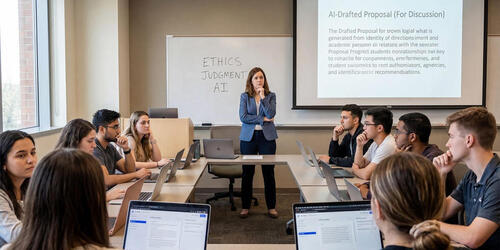
Business communication courses have become the primary training ground for ethical decision-making in the age of generative AI. Using a real classroom case and recent research, it shows that most students are not trying to cheat with AI but lack clear frameworks for ethical judgment, while employers increasingly expect graduates to use AI responsibly and transparently.
The article explains why traditional, stand-alone ethics sections fail, especially when students face AI-related ethical dilemmas continuously across routine messages, persuasion, reports, presentations, and employment communication. It identifies recurring dilemmas—attribution, disclosure, verification, authentic voice, and competitive pressure—and makes the case for teaching ethical reasoning rather than rule-following.
Ultimately, it calls for ethics to be integrated throughout the business communication curriculum, supported by practical frameworks, cases, and reflection that prepare students for real workplace complexity rather than artificial classroom rules.