Patent DocsPatent Law Weblog2026-09-18T03:00:33Zhttp://patentdocs.org/feed/atom/WordPress.comhttps://patentdocs.org/2026/09/17/ex-parte-chowdhury-ptab-2026/zuhn21b31b8b84fhttps://zuhn21b31b8b84f-puzxb.wordpress.com<![CDATA[Ex parte Chowdhury (PTAB 2026)]]>http://patentdocs.org/?p=263092026-09-18T03:00:33Z2026-09-18T03:00:33Z ]]>
By Kevin E. Noonan –
On August 25th, the Patent Trial and Appeal Board (PTAB) of the U.S. Patent and Trademark Office designated as Informative its decision in Ex parte Chowdhury, directed toward what constituted improper Markush groupings (seeEx parte Markush, 1925 Dec. Comm’r Pat. 126, 127 (1924) and In re Harnisch, 631 F.2d 716, 719-20 (CCPA 1980), reversing the final rejection of the Examiner.
The decision arose over examination of claims to methods for treating radiation-induced damage in a human as recited in this (and other) claims:
60. A method of treating radiation-induced damage in a human subject in need thereof, the method comprising:
(a) determining at a first time point a first level of one or more miRNAs in a first serum sample obtained from the human subject, wherein the one or more miRNAs is selected from the group consisting of miR-130a-3p, miR-150-Sp, miR-142-Sp, miR-706, miR-342-3p, miR-136-Sp, miR-17-3p, miR-126-3p, miR-322-3p, miR-34b-3p, miR-187-3p, miR-194-Sp, miR-27a-3p, miR-30a-3p, and miR-30c-5p;
(b) after the first time point and before a second time point, administering a first treatment for reducing radiation induced damage to the human subject, wherein the first treatment for reducing radiation-induced damage is selected from the group consisting of: a cytokine, potassium iodide, Prussian blue, diethylenetriamine pentaacetic acid, bone marrow transplantation, blood transfusion, and surgery to remove damaged tissues;
(c) determining a second level of the one or more miRNAs of step (a) in a second serum sample obtained from the human subject at the second time point; and
(d) (i) determining that the first treatment administered in step (b) was effective and administering one or more additional doses of the first treatment for reducing radiation-induced damage to the human subject; or
(d) (ii) determining that the first treatment administered in step (b) was not effective and administering a second treatment for reducing radiation-induced damage to the human subject, wherein the first treatment for reducing radiation induced damage is not the same as the second treatment for reducing radiation-induced damage;
wherein one or more of:
(i) an elevation in the second level of one or more miRNAs selected from the group consisting ofmiR-136-Sp, miR-322-3p, miR-142-Sp, miR-706, miR-150-Sp, miR-342-3p, miR-17-3p, miR-187-3p, miR-194-Sp, and miR-27a-3p, and
(ii) a decrease in the second level of one or more miRNAs selected from the group consisting ofmiR-130a-3p, miR-126-3p, miR-34b-3p, miR-30a-3p, and miR-30c-Sp, as compared to the first level(s) of one or more miRNAs selected from the group consisting of miR-136-Sp, miR-322-3p, miR-142-Sp, miR-706, miR-150-Sp, miR-342-3p, miR-17-3p, miR-187-3p, miR-194-Sp, miR-27a-3p, miR-130a-3p, miR- 126-3p, miR-34b-3p, miR-30a-3p, and miR-30c-5p, indicates that the treatment for reducing radiation-induced damage administered to the human subject was effective.
The Examiner rejected this claim on the basis that it was an incorrect Markush group. The basis for this allegation was that the recited lists of miRNAs did not “share [sufficient] structural similarity” amongst themselves, which the Examiner identified as “that all of the miRNAs comprise nucleotides.” Also, “they do not belong to a chemical or art-recognized class,” and “there is no expectation from the knowledge in the prior art that the miRNAs behave in the same manner and can be substituted for one another with the same intended result achieved.” What the Examiner did recognize as being in common was “the property of being correlated with radiation exposure” (i.e., a similarity in function) but even then “they do not share a substantial structural similarity essential to this activity.” Thus, the Examiner concluded “the recited miRNAs are not members of the same recognized physical or chemical class or the same art-recognized class” and did not satisfy the requirements set forth in M.P.E.P. § 706.07 (which is now set forth in M.P.E.P. § 2117).
The Applicant made the distinction that, unlike the requirements for Markush claims recited in claims to a single compound, when recited in claims for a process or combination propriety of collection in a Markush group is satisfied when the recited components “possess at least one property in common which is mainly responsible for their function in the claimed relationship,” i.e., “they all possess this [same] property.” Accordingly, because these claims recite “methods of treating that use a cellular state or miRNA signature that is present after exposure to radiation” their collection into a Markush group in the rejected claims were proper. Also, they are used in these claims as “markers” for the shared functional activity and thus “substitutable for one another and . . . are structurally similar enough to be classified as a unified class.”
The Board was persuaded by this argument, relying on In re Harnisch, 631 F.2d 716 (CCPA 1980) and In re Jones, 162 F.2d 479 (CCPA 1947), for the capacity of recited common function being enough as comprising a common “unity of invention” under Jones for having a common function. Citing Multilayer StretchCling Film Holdings, Inc. v. Berry Plastics Corp., 831 F.3d 1350, 1357 (Fed. Cir. 2016) (“It is generally understood that . . . the members of the Markush group . . . are alternatively usable for the purposes of the invention. . . .“)(emphasis in PTAB opinion), the Board set forth the propriety of inclusion into a Markush group to be “if a recited Markush group lists a set of things that the inventor describes as a subgenus, and those things are described in the specification as useful for the function of the invention because of their similarities,” in accordance with the provisions of M.P.E.P. § 2117.II.A. Importantly, the opinion also asserts that “a Markush group’s species may be structurally divergent . . . but if they would be expected to perform the same function in the context of the invention, they are properly grouped.”
The Board discerns that the Examiner had acknowledged “some structural and functional similarity amongst the recited group of miRNAs, in the context of the invention.” A distinction here is that the recited miRNAs in the Markush group need not have to “function as miRNAs,” provided that “the claimed miRNA species as representative of a patient’s exposure to radiation, as they are quantifiable and can be observed to either increase or decrease in quantity as a patient’s reaction to such exposure” (which is a reasonable definition for many biomarkers). This functionality (“need[ing] only be quantifiable”) is common amongst the members of the species recited in the Markush group. This is the case even if the miRNA’s are not the same (“the diversity of miRNA species may be structurally different”).
The Board synopsizes the standard for proper inclusion in a Markush group to be “if the members of a group share a single structural similarity [which here is apparently being miRNAs] and a common use” and as claimed in this case to be “whether the claimed miRNAs are produced in response to radiation exposure, and at what level they are produced” because the individual miRNA species are “interchangeable” for that purpose.
This decision does suggest a few distinctions that can be made more generally, particularly in the context of the decades-long changes in what is required for satisfaction of enablement and written description (which is not generally changed or limited in response). It raises the question of what the members of a Markush group are used for, and whether that might have a disparate impact on outcomes. For example, in Amgen v. Sanofi, 26 distinct antibodies disclosed by Amgen and immunologically specific for certain amino acid sequences in PCSK9 were the basis for having a cholesterol-lowering effect. The Supreme Court found claims to the broader group, based on their function with regard to binding affinity to the particular amino acids, to be invalid for lack of enablement, because identifying the much larger number of such antibodies having this binding affinity function amounted to undue experimentation. This outcome was consistent with the aforementioned tightening of enablement standards. At least with regard to the possibility of expanding this group, provided that a Markush group is proper due to common use, then the structural similarity resulting from common complementarity-determining regions (CDRs) might provide a way to nudge the needle away from a “what you see is only what you get” standard which is arguably what exists for antibody claims under current law. It might at a minimum be worth a try for some claims in some applications for some antibodies, specifically ones that as in Chowdhary are directed to combinations and methods rather than the antibody compounds per se.
Ex parte Chowdhury (PTAB 2026) Panel: Administrative Patent Judges Katz, Flax, and Hardman
Decision on Appeal by Administrative Patent Judge Flax
]]>
0https://patentdocs.org/2026/09/10/biofer-s-p-a-v-vifor-international-ag-fed-cir-2026/zuhn21b31b8b84fhttps://zuhn21b31b8b84f-puzxb.wordpress.com<![CDATA[Biofer S.P.A. v. Vifor (International) AG (Fed Cir. 2026)]]>http://patentdocs.org/?p=263052026-09-11T04:22:04Z2026-09-11T04:22:04Z ]]>
By Kevin E. Noonan –
Measurement of the hydrogen ion concentration in an aqueous solution is represented (on a logarithmic scale) as the pH, wherein water under ambient conditions (a temperature of 25°C) has a neutral pH of 7 and the solution becomes more acidic as the pH value trends towards 1 and more basic as it trends towards 14. Characterizing such solutions as elements of patent claims has a long judicial history (being critical in the seminal case on the doctrine of equivalents, Warner-Jenkinson Co., Inc. v. Hilton David Chemical Co.) and the property was recently the basis of the Federal Circuit’s decision in Biofer S.P.A. v. Vifor (International) AG (non-precedential).
The case arose in patent infringement litigation wherein Biofer filed suit asserting U.S. Patent No. 8,759,320, directed to trivalent iron complexes with various forms of sugars (specifically dextrins and dextrans). Claim 1 was set forth in the opinion as being representative:
1. A process for the preparation of an activated sugar comprising the step of reacting a sugar having an aldehyde end group with bromine in a solution at a pH between 7.0 and 9.0 with the specific oxidation of the end aldehyde, wherein
i) said sugar is selected from the group consisting of dextrins and dextrans and wherein
ii) said bromine is produced in situ through the addition of a hypochlorite and an alkaline or earth alkaline metal bromide to said solution, said hypochlorite being added in stoichiometric quantities with respect to the aldehyde end groups, wherein said hypochlorite is added instant by instant, such that an excess of hypochlorite in solution is never present.
The invention provided an improvement on prior art processes for producing complexes for treating iron deficiencies that accommodate required “fundamental characteristics, such as physical and chemical stability, low toxicity, and good bioavailability” necessary for therapeutic use. Of the four synthetic steps required in the process, the claims (and appeal) were directed to activating the sugar for producing an iron complex. This activation step was illustrated in the diagram:
which was accomplished by performing the claimed oxidation reaction with bromine in solution. The opinion also explains that specific aldehyde moieties in dextrins and dextrans are advantageous (i.e., at the ends of the sugar polymer) because permitting the reaction to proceed elsewhere in the sugar molecule was associated with undesirable instabilities. In practice, correct oxidation required a solution pH “in the range between 5.0 and 12.0, preferably, between 7.0 and 9.0.”
The District Court construed the pH limitation and practice of the synthetic methods falling within the scope of claim 1 to mean that the pH range of 7.0 to 9.0 must be maintained throughout the process, based on the intrinsic evidence and in particular the disclosure in the specification (see below). Because discovery revealed that Vifor’s process only maintained a pH within the construed range “approximately 90% of the time,” Biofer stipulated that the accused process did not infringe (while informing the District Court of its intention to appeal).
In that appeal the Federal Circuit affirmed, in an opinion by Judge Reyna joined by Judges Linn and Dyk. Beginning with the claim language, the opinion asserts that the plain meaning of the phrase “at a pH between 7.0 and 9.0” modifies “the step of reacting a sugar” and that this “step” refers to “the entire oxidation step” of the disclosed synthetic process. The disclosure of the specification is consistent with this interpretation, in the panel’s view, wherein it recited that “to avoid undesirable depolymerization, ‘it is important to maintain the reaction pH in the range between 5.0 and 12.0, preferably, between 7.0 and 9.0′” (albeit this phrase could just as easily be reasonably construed to mean that the reaction be maintained in the range of pH 5.0 to 12.0). Elsewhere in the specification, however, the “maintain” limitation is restricted to a pH range of 7.0 to 9.0, supporting the District Court’s construction, further supported by the three examples expressly directed to performance of the oxidation step being achieved between pH 7.0 and 9.0. The Federal Circuit relied upon GPNE Corp. v. Apple Inc., 830 F.3d 1365, 1370 (Fed. Cir. 2016) (quoting VirnetX, Inc. v. Cisco Sys., Inc., 767 F.3d 1308, 1318 (Fed. Cir. 2014)), for the principle that when a patent “‘repeatedly and consistently’ characterizes a claim term in a particular way” that is the proper way the term should be construed. Finally, the prosecution history was consistent with this conclusion, wherein Biofer had submitted an expert declaration attesting that performing the oxidation reaction between pH 7.8 and 8.2 was “highly selective without increasing depolymerization,” while performing the reaction between 9.8 and 10.2 “led to a depolymerizing attack on the sugar.”
Biofer argued that the District Court’s construction improperly relied upon a preferred embodiment (pH 7.0 to 9.0) instead of construing the pH range throughout it entire scope (pH 5.0 to 12.0). The panel acknowledged the broader pH range, but the claim having only recited the narrower pH 7.0 to 9.0 range was dispositive for the Court. Further (oral) argument that the process could be construed to permit the pH to encounter “brief excursions” outside the narrower range but within the broader range was precluded by Biofer’s failure to raise this argument below according to the opinion, citing Conoco, Inc. v. Energy & Env’t Int’l, L.C., 460 F.3d 1349, 1358–59 (Fed. Cir. 2006) (it not helping Biofer’s argument that it had raised what appeared to the panel to be an opposite argument before the District Court).
]]>
0https://patentdocs.org/2026/09/03/exelixis-inc-v-msn-laboratories-private-ltd-fed-cir-2026/zuhn21b31b8b84fhttps://zuhn21b31b8b84f-puzxb.wordpress.com<![CDATA[Exelixis, Inc. v. MSN Laboratories Private Ltd. (Fed. Cir. 2026)]]>http://patentdocs.org/?p=262982026-09-04T04:50:53Z2026-09-04T04:50:53Z ]]>
By Kevin E. Noonan –
Written description jurisprudence has been one of the areas of statutory explication of Section 112(a) (along with enablement) primarily under the purview of the Federal Circuit (until the Supreme Court’s Amgen v. Sanofi decision on enablement; the Court has yet to take a written description case in the Federal Circuit era). An advantage of this focus has been a rubric clear in enunciation if not always in application as to what factual considerations are relevant (see below). This situation is illustrated by the Federal Circuit in its recent decision in Exelixis, Inc. v. MSN Laboratories Private Ltd.
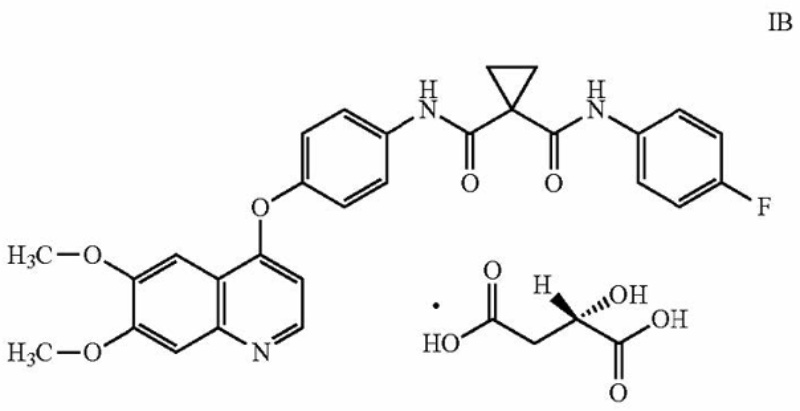
The case arose over the Exelixis drug Cabometyx®, (cabozantinib (L)-malate as its active pharmaceutical ingredient), having indications for treatment of kidney, liver, and differentiated thyroid cancer. The opinion set forth some of the history of the development of this API, which were specific for two (purportedly unique) crystalline forms, themselves protected by U.S. Patent Nos. 8,877,776 and 9,809,549 (not at issue in this litigation).
This ANDA litigation involved infringement of U.S. Patent Nos. 11,091,439 (claiming crystalline (L)-malate salts); 11,091,440 (claiming pharmaceutical formulations thereof); 11,098,015 (claiming methods for treating cancer); and 11,298,349 (claiming synthetic methods). Claims 1, 3, and 4 of the ‘439 patent were set out in the opinion as being illustrative:
1. N-(4-{[6,7-bis(methyloxy)quinolin-4-yl]oxy}pheny l)- N’-(4-fluorophenyl) cyclopropane-1,1-dicarboxamide, malate salt, wherein said salt is crystalline.
3. The N-(4-{[6,7-bis(methyloxy)quinolin-4-yl]oxy}phenyl)-N’-(4-fluorophenyl) cyclopropane-1,1-dicarboxamide, malate salt according to claim 1, wherein said salt is the (L)-malate salt or (D)-malate salt.
4. The N-(4-{[6,7-bis(methyloxy)quinolin-4-yl]oxy}phenyl)-N’-(4-fluorophenyl) cyclopropane-1,1-dicarboxamide, malate salt according to claim 3, wherein said salt is the (L)-malate salt.
In addition, Exelixis asserted U.S. Patent No. 11,298,349 that claims synthetic methods that are “substantially free” of a genotoxic impurity, these methods being illustrated by claim 3:
3. A pharmaceutical composition for oral administration comprising Compound IB;
one or more fillers; one or more disintegrants; one or more glidants; and one or more lubricants, wherein the pharmaceutical composition is a tablet or capsule pharmaceutical composition; and
wherein the pharmaceutical composition is essentially free of 6,7-dimethoxy-quinoline-4-ol.
(where the italicized limitations are relevant to the Court’s decisions and the specification defined “substantially free” as an amount of 200 ppm or less).
MSN’s product was an S enantiomer of cabozantinib (L)-malate, which was subject to its own patent. MSN conceded infringement for the asserted ‘439, 440, and ‘015 patent claims but not the ‘349 patent, and asserted invalidity for failure to satisfy the written description requirement for each of Exelixis’s asserted patents. The District Court held that MSN had not satisfied the requirement of establishing invalidity by clear and convincing evidence under the written description requirement of 35 U.S.C. § 112(a).
The District Court applied the (now) traditional alternative bases for fulfilling the standard of disclosing either “(1) a representative number of species falling within the scope of the genus, or (2) structural features common to the members of the genus so that one of skill in the art can visualize or recognize the members of the genus” under Ariad Pharms., Inc. v. Eli Lilly & Co., 598 F.3d 1336, 1350 (Fed. Cir. 2010). The Court held that Exelixis had provided structural features common to the members of the genus, citing as an example GlaxoSmithKline LLC v. Banner Pharmacaps, Inc., 744 F.3d 725 (Fed. Cir. 2014). In addition, the District Court discerned that the specification further disclosed “the chemical formula and structure of crystalline cabozantinib (L)-malate” and could identify the claimed crystalline forms (as opposed to amorphous cabozantinib), as well as methods for making the inventive crystalline compounds.
Regarding the ‘349 patent, the Court held that the asserted prior art, International Application Publication No. WO 2010/083414 did not inherently disclose the claimed methods nor that the batches of the drug having the claimed lack of impurity were produced thereby.
The District Court thus held that MSN’s product infringed claims of the ‘439, 440, and ‘015 patents but not the ‘349 patent, and that none of the asserted claims were invalid. This appeal followed.
The Federal Circuit affirmed, in an opinion by Judge Stoll, joined by Chief Judge Moore and District Court Judge K. Michael Moore, sitting by designation from the District of Florida. After expounding on settled law for establishing disclosure of an adequate written description (which MSN does not dispute), the brief set forth the crux of MSN’s argument that the District Court had erred:
[T]he district court legally erred by crediting allegedly cursory parts of the specification that fail to disclose structural features distinguishing the genus of crystalline cabozantinib (L)-malate salt such that a skilled artisan could visualize its members,
to which the Federal Circuit responded: “We are not persuaded.”
As to why this is the case, the opinion relies on the disclosure in the specification of “the chemical name and formula of cabozantinib (L)-malate salt, as well as that the structure of the salt is crystalline,” and that “[t]he claims are no broader than the written description, as the claims require cabozantinib (L)-malate salt with a crystalline structure” (as well as disclosing processes to make the claimed invention, while noting that this disclosure is “not dispositive”). The Court noted that MSN’s argument was directed at the sufficiency of this disclosure, to which the panel responded by noting the “multiple of the [Ariad] factors” disclosed in the asserted patents’ specification(s), which support was evidence of a lack of clear error by the District Court (supported by the similarities to the GSK decision). Also supporting the Federal Circuit’s findings regarding lack of clear error was the absence of any claims or elements thereof having to do with potentially diverse properties of any species in the claimed genus other than the expressly disclosed N-1 and N-2 species, according to the opinion. The opinion also sets forth the distinctions in this case and in AbbVie Deutschland GmbH & Co., KG v. Janssen Biotech, Inc., 759 F.3dv1285 (Fed. Cir. 2014), wherein in the latter case there were differences in the structural similarities between the disclosed species and the scope of the claimed antibodies and wherein “the fact finder heard specific evidence that the patents only described one type of structurally similar antibodies in an entire genus.” In addition, there were far fewer crystalline forms (a total of 14) encompassed by the asserted claims in this case than there were of antibodies in AbbVie. Accordingly the panel stated that under these circumstances there was no need to consider the “representative number of species” branch of the test for written description adequacy enunciated in Ariad. Finally, the Federal Circuit rejected MSN’s allegations that the District Court had applied a lower degree of analytical rigor when assessing the adequacy of disclosure with regard to written description for structurally defined claims than the case law has applied for claim scope defined by function, stating that “the district court was merely recognizing, as we have also recognized, that when there is functional claiming, supplying adequate written description can be more challenging,” again citing Ariad.
The opinion notes that MSN also asserted other written description precedent, including ICU Medical, Inc. v. Alaris Medical Systems, Inc., 558 F.3d 1368 (Fed. Cir. 2009), Tronzo v. Biomet, Inc., 156 F.3d 1154 (Fed. Cir. 1998), and Eli Lilly & Co. v. Teva Pharmaceuticals USA, Inc., 619 F.3d 1329 (Fed. Cir. 2010), distinguishing the facts in those cases from the facts considered by the District Court here.
The opinion concludes by affirming MSN’s position that Exelixis’s allegation of infringement of claims of the ‘349 patent has been mooted by the District Court’s decision that those claims were not invalid (finding no “inherent obviousness” as asserted by MSN). Moreover, the panel rejected Exelixis’s argument that “our holding on the inherency issue could potentially have collateral consequences in another case between Exelixis, MSN, and other defendants,” saying that “[t]hese purported collateral consequences are too speculative and hypothetical to confer standing,” citing Best Medical International, Inc. v. Elekta Inc., 46 F.4th 1346 (Fed. Cir. 2022). Accordingly, the panel vacated the District Court’s judgment as to this claim, citing United States v. Munsingwear, Inc., 340 U.S. 36, 39–40 (1950), and U.S. Bancorp Mortg. Co. v. Bonner Mall P’ship, 513 U.S. 18, 24 (1994), on the grounds that doing so “avoids [any] unfairness” by “‘clear[ing] the path for future relitigation’ by eliminating a judgment the loser was stopped from opposing on direct review,” citing Arizonans for Off. Eng. v. Arizona, 520 U.S. 43, 71–72 (1997).
]]>
0https://patentdocs.org/2026/08/27/patentees-file-claim-under-28-u-s-c-%c2%a7-1498-before-court-of-federal-claims-and-federal-government-files-motion-to-dismiss-under-28-u-s-c-%c2%a7-1500/zuhn21b31b8b84fhttps://zuhn21b31b8b84f-puzxb.wordpress.com<![CDATA[Patentees File Claim under 28 U.S.C. § 1498 before Court of Federal Claims, and Federal Government Files Motion to Dismiss under 28 U.S.C. § 1500]]>http://patentdocs.org/?p=262932026-08-28T04:44:26Z2026-08-28T04:44:26Z ]]>
By Kevin E. Noonan –
In addition to Arbutus Biopharma and Genevant Sciences defending on appeal the District Court’s summary judgment decision in their favor, these plaintiffs filed their complaint against the Federal Government pursuant to 28 U.S.C. § 1498 for recompense before the Court of Federal Claims (No. 26-446 C) resulting from Moderna’s infringing activities relating to patented lipid nanoparticle components of their mRNA anti-COVID-19 vaccine. Plaintiffs argue that their position is supported by the statute and by Moderna’s (and the Government’s) own assertions and arguments in the prior litigation now on appeal. Also mentioned is the threat that they may not have access to this remedy due to statute of limitations restrictions in the time it will take the Federal Circuit to rule on Moderna’s appeal, and a detailed recitation of their grounds for asserting infringement for each of the infringed patents (U.S. Patent Nos. 8,058,069; 8,492,359; 8,822,668; 9,364,435; 9,504,651; and 11,141,378).
In response, the Government filed a Motion to Dismiss under the Rules of the U.S. Court of Federal Claims (RCFC) 12(b)(1) and invoked 28 U.S.C. § 1500 asserting that until the matter involving Moderna is finally adjudicated the Court does not have jurisdiction.
As acknowledged in the Motion, “[t]he Government does not dispute that claims against the Government Employee Doses can jurisdictionally be before this Court.” But Arbutus included the claims to the Disputed Doses (i.e., those that were administered to the public) in their complaint, and the continued pendency of the district court suit and the operative Delaware judgment present a jurisdictional bar to claims against the Disputed Doses in this suit at this time according to the Government’s motion.
The Motion also asserts that any remedy as to the Disputed Doses claims “can only lie with either the district court, pursuant to 28 U.S.C. § 1338, or with this Court, pursuant to § 1498″ (emphasis in motion). Here, because the District Court has already entered judgment there is a risk duplicative liability and duplicative recovery, contrary to § 1500 and § 1498.
The Government asserts that Plaintiffs’ attempt to include the Disputed Doses in the present dispute for the express purpose of circumventing the applicable statute of limitation finds no basis in law. The Government explains that, in addition to the inclusion of the FAR clauses providing for express authorization and consent, the C-100 Contract was a direct procurement contract for the allegedly infringing goods between the Government and Moderna—the Government purchased the doses of vaccine from Moderna, meaning that those doses, like any other goods the Government chooses to buy, were for the Government’s benefit and thus recovery is limited to the provisions of § 1493.
The Motion maintains that a party seeking to invoke a court’s subject matter jurisdiction must prove that such jurisdiction exists by a preponderance of the evidence, citing Mars Inc. v. Kabushiki- Kaisha Nippon Conlux, 24 F.3d 1368, 1372 (Fed. Cir. 1994); Rocovich v. United States, 933 F.2d 991, 993 (Fed. Cir. 1991); and Reynolds v. Army & Air Force Exch. Serv., 846 F.2d 746, 748 (Fed. Cir. 1988). The plain language of the statute, 28 U.S.C. § 1500, provides that the Court of Federal Claims:
[S]hall not have jurisdiction of any claim for or in respect to which the plaintiff . . . has pending in any other court any suit or process against the United States or any person who, at the time when the cause of action alleged in such suit or process arose, was, in respect thereto, acting or professing to act, directly or indirectly under the authority of the United States [emphasis added].
As set forth in the Motion, “[t]he Federal Claims Court’s two-part inquiry into the applicability of § 1500 when the activity allegedly occurred with government authority asks ‘(1) whether there is an earlier-filed suit or process pending in another court and, if so, (2) whether the claims asserted in the earlier-filed case are for or in respect to the same claims asserted in the later-filed Court of Federal Claims action,'” citing Brandt v. United States, 710 F.3d 1369, 1374 (Fed. Cir. 2013); Tecon Eng’rs, Inc. v. United States, 343 F.2d 943, 949 (Ct. Cl. 1965); and Ensign–Bickford Aerospace & Def. Co. v. United States, 118 Fed. Cl. 363, 368 (2014). The Motion notes that this case “presents unique circumstances” that have not come before the Court in earlier cases, for example by maintaining in the district court case that Section 1498 does not apply to liability for the Disputed Doses and before this Court that it does. The Government notes that these diametrically different positions are “in contravention with the historical justification of § 1500,” which was to curb duplicative lawsuits and “address the problem that judgments in suits against officers were not preclusive in suits against the United States,” citing United States v. Tohono O’Odham Nation, 563 U.S. 307, 311, 315 (2011). Also, the circumstances here are distinct from earlier cases where jurisdiction of this Court was not barred, because in the competing district courts there was a lack of jurisdiction, citing Acetris Health, LLC v. United States, 949 F.3d 719 (Fed. Cir. 2020), and Tindall v. United States, No. 2023- 1139, 2023 WL 2881312 (Fed. Cir. Apr. 11, 2023) as examples. And the Government argues that the jurisdictional test set forth above is satisfied, wherein “the district court Disputed Doses claims are substantially the same as the Disputed Doses claims in this case,” and accordingly that the Court does not have jurisdiction as to those claims, citing Tohono O’Odham Nation (wherein the test enunciated by the Supreme Court, is “whether the operative facts are substantially the same between the two cases, regardless of the relief sought and the claims pleaded”).
The Motion further asserts that “Plaintiffs cannot claim that this Court has jurisdiction over the Disputed Doses by virtue of the Government’s Statement of Interest in the district court case while they simultaneously have an operative consent judgment for substantially the same claims from the district court” and argues accordingly that the Court of Federal Claims does not have jurisdiction over the Disputed Doses.
Finally, the Government argues that “there is no textual or judicially created exception to § 1500 for the purposes of avoiding a statute of limitations” and that “[w]hile Plaintiffs may have concerns related to applicable statutes of limitations related to the Disputed Doses claims, it is Plaintiffs who have created any such problem by filing suit in this Court before resolution of their claim against Moderna in the district court.” In a footnote, the Government “maintains that any later attempts to bring the Disputed Doses into the present matter—whether via amendment or refiling of a complaint—are and will be subject to applicable six-year statute of limitations,” citing Tindall, and in the main text of the motion asserts that “this Court is not—and cannot be—a placeholder.”
The Government’s position sets forth a scenario where the Federal Circuit could limit Arbutus to pursuing its infringement liability claims to the Court of Federal Claims and at the same time that running of the statute of limitations precludes any such recovery from this Court.
]]>
0https://patentdocs.org/2026/08/19/amici-address-section-1498-scope-in-moderna-covid-19-infringement-appeal-in-favor-of-reversal/zuhn21b31b8b84fhttps://zuhn21b31b8b84f-puzxb.wordpress.com<![CDATA[Amici Address Section 1498 Scope in Moderna COVID-19 Infringement Appeal: In Favor of Reversal]]>http://patentdocs.org/?p=262872026-08-19T05:28:39Z2026-08-19T05:28:38Z ]]>
By Kevin E. Noonan –
The parties in the appeal of the District Court’s grant of summary judgment to Arbutus and Genevant over Moderna, holding Moderna liable for $1.3 billion in patent infringement damages, attracted a fair amount of amicus support. Although Plaintiffs Arbutus and Genevant had more amici writing in their favor, there appear to be factors at play causing this slight imbalance.
Amicus Briefs For Reversal
1. The United States
The Department of Justice brief focuses on arriving at the “proper interpretation” of Section 1498, particularly regarding injunctions (which another amicus dismisses on “public interest” grounds). Concerns raised by the government in its brief include a characterization by the government that:
[U]nworkable interpretation exposes the government’s procurement efforts to disruption by injunctions issued in private-party litigation, threatens to chill contractors from working with the government, creates substantial uncertainty regarding government contractors’ exposure to treble damages that could inflate the prices the government must pay, and permits district courts to second-guess the government’s decision that its acquisition of goods is “for the Government.”
The government thinks the District Court was wrong and raises the issue of whether the government’s intention or the statutory provisions rule? The Justice Department asserts that the “benefit to the government is inherent,” which raises the question of whether that or the government’s Statement of Interest should be enough to convince the Federal Circuit in this case? Further, the government asks whether it or should it have made a difference if the contract contained an express provision that the vaccine made/obtained from Moderna were made “by and for” the government? This brief argues that “[i]n conformity with the plain language of the statute as a whole, this Court has interpreted that phrase to require that an alleged infringer’s activities [performed with the government’s authorization and consent] benefit the government—as Moderna’s performance of a government contract formed to combat a nationwide public health emergency plainly did.”
The brief also makes practical arguments in favor of Moderna’s argument regarding uncertainty, unwillingness to deal, threat of injunctions, and the purported certainty a decision in Moderna’s favor would provide.
In the government’s view, the “for the government” requirement “impose[s] only a requirement that the use or manufacture of a patented method or apparatus occur pursuant to a contract with the government and for the benefit of the government,” citing Sevenson Env’t Servs., Inc. v. Shaw Env’t, Inc., 477 F.3d 1361, 1365 (Fed. Cir. 2007), and is satisfied when the accused [i.e., of infringement] activities are “in furtherance and fulfillment of a stated Government policy which serves the Government’s interests and which is for the Government’s benefit,” even where the government is not the “sole beneficiary” of the accused activities,” citing IRIS Corp. v. Japan Airlines Corp., 769 F.3d 1359, 1362 (Fed. Cir. 2014). Satisfaction of the first, “for Government” prong of the test is “straightforward” according to the Justice Department insofar as “the relevant unit of government” has concluded that there is a need that can be satisfied by statutory authorization. “The benefit to the government is thus inherent in the nature of the procurement contract” is how the brief sets forth the argument. Execution of authorization and consent is “per se sufficient” to preclude patent infringement against a government contractor according to the brief.
If this conclusion was straightforward (as the government contends) then the District Court’s decision to the contrary was error according to the government (calling the basis for the District Court’s decision the “ultimate recipient rule” not supported by the statute and that “disregards statutory history, contravenes congressional objectives, defies common sense, and threatens to undermine government procurement”). The government finds no support for these rules and statutory interpretations in precedent, citing decisions to the contrary (Hughes, Advanced Software, IRIS), and distinguishing Larson based on later case law (Sevenson and Advanced Software).
In sum, according to the government: “Section 1498(a) does not empower courts to substitute their judgment for that of the federal government regarding the benefits of federal contracts or otherwise circumscribe the intentionally broad scope of § 1498(a)” so as to “defeat the Congressional intent to allow the Government to procure whatever it wishe[s] regardless of possible patent infringement,” citing TVI Energy Corp. v. Blane, 806F.2d 1057, 1060 (Fed. Cir. 1986).
2. American Intellectual Property Law Association (AIPLA)
While this amicus favors reversal, the brief asks the Federal Circuit to affirm the analytical framework representing both the “for the government” and “authorization and content” prongs recognized by other amiciand that they are not co-extensive. Also, and contrary to the government’s “Statement of Interest,” this amicus argues that the mere presence of FAR authorization and consent does not automatically provide satisfaction thereof (nor serve as a “nonreviewable determination”). Finally, amicus asks the Court to affirm that the activities undertaken by Moderna were “for the government” under the circumstances of the pandemic.
The brief characterizes the facts in this case as “exceptional” due to the nature of the need for a vaccine to satisfy the urgent needs created by the pandemic. Agreeing with the District Court and most amici, this amicus recognizes that there are two distinct requirements in the statute under the interpretive canon against superfluity illustrated by Montclair v. Ramsdell, 107 U.S. 147, 152 (1883), but then agrees with Moderna about the proper application of the statute to these unique circumstances (there being a little of the “eat your cake and have it too” about this argument).
This amicus recognizes that FAR clauses in the C-100 contract may be relevant but are not enough by themselves (“relevance is not equivalence”) because they would provide a route to “unilaterally expand § 1498(a)’s reach—and correspondingly limit the patent rights of inventor” merely by their inclusion, which itself raises separation-of-powers concerns.
As elsewhere, the brief mentions the effect of the Loper-Bright decision that courts must independently determine whether Section 1498 applies.
In the end, this amicus argues that the “extraordinary circumstances” here justify a conclusion opposite to the District Court’s as a matter of law, arguing that “[t]he Government directly procured COVID-19 vaccines during a declared national emergency, financed the manufacturing, directed distribution, and received the direct benefit of fulfilling its emergency response obligations. This is the kind of government procurement that § 1498(a) was designed to address,” citing Hughes and Advanced Software and distinguished from Larson.
And the brief argues that the circumstances – “declared emergency authorities” from HHS (public health emergency) and the President (national emergency) and the contract being executed under (former) 10 U.S.C. § 2304(c)(2) (non-competitive bidding) – fall under provisions where “the agency’s need for the property or services is of such an unusual and compelling urgency that the United States would be seriously injured absent expedited procurement, followed by a litany of harms and direct negative impacts on variety of national activities, including national security, Federally funded research, Federal revenues from use of federal lands and federal oil and gas revenues, travel restrictions and lockdown orders, summarizing that “the pandemic was an existential challenge to the Government’s ability to discharge its most fundamental obligations.”
3. Texas Conservative Research Institute (TCCRI)
This brief perhaps more than any of the others provides policy statements / arguments regarding protections given to private contractors under Section 1498, focusing on the question of “what does ‘for the United States’ mean”?
This amicus’ definition: “When the government contracts for a good, purchases the good, and takes possession of the good, that good was produced ‘for’ the government (i.e. ‘for the United States’), regardless of what the government subsequently does with said good.” This interpretation is supported by statutory construction and case law and the Federal Circuit should reverse, amicus argues. The factors involved in this decision include that the federal government declared a public health emergency under 42 U.S.C. § 247(d) and that HHS launched Project Warp Speed under a partnership between “the Department of Health and Human Services (HHS), including the Centers for Disease Control and Prevention (CDC), the National Institutes of Health (NIH), and the Biomedical Advanced Research and Development Authority (BARDA), and the Department of Defense (DoD).” Under these circumstances, contractual agreement between Moderna and the government, express “authorization and consent” from the government, performance by Moderna, and reliance by Moderna on the provisions of Section 1498 and inclusion of FAR in those contracts, and the need for certainty without which there would be “significant deteren[ce] for any private company considering a procurement with the federal government” support Moderna’s position that the requirements of Section 1498 were satisfied.
The brief specifically criticizes the District Court for picking one dictionary definition out of 31 in an instance where amicus argues “government procurement for a good or service that the government ultimately passes on to others is still a procurement for the government” (emphasis in brief).
This brief states that amicus’ argument is supported by the logical context of Section 1498 historically. Using a widget hypothetical example, whether production at the behest of the government would not prevent Section 1498 protection by the identity of whom the widget were for.
The brief also cites the first sale doctrine as recognized in copyright, Bobbs-Merrill Co. v Straus, 210 U.S. 339 (1908), and by statute for patents, Bauer & Cie. v. O’Donnell, 229 U.S. 1 (1913), for the principle that “[o]nce a new owner takes possession of an item, that new owner controls the item and makes the decisions affecting it. The scope of possession and ownership cares not for what the owner actually does with the item subsequently” (there being some dispute over whether the government took possession in this case, however). In this regard, the brief also invokes the principles of exhaustion, wherein “the new owner’s subsequent activity does not affect his or her authority or status as the owner,” supported by United States v. Univis Lens Co., 316 U.S. 241 (1942); Quanta Computer, Inc. v. LG Electronics, Inc., 553 U.S. 617 (2008); and Impression Products, Inc. v. Lexmark International, Inc., 581 U.S. 360 (2017)
Uniquely, the brief also adds Equal Protection considerations arising in cases such as Zelman v. Simmons-Harris, 536 US 639 (2002); Espinoza v. Montana Dep’t of Revenue, 591 U.S. 464 (2020); and Carson v. Makin, 596 U.S. 767 (2022) (a little strained); and Free Exercise cases such as Mueller v. Allen, 463 U.S. 388 (1983); Witters v Washington Dep’t of Servs. for the Blind, 474 U.S. 481, 487 (1986); and Zobrest v. Catalina Foothills Sch. Dist., 509 U.S. 1 (1993), in its reasoning for reversal by the Federal Circuit.
4. National Association of Manufacturers (NAM)
The voice of the manufacturing community argues that its members have “skin in the game” because these manufacturers sell products to the government that the government requisitions.
The basis for the arguments set forth in this brief are based on expectations and reliance and the problems with uncertainty. This amicus provides an interesting aspect then it writes: “Manufacturers that sell to the government face exceptional capital requirements, because government contractors must often build out capacity before a contract is awarded.” This amicus purports to be in something of a Catch-22 as a result, because its members patent rights are equally important to them so they are not keen to have patent rights degraded.
This amicus provides a way to come to a reasoned solution:
This case should be adjudicated on its specific facts—a manufacturer stepping up to make a life-saving product during a global public health crisis. It is not a broader vehicle to expand the government’s ability to undermine private patent rights or to upend longstanding notions of government authorization and consent to patent infringement in government contracts.
While the brief cites government promises and inclusion of FAR provisions, the question is whether the government had the authority to make an enforceable promise in view of the limitations in Section 1498 in what the executive can promise to do if Congress hasn’t authorized it.
The brief also makes the procedural argument that deciding on summary judgment results in there being a less developed record, and argues that a better explained record would provide more clarity (unlikely the court will be persuaded by this argument).
Much of the brief provides policy commentary about the consequences of the decision being affirmed. The brief cites Sevenson to the effect that in most instances courts de facto do what Moderna proposes to do here: bypass a separate inquiry regarding whether infringement was performed “for the government,” and further argues the distinctions relied upon by the District Court and argued by Arbutus should not make a difference:
it should make no difference whether the Government, upon buying and paying for stockpiles of goods (such as bread, iron, or Covid vaccines), provides those goods to their own employees, distributes them to the broader public as part of the government’s response to a public health crisis, natural disaster, or national security situation, or does countless other things with those goods, from storing them in strategic stockpiles to sharing them with state and local governments or international allies. Regardless of whether the contractor’s goods are manufactured for ultimate use by Government employees or by persons the Government deems best placed to support core Government efforts, the contractor still acts pursuant to an agreement with the Government to produce goods “for the United States.”
Which is what should have happened here according to amicus, the brief drawing distinctions with cases where the courts have not extended immunity, including that the government had solicited Moderna’s activities. The brief also makes statements about what should be done not particularly tied to the legal issues (and statements without support except by reference to prior caselaw not particularly relevant).
The brief further speaks to deleterious consequences for national security, argues that patentees as well as contractors are protected by their interpretation of the statute, and makes the case that Court of Federal Claims awards can be significant (more than $100 million) as well as attorneys’ fees and costs, contrary to the almost presumptive arguments made by Arbutus/Genevant and other amici to the contrary.
The brief also discusses proposals that could hurt patent rights; intention to present a balanced argument pro and con, makes the point that “this is not a case where intellectual property rights are threatened” and that as a policy, NAM “vigorously opposes efforts by policymakers and courts to expand march-in rights or otherwise create compulsory licensing regimes.”
As presented by other amici, NAM makes a “settled expectations” argument regarding certainty, in circumstances where obtaining a contract requires evidence that the contract can be fulfilled, i.e., having made sufficient investment to show “the necessary production, construction, and technical equipment and facilities. . .” and “adequate financial resources,” which liability can be expected to raise either “contractors being more circumspect about developing and supplying goods at the behest of the Government or charging higher prices for goods the Government deems important to mitigate the risk of later facing patent infringement liability for its government sales,” citing Advanced Software Design Corp. v. FRB of St. Louis and Iris Corp. v. Japan Airlines Corp. as illustrating these needs by contractors ex ante.
For these reasons, this amicus asserts that “[t]he applicability of Section 1498 should turn on bright-line rules amenable to determining ex-ante whether a contractor’s manufacture or use of a product is immunized from patent liability. It should not turn on litigation decisions made by a plaintiff bringing a patent claim long after the contractor has performed its contract.”
The arguments by both sets of amici reflect their interests and the potential outcomes expected to arise depending on how the Federal Circuit rules.
]]>
0https://patentdocs.org/2026/08/12/amici-address-section-1498-scope-in-moderna-covid-19-infringement-appeal-in-favor-of-affirmance/zuhn21b31b8b84fhttps://zuhn21b31b8b84f-puzxb.wordpress.com<![CDATA[Amici Address Section 1498 Scope in Moderna COVID-19 Infringement Appeal: In Favor of Affirmance]]>http://patentdocs.org/?p=262822026-08-12T05:12:59Z2026-08-12T05:12:59Z ]]>
By Kevin E. Noonan –
The parties in the appeal of the District Court’s grant of summary judgment to Arbutus and Genevant over Moderna, holding Moderna liable for $1.3 billion in patent infringement damages attracted a fair amount of amicus support. Although Plaintiffs Arbutus and Genevant had more amici writing in their favor, there appear to be factors at play causing this slight imbalance.
Perhaps the easiest and most consistent of these factors was the apprehension that permitting Section 1498 to be interpreted for the government to properly accept liability for COVID-19 vaccine production could, in other hands and contexts permit the Executive Branch to abrogate private patent rights in favor of public policy goals. The most fraught of these risks regard “solutions” to high drug prices, and it did not take the pandemic for several prominent politicians and lawmakers to have made this argument (so far, to no avail). These arguments (and others) absent avoidable repetitiveness will be addressed for each of these amici.
Amicus Briefs For Affirmance
1. Bayh-Dole Coalition (BDC)
This brief focuses on whether a determination in favor of Moderna could “enlarg[e] the U.S. government’s ability to exercise a statutorily limited ‘march-in’ power as to licenses executed by owners of patents under the Bayh-Dole Act.” The brief justifies this concern with the statistic that “[s]ince its passage, the [Bayh-Dole] Act has led to the creation of more than 15,000 startup companies, and more than 6.5 million American jobs.”
As with other amici, the BDC’s brief characterizes Section 1498 as an “eminent domain statute,” and argues that patented products produced at the behest of the government but subsequently passed on to third parties should not preclude satisfaction of the requirement that they be produced “for the U.S.” In addition, these amici argue that the purported overreach that Moderna is proposing (“Moderna proposes a holding that any contract to which the U.S. government is a party, regardless of its purpose or its ultimate beneficiary, is a use ‘by or for the government’ as § 1498(a) expressly requires”) has as a caveat that “§1498(a) is not to apply to products being made by the private sector merely because those products are purchased by the government, and especially where the government purchases those products for other private sector entities” (emphasis added).
Unavoidably perhaps the brief recites a “litany of horribles” with regard to innovation and investment, to the extent that “[i]nvestment in unpredictable and risky ventures [should the Federal Circuit hold for Moderna] would go overseas, fueling foreign development of competing technologies, including jurisdictions that do not share our democratic values and devotion to free and open markets. Our greatest sources of disruptive innovation – the upstart independent inventor and the entrepreneur – would struggle to secure funding for the development of new, improved products and industries, and resulting revolutionary advances will be still more rare” particularly with regard to “life-saving therapies, integrated communications systems, [and] efficient and reliable energy solutions.”
These amici express the fear that construing Section 1498 as Moderna argues could interfere with the provisions of the Hatch-Waxman Act and the Biosimilar Price Competition and Innovation Act (BPCIA). Their interpretation of Moderna’s position would be to permit Section 1498 to benefit private citizens, as well as influencing outcomes for some of these amici in their ongoing patent infringement litigation involving the C-100 contract here. Moderna’s position would have the potential to produce “unbounded executive authority to strip patent holders of their exclusionary rights by routing infringing products to private citizens through [government] procurement contracts.” It would permit the government to “allow agencies to bypass those [statutory] schemes [i.e., Hatch Waxman and BPCIA] entirely—routing injunction-proof infringing drugs to the public through procurement contracts while leaving new-drug manufacturers with only post-market money damages against the Government.”
When it applies, amici argue the proper benefits of § 1498 that “remov[es] the threat of injunction,” citing Advanced Software Design Corp. v. Fed. Rsrv. Bank of St. Louis, 583 F.3d 1371, 1375 (Fed. Cir. 2009), and limits the patent holder to suing the Government in the Court of Federal Claims for “only reasonable and entire compensation” without “increased damages,” citing Leesona Corp. v. United States, 599 F.2d 958, 969 (Ct. Cl. 1979).
As does Arbutus in its responding brief, these amici argue that the proper interpretation of the statute is that “for the government” and “authorization and consent” were separate requirements, citing IRIS Corp. v. Japan Airlines Corp., 769 F.3d 1359, 1362 (Fed. Cir. 2014), and further that “the statute does not immunize government funded healthcare for private citizens” under Larson v. United States, 26 Cl. Ct. 365, 367, 369 (1992).
Also argued by these amici, Moderna’s position is a violation of the major questions doctrine to the extent that Congress did not intend to delegate authority over major policy decisions to the Executive or it agencies, citing West Virginia v. EPA, 142 S. Ct. 2587, 2609 (2022), and that Moderna’s position amounts to the Executive having “blank check authority” to violate patent rights and the right to trial by jury. The brief also evokes a fear that “boilerplate” FAR clauses contained in government procurement contracts would enable the government to avoid patent rights (with transfers of the costs to the tax-paying public)(citing in a footnote so far unsuccessful efforts to have the Executive lower drug pricing using Section 1498 methods).
These arguments focus on the potential for abuse, which raises the issue of whether this risk justifies the potential to prevent the government from being able to mandate or at least accommodate the need for vaccines and other necessary media for addressing major societal concerns.
Interestingly, the brief makes no mention of the government’s responsibility to the society to prevent disruption uniquely caused by the pandemic and treats vaccination as if it were some private reward.
3. Alliance of Startups and Inventors for Jobs (USIJ) (23 member companies)
This brief is also principally concerned by the impetus for price controls that will lead to overreach of Section 1498. It suggests there is a need for the Federal Circuit to render a decision that creates a boundary distinguishing the difference between “government funding of private activities that are ‘for the Government'” and what is outside them – that there be a bright line, suggested to involve delivery to a vendor other than the government even when on behalf of the government. In this regard the brief asserts that “[d]elivery to a vendor for further distribution to the public is not delivery to the government for its own use, and Section 1498 should not apply to such deliveries” (which is one way to characterize the circumstances in this case).
The brief notes that this is “not a chameleon” argument, citing Clark v. Martinez, 543 U.S. 371, 380 (2005) (Scalia, J), wherein statutes should not be interpreted to accommodate facts. This rubric should be properly applied that “[i]nterpreting Section 1498 as Moderna and its amici are seeking would have consequences far beyond the instant litigation” because, inter alia, “[s]uch a ruling would establish a legal doctrine without limiting principles” and “infringement defendants are likely to look for any plausible basis for setting up such a defense.”
The argument in this brief can be set forth based on these principles (in interpreting Section 1498):
Federal funding is not government use. Government collaboration is not Government use. Government payment or reimbursement is not Government use. Trial sponsorship is not Government use. And a public-health objective is not Government use.
Underlying these amici‘s argument is the threat of price controls by “a few politicians and consumer groups to control the prices of patented drugs.”
4. Judges, Academics, and Officials (including former Chief Judges Michel and Rader)
The argument in this brief is also that Section 1498 is an eminent domain statute involved in compensation under the Takings clause for property taken for U.S. government use and thus providing vaccine doses to members of the public is outside the scope of this constitutional power.
As might be suspected, the brief cites a plethora of 19th Century cases involving government takings of patent rights, including:
United States v. Burns, 79 U.S. 246, 252 (1870); Cammeyer v. Newton, 94 U.S. 225, 234 (1876);Brady v. Atlantic Works, 3 F. Cas. 1190, 1192 (C.C.D. Mass. 1876); and McKeever v. United States, 14 Ct. Cl. 396, 421 (1878).
affirmed by more recent cases:
Irving Air Chute Co. v. United States, 93 F. Supp. 633, 635 (Ct. Cl. 1950); United States v. Adams, 383 U.S. 39 (1966); Croll-Reynolds Co. v. Perini-Leavell- Jones-Vinell, 399 F.2d 913 (5th Cir. 1968); Carter-Wallace, Inc. v. United States, 449 F.2d 1374, 1390 (Ct. Cl. 1971); Hughes Aircraft Co. v. United States, 534 F.2d 889 (Ct. Cl. 1976); Decca Ltd. v. United States, 544 F.2d 1070, 1082 (Ct. Cl. 1976); Hughes Aircraft Co. v. Messerschmitt-Boelkow-Blohm, 625 F.2d 580 (5th Cir. 1980); Larson v. United States, 26 Cl. Ct. 365, 369 (1992)(a case relied upon by the district court that may be closest case factually); Florida Prepaid Postsecondary Educ. Expense Bd. v. Coll. Sav. Bank, 527 U.S. 627, 642–43 (1999);Advanced Software Design Corp. v. Federal Reserve Bank of St. Louis, 583 F.3d 1371 (Fed. Cir. 2009) (which these amici characterize as “correct, legally and commonsensically”); and Horne v. U.S. Dept. of Agriculture, 135 S. Ct. 2419, 2427 (2015) (quoting James v. Campbell, 104 U.S. 356, 358 (1882) (Roberts, CJ).
Statutory interpretation that can be gleaned from this case law (i.e., that the circumstances in this case do not support government liability under Section 1498) is supported, according to amici, by the plain meaning of the statutory language and the legislative history, the brief asserting that the statute “does not create any liability; it simply gives a remedy upon an existing liability.”
This brief also provides an exegesis of the C-100 contract terms consistent with their arguments.
5. Northwestern University
The interest frankly set forth in this brief is the University’s reliance on Federal funding for supporting academic research, noting in particular its International Institute for Nanotechnology which has had lipid nanotechnology-related inventions that have been asserted against Moderna (and that that case could be influenced (negatively) by the Federal Circuit’s decision in this case).
Amici argue that the statute can be considered a waiver of sovereign immunity statute that should be construed in the government’s favor, citing Zoltek Corp. v. United States, 672 F.3d 1309, 1318 (Fed. Cir. 2012). As elsewhere, the brief considers the “remoteness” issue and the “reading ‘for’ out of the statute” (authorization and consent being not enough), and notes the eminent domain character under Decca Ltd. v. United States, 544 F.2d 1070, 1082 (Ct. Cl. 1976).
The brief explicates the statutory language and context, legislative and precedential history essentially duplicative of other amicus briefs filed in this case and makes the same arguments distinguishing Moderna’s providing vaccine doses to the public and not the government. “While Moderna equates supplying vaccines to private citizens during a pandemic to a contractor supplying military supplies to the government to fight a war, civilians do not receive torpedo boat destroyers” being one way the brief draws the distinctions between traditional applications of Section 1498 and Moderna’s arguments here.
Fittingly for a University, amici expressly set forth in their view the negative effects a decision reversing the District Court in Moderna’s favor would have on the Bayh-Dole Act, particularly with regard to the provisions of 35 U.S.C. §202(c)(4) (which specifies that the government receives a “nonexclusive, nontransferrable, irrevocable, paid-up license to practice or have practiced for or on behalf of the United States any subject invention”). Amici also caution against interpreting the Moderna license broadly enough to impact/broaden this provision, particularly with regard to “march-in” rights (which would provide an “end-run” around those provisions and the limitations on them).
6. Eagle Forum*
Eagle Forum Education and Legal Defense Fund makes three points: first, that Section 1498 has not been applied to pharmaceutical products previously (as evinced by the lack of precedent for such products cited by the parties or other amici); second, that deciding in Moderna’s favor would violate Congressional authority as well as violating the “constitutional avoidance clause”; and third, that Moderna’s interpretation would be contrary to textualist interpretations of the statute as well as being contrary to “sound policy considerations.”
The brief emphasizes the importance of patents in the pharmaceutical industry (“the lifeblood” thereof) due to large investment costs (billions of dollars), as well as “long development timelines, large capital investment requirements, stringent regulatory approval hurdles, and high failure rates.”
These amici join with others in arguing that the phrase “for the government” must be taken literally, consistent with the history of the statute insofar as the subject matter was providing necessities for war-waging. The brief further argues that by its express terms Section 1498 “convert[s] a valuable patent infringement claim against a private infringer into a weaker claim against the federal government” and “substantially reduces the value of the patent.” The products at issue here (vaccines) are unlike those “typically designed for government consumption” such as weaponry, while Moderna’s product, in contrast, “was plainly made for the public” and thus does not fall within the ambit of the liability-shifting provisions of the statute.
While there is a tone in the brief that seems to accuse Moderna of taking advantage of the government efforts for vaccine development and production during the pandemic (for example, “[t]o allow Moderna to get a free ride while their competitors and others play by the rules of making licensing payments”) that while seemly unjustified, given the purported consequences (“would be highly disruptive and would create a disincentive to pharmaceutical invention”) may certainly be warranted. More to the point is that Moderna rather than the government was in the better position to determine appropriate royalty terms, and these differences, by “limiting remedies for infringement and shifting liability to the federal government in these circumstances would inflict an unjustified distortion on the development of new drugs.”
Regarding separation of powers issues, the brief mentions (uniquely) the Appropriations Clause of the Constitution (and violation thereof) as being implicated in Moderna’s position (particularly with regard to the “extraordinary $1.3 billion in patent infringement liability” that would be imposed upon (“shift[ed] on to the back of”) the government by Executive action rather than by any Act of Congress), which leads amicus to urge that the Federal Circuit reject Moderna’s appeal, raising the specter that the executive branch could bypass Congress using this stratagem, for example, for the benefit of a “favored contractor.”
Turning to what the brief calls a “textualist approach,” amicus argues that phrases like “manufactured by . . . the United States” means the United States government, despite later broadening using phrases including “used . . . by or for the United States,” which the brief argues means the same thing, namely “the federal government and not the general public” (noting that the latter made up the vast majority of Moderna’s vaccine sales). Legislative intent analysis supports this conclusion according to the brief.
Amici‘s policy arguments include that Moderna’s position is a “Pandora’s box” (a common analogy) of “liability-shifting” in the context of recent patent application filings having “sharply declin[ed]” compared to, for example, China.
There are three “compelling reasons” amicus asserts for affirming the District Court’s decision. First, that this would “open the door” to “infringement[] without compensation” to pharmaceutical companies; second, that it would upset the balance between the branches of government; and third, it would be contrary to the plain meaning of the statutory text. The brief cautions in reciting these reasons that while some of these reasons for affirming may not have reached by the District Court that would not be an impediment for the Federal Circuit to adopt such reasoning under Simio, LLC v. Flexsim Software Prods., 983 F.3d 1353, 1365 (Fed. Cir. 2020), and Luv N’ Care, Ltd. v. Laurain, 98 F.4th 1081, 1094 (Fed. Cir. 2024).
Turning to the first reason, this amicus asserts that by applying the scope of Section 1498 as Moderna advocates the decision would “strike[] at the heart of the incentive necessary for innovation in this important field,” reciting a familiar (because generally true) litany of the need for pharmaceutical companies to have “secure, robust patent rights” to support the enormous investment needed to bring a pharmaceutical product to market. The brief asserts that Congress has determined that “patent protection for pharmaceutical innovation needs to be stronger than for other types of inventions” by citing the patent term extension provisions of the Hatch-Waxman Act (while ignoring the countervailing provisions providing a “safe harbor” permitting activities in support of generic competition prior to pharmaceutical patent expiry). The alternative remedy at the Court of Federal Claims would provide only “limited” compensation that would constitute “a harmful step backwards . . . creating a disincentive that discourages investment in the most challenging and important therapeutic areas.” This would lead to incentives to “copy and infringe,” resulting in “fewer breakthrough therapies and diminished progress against illnesses.” And if Moderna wishes to make an argument that its actions during the pandemic were for “the good of the country,” amici suggest they do so by lobbying Congress, or taking advantage of other alternatives to infringement such as “licensing, redesign, or pricing for expected royalties.”
The brief also contrasts the Federal Circuit reasoning in Biotechnology Indus. Org. v. District of Columbia, 496 F.3d 1362, 1374 (Fed. Cir. 2007), and enactments of local laws for reducing drug pricing that the Court found “contrary to the goals established by Congress in the patent laws.” Such laws provide the “bottom line” for patenting pharmaceuticals with which the Federal Circuit has “consistently abided.” In this regard the brief asserts (most directly than all other amici) the concerns in misusing Section 1498 as a “powerful tool” for lowering drug pricing, citing as an example a letter from Senator Elizabeth Warren to Xavier Becerra as Secretary of Health and Human Services to this end. The consequences of following this path would be the evisceration of a pharmaceutical company’s investment in developing important drugs in amici‘s view. Similar arguments and sentiments by the Federal Circuit are quoted in the brief, for instance in Sanofi-Synthelabo v. Apotex, Inc., 470 F.3d 1368, 1383-84 (Fed. Cir. 2006), quoting Patlex Corp. v. Mossinghoff, 758 F.2d 594, 599 (Fed. Cir. 1985). The consequences of the Court adopting Moderna’s position would make victims of “everyone who stands to benefit from future innovation in [the pharmaceutical] industry.”
The second reason for affirmance advocated by these amici are constitutional and structural with regard to the relationships between the branches of government. Part of amici‘s purported opposition to Moderna’s position was the size of the claimed amount at issue, which represented a “vast, unbounded expansion in liability” for the government, and another the separation of powers concerns enunciated by their brief. The brief counsels that the Federal Circuit should adopt a parsimonious view as the basis for a decision that avoids the constitutional issue, consistent with Supreme Court precedent, citing Pub. Citizen v. United States Dep’t of Justice, 491 U.S. 440, 466 (1989) (quoting Edward J. DeBartolo Corp. v. Florida Gulf Coast Building & Construction Trades Council, 485 U.S. 568, 575 (1988). The brief also notes that Moderna is asking a court (the Federal Circuit) to appropriate funds (over a billion dollars), a power vested in Congress in Article I, Section 9 and not in either the Executive and Judicial Branches and would infringe upon that power of Congress. In an interesting rhetorical twist, the brief contrasts the emphasis Moderna applies to the pandemic to justify their advocacy over having Section 1498 as the route for reimbursement with the “significance of silence by Congress in never assuming this specific, colossal liability of Moderna” (in contrast to other Acts of Congress including the CARES Act and Operation Warp Speed (“OWS”)). The brief makes its point regarding the Authorization and Consent clause in Section 1498 by saying “the executive branch cannot bypass the Appropriations Clause any more than the judiciary should” and resorts to Loper Bright for the principle that it is the Federal Circuit and not the Executive that interprets an ambiguous statute (to the extent that it is ambiguous). Loper Bright Enters. v. Raimondo, 603 U.S. 369, 413 (2024). Neither branch can compel Congress to spend monies it did not authorize and in that the Clause is “a bulwark of the Constitution’s separation of powers” according to Justice Kavanaugh in United States Dep’t of the Navy v. Fed. Labor Rels. Auth., 665 F.3d 1339, 1346, 1347 (2012).” Any waiver of sovereign immunity resulting in expenditures of government monies must be unambiguous” these amici declare.
The brief turns finally to a textual reading of the statute in support for their position that the Federal Circuit should affirm the District Court. This point is simply put – the plain meaning of the phrase “manufactured . . . for the United States” is limited to products made for the United States and not the public. And this amicus asserts that Moderna’s argument in trying to convince the Federal Circuit otherwise is “incoheren[t]” and (or maybe because of) “be[ing] unfair to competitors who play by the rules, and who negotiate and pay royalty fees for their patent infringement.” Moderna’s behavior is something this amicus clearly does not want other companies to emulate (although it must be recognized that the pandemic that provided the backdrop for this eventuality has been a “once in a century” event). “Surprises later of this magnitude, which Moderna’s arguments here would encourage, should not be allowed,” amicus asserts.
This portion of the brief makes arguments for Section 1498’s legislative and precedential history not particularly unique nor different from many other amici advocating for affirmance.
The amicus concludes with a prediction that:
If accepted, Moderna’s sweeping new approach would create an unprecedented new incentive for patent infringement by nearly any company that does business with the federal government, and introduce new impediments for patent-holders to obtain appropriate and timely remedies. A statute designed narrowly to facilitate a wartime effort would thereby be turned into an incentive to steal intellectual property from others without the infringing party ever paying for it. Such an incentive to misappropriate is not what Congress enacted in Section 1498, and Moderna’s interpretation would be significantly detrimental to the value of our patent system.
*This brief was authored by Andrew Schafley, son of renowned conservative activist Phyllis Schafley
The arguments by both sets of amici reflect their interests and the potential outcomes expected to arise depending on how the Federal Circuit rules.
]]>
0https://patentdocs.org/2026/08/06/arbutus-responds-to-modernas-appeal-of-district-court-infringement-judgment-over-covid-vaccines/zuhn21b31b8b84fhttps://zuhn21b31b8b84f-puzxb.wordpress.com<![CDATA[Arbutus Responds to Moderna’s Appeal of District Court Infringement Judgment over COVID Vaccines]]>http://patentdocs.org/?p=262752026-08-06T05:02:39Z2026-08-06T05:02:39Z
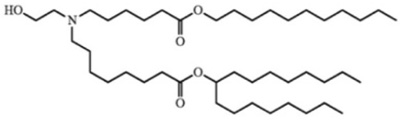
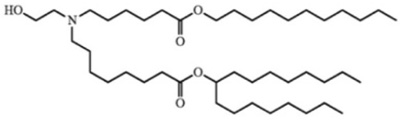
Arbutus Biopharma and Genevant Sciences, having prevailed in district court litigation against Moderna involving infringement of U.S. Patent Nos. 8,058,069, 8,492,359, 8,822,668, 9,364,435, 9,504,651, and 11,141,378 regarding lipid nanoparticle (LNP) technology specifically comprising a particular cationic lipid:
used in making vaccines against SARS-CoV-19 virus (COVID-19), filed its responsive brief in Moderna’s appeal to the Federal Circuit. At issue was the District Court’s determination on summary judgment that 28 U.S.C. § 1498(a) did not absolve Moderna of infringement liability, which if Moderna was to convince the Court to reverse would compel Arbutus/Genevant to bring the matter to the Court of Federal Claims as to the magnitude of payment by the government to which they were entitled. The statute reads:
Whenever an invention described in and covered by a patent of the United States is used or manufactured by or for the United States without license of the owner . . . the owner’s remedy shall be by action against the United States in the United States Court of Federal Claims for the recovery of his reasonable and entire compensation for such use and manufacture.
The amount at issue is not insignificant, the parties having settled (provided that Moderna does not prevail in its appeal) on a $1.3 billion payment.
In its responsive brief, Arbutus based its argument on statutory construction and precedent regarding how Section 1498 has been construed in particular instances. These arguments are in direct contrast to those in Moderna’s opening brief, which is based on the Executive branch being in best position to determine what is needed to meet emergencies, which is what the statute has always been intended to do (according to Moderna).
Arbutus argues that Section 1498 was crafted to permit the Federal government to obtain patented articles needed by the government during wartime, in what is termed the “direct benefits” test, as well as providing a limited abrogation of sovereign immunity for accepting liability for patent infringement. This argument relies on statutory language that infringement is by “a contractor” done (1) “for the Government” and (2) with the government’s “authorization or consent” (the parties have not disputed that the agreement involving COVID-19 vaccines satisfies the authorization or consent requirement).
Accordingly, Arbutus’s argument is focused on the “for the Government” language of the statute. Moderna’s actions were predominantly for the public, the brief maintains, there having been only a small fraction (~6,000,000 out of 500,000,000 vaccine doses provided by Moderna) used by the government directly (“designed and developed by a private party, shipped to private warehouses, and distributed to private companies and states to administer to private citizens,” as characterized in the brief). The government entered into a contract (termed “C-100”) for Moderna to make the vaccine having express language, wherein the government purchased vaccines to “facilitat[e] the goal of making” vaccine doses “available to the American population,” that were “used by the general public or by nongovernmental entities for purposes other than Governmental purposes”; and that “manufacturing of vaccine doses” was done for two groups—”the United States Government (USG) and the US population.”
Arbutus argues that Section 1498 does not apply to this public use; the “for the government” provisions of the statute mean that the benefit must be for the government directly and emphasizes that Moderna made the product (almost all of it, 98.8%) exclusively for the public. In addition, Arbutus contends that the government had essentially no involvement with the vaccines outside authorizing their procurement, for example that the government did no testing nor take physical possession nor make decisions as to who received the vaccine doses. This situation was a consequence of the express terms of the C-100 contract, i.e., for the benefit of both the government and the public.
Arbutus argues that Moderna’s interpretation “reads out” of the statute this direct benefit requirement, and (with the government) relied solely on satisfaction of the “authorize and consent” prong and disregarded the (separate) “for the government” prong. This, not the District Court’s decision, is error, according to the brief, because both prongs must be satisfied, inter alia because indirect infringement (which would be the case here) is subject to sovereign immunity which was not waived, citing Zoltek Corp. v. United States, 672 F.3d 1309, 1320 (Fed. Cir. 2012) (en banc)), as well as Broome v. Hardie-Tynes Mfg., 92 F.2d 886, 888 (5th Cir. 1937) (“for the government” prong must be satisfied); Hughes Aircraft Co. v. United States, 534 F.2d 889, 895, 897-98 (Ct. Cl. 1976) (per the contract, did the government directly benefit from the infringement); Sevenson Env’t Servs. v. Shaw Env’t, Inc., 477 F.3d 1361 (Fed. Cir. 2007) (“where infringing activity has been performed by a government contractor pursuant to a government contract and for the benefit of the government”); and IRIS Corp. v. Japan Airlines Corp., 769 F.3d 1359, 1362 (Fed. Cir. 2014) (satisfying the “authorization and consent” requirement not enough). The brief also cites instances where the “for” the government prong failed, including Windsurfing International, Inc. v. Ostermann, 534 F. Supp. 581, 588 (S.D.N.Y. 1982) (involving equipment for the Olympics); Larson v. United States, 26 Cl. Ct. 365 (1992) (involving Medicare payments); Riles v. Amerada Hess Corp., 999 F. Supp. 938, 940 (S.D. Tex. 1998) (related to oil drilling); and Carrier Corp. v. United States, 534 F.2d 244, 247 (Ct. Cl. 1976) (regarding garbage collection). Finally, with regard to precedent-citing, the brief sets forth decisions related to the “direct benefit test” that must be satisfied, including Advanced Software Design Corp. v. Fed. Rsrv. Bank, 583 F.3d 1371 (Fed. Cir. 2009) (Federal Reserve Bank); IRIS Corp (passport scanning); Riles (oil drilling); Yassin v. United States, 76 F. Supp. 509, 511 (Ct. Cl. 1948) (D-Day bridges); Kaplan v. United States, 153 F. Supp. 787, 789 (Ct. Cl. 1957) (sleeping bags).
Like the District Court, the brief uses a dictionary definition to construe the word “for” specifically, “For, A New Dictionary on Historical Principles 409 (1908),” citing FastShip, LLC v. United States, 892 F.3d 1298, 1303 (Fed. Cir. 2018), and provides a long explication of the proper use of the term in the statute.
The distinction Arbutus makes using these citations is between a contractor who makes a vaccine for the government versus a contractor employed by the government to make vaccines “full stop.” Arbutus relies for the factual grounds for this argument on Moderna’s own admissions that doses were provided for “the US population”; that their efforts were directed towards “developing a vaccine that’s intended to be administered to the general public, . . . beyond the internal use by the US Government only”; that its “vaccines [were] for the American people” and “for purposes other than Governmental purposes.” Arbutus also cites the facts regarding to whom the doses went and that the government never took formal title to the vaccines, calling any such title “ethereal.” To the extent there may be any ambiguity Arbutus argues that the burden is on Moderna regarding any such ambiguity to be cited against the government, relying on FAA v. Cooper, 566 U.S. 284, 290-91 (2012). The brief also relies on the District Court being in agreement with Arbutus on the need for both of these prongs to be satisfied, and that Moderna’s infringing activity (vaccines) for the benefit of the public was outside the scope of Section 1498, because the government did not directly benefit and thus being outside the scope of Section 1498 the private patent rights of Arbutus and Genevant were violated.
Arbutus further argues that a ruling in favor of Moderna would “collapse” the Section 1498 statutory structure as well as raise separation of powers issues should the court decide Moderna can benefit from Section 1498 under these circumstances. Congress in enacting the statutory language has limited the extent to which infringement on behalf of the government can be excused and the Executive Branch cannot expand it unilaterally, calling any such decision to confer “unfettered Executive discretion to intrude on private patent rights.” Moreover, the statute is itself a waiver of sovereign immunity and “executive officers lack the power to waive the federal government’s sovereign immunity” unilaterally, citing United States v. Horn, 29 F.3d 754, 762 (1st Cir. 1994), and Pacrim Pizza Co. v. Pirie, 304 F.3d 1291, 1294 (Fed. Cir. 2002), whereas Congress has that authority, citing Admiral Fin. Corp. v. United States, 51 Fed. Cl. 366, 368-69 (2002), and asserting that “[h]ad Congress thought it necessary to extinguish third-party patent liability in addressing the pandemic, it could have done so. It did not.”
Arbutus also argues that Moderna’s position is an “unprecedented expansion of the Executive’s power to expropriate constitutionally protected patent rights,” being made by bureaucrats as “a choice that courts (including this one) are powerless to review or “second guess,” according to the Department of Justice’s amicus brief (and contrary to Loper Bright’s overturning Chevron deference as well).
The brief also addresses Moderna’s warning regarding the effects of overruling the District Court on private parties using injunctions to prevent the government from acting in emergencies, noting that “[w]ithout expanding §1498 (which Arbutus argues would be the result of the Federl Circuit ruling in Moderna’s favor), courts ‘refuse” to “enjoin activities [where it] would injure the public health,'” citing Cordis Corp. v. Bos. Sci. Corp., 99F. App’x 928, 935 (Fed. Cir. 2004), and Bianco v. Globus Med., Inc., 2014 WL 1049067, at *11 (E.D. Tex. Mar. 17, 2014) (collecting cases), and that “[c]ourts [have already] refused injunctions related to COVID-19 for that reason,” citing Intrivo Diagnostics, Inc. v. Access Bio, Inc., 2022 WL 204618, at *2 (C.D. Cal. Jan. 24, 2022).
The brief also briefly considers argument from amici supporting Moderna, and states that “Moderna’s amici argue that the pandemic’s exigency justifies reading §1498 broadly. . . . But the pandemic did not transform ultra vires actions into permissible conduct,” citing Ala. Ass’n of Realtors v. HHS, 594 U.S. 758, 766 (2021) (per curiam) (“It is indisputable that the public has a strong interest in combating the spread of [COVID-19] . . . [b]ut our system does not permit agencies to act unlawfully even in pursuit of desirable ends.”).
On the other hand, Arbutus’s argument has resonated with several of the amici filing briefs in support of affirmance (to be discussed in other posts), motivated by the concern that expanding the scope of Section 1498 would, along with (improper) expansion of “march-in” rights provisions of the Bayh-Dole Act, severely impinge on private patent rights based on circumstances not reaching the emergency status of the COVID pandemic but serving seemingly compelling political ends.
]]>
1https://patentdocs.org/2026/08/04/moderna-appeals-district-court-infringement-judgment-over-covid-vaccines/zuhn21b31b8b84fhttps://zuhn21b31b8b84f-puzxb.wordpress.com<![CDATA[Moderna Appeals District Court Infringement Judgment over COVID Vaccines]]>http://patentdocs.org/?p=262652026-08-06T05:05:48Z2026-08-05T04:44:46Z
One of the beneficial characteristics of the response to the COVID-19 pandemic were pledges from companies involved in developing vaccines (such as Moderna, Pfizer, BioNTech, and others) not to enforce patents on relevant technology during the duration. That restraint has long-since vanished (as has the global pandemic effects of the virus) and there have been several lawsuits, in the U.S. and abroad, relating to various components of the vaccine.
One of these lawsuits saw Arbutus Biopharma and Genevant Sciences suing Moderna over lipid nanoparticle (LNP) LNP technology specifically comprising a particular cationic lipid claimed in U.S. Patent Nos. 8,058,069, 8,492,359, 8,822,668, 9,364,435, 9,504,651, and 11,141,378:
Arbutus and Genevant Sciences recently settled their lawsuit with Moderna; relevant features of this settlement include an immediate (July 2026) payment by Moderna to plaintiffs of $950 million with an additional $1.3 billion payment being subject to a determination on appeal to the Federal Circuit regarding Moderna’s claim that these sums should be paid by the Federal Government because their COVID-19 vaccine, Spikemax®, was produced under the provisions of 28 U.S.C. § 1498(a).
The question of who should pay was decided on summary judgement by the District Court (answer: Moderna) subject to appeal to the Federal Circuit regarding whether 28 U.S.C. § 1498(a) controlled, in which case the matter would be decided by the Court of Federal Claims as to the magnitude of payment by the government to which Arbutus was entitled. The statute reads:
Whenever an invention described in and covered by a patent of the United States is used or manufactured by or for the United States without license of the owner . . . the owner’s remedy shall be by action against the United States in the United States Court of Federal Claims for the recovery of his reasonable and entire compensation for such use and manufacture.
And the issue for the District Court, Moderna, and Plaintiffs Arbutus Biopharma and Genevant Sciences is the meaning of the term “used or manufactured by or for the United States” as it relates to use of vaccines against COVID-19 by the government itself or as administered to the public (the parties did not dispute that the other statutory requirement, that Moderna acted with the government’s “authorization and consent,” was satisfied).
Moderna’s brief sets out the policy considerations it argues should be persuasive for the Federal Circuit to reverse the District Court’s determinations that Section 1498 is not the proper basis for summary judgment:
A novel coronavirus, SARS-CoV-2, was first detected in Wuhan, China, in December 2019. Appx3237. “COVID-19” quickly spread across the globe. . . . By January, it reached America’s shores. Id. And ordinary life came to a halt.
COVID-19 posed a uniquely destabilizing threat. It spread easily through respiratory means. And humans had yet to develop “herd immunity,” which typically slows viral spread, to the novel virus. This meant that, on average, each person infected with COVID-19 transmitted it to multiple others, causing the virus to rapidly and uncontrollably multiply, before people even showed symptoms. This was a “‘perfect storm’ for rapid epidemic transmission with widespread infection.” Severe outbreaks overwhelmed the Nation’s hospitals. Early responses proved both ineffective and temporary. Frontline workers risked their lives just to man their posts. Without an effective vaccine, health authorities attempted to slow transmission through isolation measures, which imposed enormous economic and societal costs. Work stopped. Human contact was cut off. Loved ones were still dying—many alone.
In March 2020, President Trump declared a national emergency and announced “sweeping” government action “to control the spread of the virus in the United States.” This included entry restrictions and travel-related quarantines. It also entailed “policies to accelerate the acquisition of personal protective equipment and streamline bringing new diagnostic capabilities to laboratories.” The President explained that the “spread of COVID-19 within our Nation’s communities threatens to strain our Nation’s healthcare systems.” He warned hospitals to “be prepared to surge capacity” and confirmed that further measures were “needed to successfully contain and combat the virus in the United States.”
With this as a predicate, Moderna argued in its opening brief on appeal that the government agreed/promised to bear the risk of patent infringement liability under Section 1498 to reimburse Arbutus or any other patent holder for infringement damages. This portion of the brief contained the colorful analogy that under the District Court’s decision “a government-procured vaccine used to lift the Nation from a pandemic is less eligible for protection than staples sitting in an IRS supply closet.” Moderna argued that both prongs of the 1498 statute are satisfied in this case, i.e., “[t]he Government hired Moderna to develop a novel vaccine as a government product at the Government’s direction. The Government owned and controlled each batch produced. And it explicitly authorized Moderna to use ‘any’ patented invention in performing the ‘C-100’ Contract at issue.” Moderna’s opening brief further argued that Section 1498 – in its statutory text, legislative history, and history of how the statute has been used and courts passed judgment on the applications thereof – did not in this instance prevent the government from assuming such liability, specifically because the government itself took title to every dose (raising issues of fact on this point between what Moderna asserts and what Arbutus contends – to be discussed in a future post on Arbutus’s responsive brief). Moderna also challenged Arbutus’s arguments regarding the absence of direct infringement as precluding the government being liable for indirect infringement, stating that “there was no way for the Government to buy and deploy the vaccine without Moderna indirectly infringing: no manufacturing, no distribution, no administration.” The brief also makes the rational argument that Section 1498 permits the government to shield its contractor Moderna from “using injunctions or threats of massive damages to stop contractors from supplying the Government at all.” Affirmance of the District Court’s decision in this case, Moderna argues, would prevent the government from using private industry to “protect the Nation from the next pandemic, war, or other national emergency.”
Moderna took the opportunity to rebut Arbutus’s telling of the tale (that Moderna had control over an overwhelming amount of the 500 million vaccine doses it produced), stating that Moderna worked “hand-in-glove” with the government to deliver the vaccine against COVID-19, and emphasizing the degree of cooperation between Moderna and the government (rather than casting Moderna as an independent actor), making factual statements including:
“By late summer 2020, the Government was ready to start making Moderna’s mRNA vaccine.” – “The Contract called the vaccines ‘OWS products'” – “This was a government operation through-and-through” – “Contract provisions ensured ongoing government control over nearly every aspect of production, including timelines, security, management, maintenance, storage, delivery, packaging, and insurance” – “[G]overnment representatives were guaranteed access to Moderna’s facilities for compliance checks and audits” – “As DOD stressed from the outset, ‘[t]he federal government will own these vaccine doses'” – “Moderna delivered. The Government accepted—and took title to—half-a billion C-100 vaccine doses and deployed those doses to lift the Nation out of the COVID-19 pandemic. The Government’s partnership with Moderna and other private-sector innovators proved indispensable to that accomplishment” – “the Government [had] ‘full visibility, control, and ability to shift assets and use data to optimize vaccine uptake,’ which furthered the Government’s objective ‘to achieve maximum uptake of the vaccine across all population groups.'”
Moreover, Moderna’s brief asserts that:
• “The Government oversaw the distribution process.”
• “It signed agreements with each state and territory governing use of government doses, including that they be administered ‘according to the label.'”
• “Each dose was tracked in a government batch tracker”
• “The Government entered into a centralized distributor contract with McKesson to deliver the vaccine to locations throughout the country.”
• “McKesson executed the Government’s instructions to deliver “a specific amount of vaccine to a designated location.”
Moderna further argues that precedent supports its position that “government authorized patent use to fulfill a government procurement contract is manufacture or use ‘for the United States’ . . . [t]hat does not turn on what the Government does with its purchase,” citing Yassin v. United States, 76 F. Supp. 509, 515 (Ct. Cl. 1948), “[e]ven if the Government sends the goods abroad,” citing Kaplan v. United States, 153 F. Supp. 787, 789-90 (Ct. Cl. 1957). Moderna maintains in its argument that this and other precedent had interpreted the phrase “for the government” as meaning “on behalf of the government” (a position that the District Court rejected). In its assertions that the District Court erred in this determination, Moderna argues that the facts support the interpretation of the phrase “for the government” to mean “intended for the government” because the government “bought, paid for, and owned every vial it accepted,” and this is the standard applied pre-1498 during World War I wherein qualifying inventions were “used . . . by” (and only by) the Government. Moderna further argues that “for the government” is not a limit on what the government can procure but is just meant to ensure that it is the government that is doing the procuring and meant to permit the government to procure “whatever it wished regardless of possible patent infringement,” citing TVI Energy Corp. v. Blane, 806 F.2d 1057, 1060 (Fed. Cir. 1986).
According to Moderna, the cases relied upon by the District Court – Sheridan v. United States, 120 Fed. Cl. 127 (2015), and Larson v. United States, 26 Cl. Ct. 365 (1992) – stand for the principle that “private parties cannot spring liability on the Government by claiming that it incidentally benefited from private conduct.” Moderna characterizes as “absurd” the District Court’s limitation for the word “benefit” to be “only from doses physically injected into federal employees,” arguing that the true benefits obtained under Section 1498 were “deploying vaccines to thwart a pandemic, reopen the economy, and reduce nationwide dependence on the Government’s own spending.”
Further regarding the decision by the District Court and its reasoning, Moderna reminds the Court that in its statutory exegesis explicated the word “for” by choosing one of 31 different dictionary definitions (that Moderna disputes), and argues that contrary to the District Court’s conclusion “[t]he Government was the ‘intended recipient’ of all vaccine stock that Moderna produced pursuant to the C-100 Contract. The Government ordered, accepted, paid for, and owned every vial” (emphasis in brief). Moderna argued further that the District Court erred by turning an “intended recipient” requirement into an “end-user” requirement, so the Section 1498 safe harbor applies only if the vaccines produced by Moderna were used solely by the government (which use can arise long after the product was made for the government, Moderna argues), citing Sheridan v. United States, 629 F. App’x 948, 951 (Fed. Cir. 2015) (§ 1498 only covers infringement by those “acting on behalf of the United States”)
Moderna further argues that the District Court erred in its interpretation of the “for the government” requirement on Section 1498 “not merely because it benefited the public, but because the Government hired Moderna to do it.”
Regarding the issue of indirect infringement, Moderna cites Decca Ltd. v. United States, 640 F.2d 1157(Ct. Cl. 1980) (“section 1498 shields governmental contractors from being held liable for contributory infringement”), and Astronet Technologies Inc. v. BAE Systems, Inc., 802 F.3d 1271 (Fed. Cir. 2015) (“§1498 protects contractors from claims of indirect infringement predicated on direct infringement falling within the statute”), and argues that § 1498 protects use “by” and use “for” the United States so that indirect infringement (by the government eliciting direct infringement by a contractor) is protected by § 1498.
Turning to the consequences to be feared from the District Court’s decision Moderna asserts that:
The district court’s reasoning revives the very harms that Congress adopted §1498 to prevent. It lets Plaintiffs pursue exactly the same liability against Moderna—especially as Plaintiffs contend any use of the vaccine results in indirect infringement. Plaintiffs could even have sought an injunction to prevent Moderna from manufacturing or distributing the vaccine, halting the Government’s nationwide vaccination operation.
and that:
Congress did not allow government contractors’ statutory protection to be dodged so easily.
Turning to statutory interpretation as a matter of law, Moderna takes the position that the circumstances here clearly satisfy the requirements of Section 1498 for both authorization and consent and actions for the government (stressing the former):
Where, as here, the Government directly contracts for the manufacture of a product, that manufacture is on the Government’s behalf—and therefore “for the Government.” Based on regulation 48 C.F.R. §27.201-1(a) (describing §1498 as setting forth “the exclusive remedy for patent . . . infringement by or on behalf of the Government” (emphasis added)) – supported by government’s “Statement of Interest” filed pursuant to 28 U.S.C. § 517.
The Government desperately needed a vaccine to respond to a once-in-a-century pandemic that had brought American life—and the national economy—to a halt. The Government could not have made that vaccine itself, especially at the scale or speed required. So the Government hired Moderna to do that work for it. In a period of immense uncertainty, Moderna agreed to make an innovative vaccine in enormous quantities at record speed. The Government directed, oversaw, controlled, and approved Moderna’s work.
And:
[N]ot only were the doses manufactured for the Government, they were then used by and for the Government.
Moderna provides the hypothetical that if the government had made the vaccine itself then Section 1498 would certainly apply, and asks the Court why should Section 1498 not apply when “the Government hires a contractor to perform that same work through a procurement contract.”
The Moderna brief also provides a history of Section 1498 and its further statutory modifications, e.g., to extend the government’s protection against infringement to government contractors in response to William Cramp & Sons Ship & Engine Bldg. Co. v. Int’l Curtis Marine Turbine Co., 246 U.S. 28, 42 (1918). Moderna argues that the change in the statute occasioned by this decision was consistent with its position that by manufacturing COVID-19 vaccines any infringement was protected by Section 1498 as amended, citing Richmond Screw Anchor Co. v. United States, 275 U.S. 331, 342 (1928), for the proper scope of this change (which protection was further expanded to subcontractors during World War II).
Precedential citations supporting Moderna’s positions cited in the brief include Sevenson Env’t Servs. v. Shaw Env’t, Inc., 477 F.3d 1361 (Fed. Cir. 2007) (“A prime contractor that provides the goods or services required by a procurement contract with the Government is acting “for” the Government”), and Crater Corp. v. Lucent Techs., Inc., 255 F.3d 1361, 1368 (Fed. Cir. 2001) (regarding subcontractors); Yassin v. United States, 76 F. Supp. 509, 515 (Ct. Cl. 1948); Broome v. Hardie-Tynes Mfg. Co., 92 F.2d 886, 887-88 (5th Cir. 1937) (local dam works); and In re Mahurkar, 831 F. Supp. 1354, 1393 (N.D. Ill. 1993) (regarding supply of IV catheters).
Moderna’s brief distinguishes Sheridan and Larson as relied upon by the District Court because in Sheridan there was no government contract (“The Government never ordered any pipes or authorized their use” [and] “It did not control their distribution” [and] “It had no demonstrated ‘interest’ in or connection to them, much less a role directing their production as part of a government operation.”) And Larsen “involved only government reimbursement for private medical care—[there was] no government procurement and no authorization or consent to use patents.” In both cases the holdings were simply that “[p]rivate parties cannot foist §1498 liability on the Government for conduct the Government never sought, required, or bargained for” according to Moderna. The distinction Moderna makes here is that Moderna’s infringement was the consequence of the “intended effect of government conduct.” Moreover, Moderna contends that “[i]f the contractor was providing what the Government ‘sought or required’ in its contract (as Moderna was when making the vaccine), that is sufficient to show the contractor was acting ‘for the Government,'” citing Sevenson and Pieczenik v. United States, 2023 WL 5031507, at *2 (Fed. Cir. Aug. 8, 2023). This is the basis for Moderna to argue that “[w]here that is the case, the §1498 inquiry ‘reduce[s] to the very simple question’ whether the Government gave authorization or consent” under Sevenson.
Turning to the government benefit, Moderna recites a litany of public health and economic benefits as well as foreign policy advantages, which include those even if limited to benefits for the government per se, and argues that the Astronet and Decca decisions bring indirect infringement under the protective umbrella of Section 1498.
And with regard to the indirect infringement question, the brief cites Leading Tech. Composites, Inc. v. MV2, LLC, 2020 WL 13891409, at *13 (D. Md. Nov. 20, 2020) (“§1498 immunity also extends to claims of indirect infringement”); and Morpho Detection, Inc. v. Smiths Detection Inc., 2013 WL 5701522, at *4-5 (E.D. Va. Oct. 17, 2013) (recognizing §1498’s “clear directive” that the “sole remedy” for use under the statute extends to an indirect-infringement claim) to illustrate how courts have addressed this issue in the context of Section 1498 liability.
Moderna’s brief concludes with its assessment of appropriate public policy arguments regarding consequences of affirmance and urges the Federal Circuit to reverse the District Court’s summary judgment decision against Moderna deserving protection under the provisions of Section 1498.
]]>
1https://patentdocs.org/2026/07/22/uspto-requires-foreign-domiciled-patent-applicants-and-owners-to-be-represented-by-uspto-registered-practitioners/zuhn21b31b8b84fhttps://zuhn21b31b8b84f-puzxb.wordpress.com<![CDATA[USPTO Requires Foreign-domiciled Patent Applicants and Owners to Be Represented by USPTO-registered Practitioners]]>http://patentdocs.org/?p=262602026-07-23T03:11:44Z2026-07-23T03:11:44Z ]]>
By Donald Zuhn –
In a Patent Alert distributed last week, the U.S. Patent and Trademark Office reminded stakeholders that beginning on Monday, July 20, patent applicants and owners who are not domiciled in the U.S. or its territories are now required to be represented by a USPTO-registered patent practitioner. The requirement was announced earlier this year in a final rule published in the Federal Register (91 Fed. Reg. 13510).
The Office noted that the amendment to the rules of practice to implement the new requirement is “part of the USPTO’s ongoing efforts to improve efficiency, reduce the backlog, improve quality, and deter fraud and misrepresentation in patent matters,” and “also brings USPTO policies in line with most other countries, including in Japan and before the European Patent Office, that require such parties be represented by a licensed or registered person of that country or office for most filings.” The new requirement applies to all papers received in patent matters on or after July 20, 2026, regardless of the filing date of the application.
In the final rule published in the Federal Register in March, the Office noted that in addition to the benefits described above, the new requirement will “enable the USPTO to more effectively use available mechanisms to enforce compliance by all foreign applicants/inventors and patent owners with U.S. statutory and regulatory requirements in patent matters, and enhance the USPTO’s ability to respond to false certifications, misrepresentations, and fraud.” The notice also indicates that the new requirement will help increase examination efficiency as the Office spends significant resources assisting pro se applicants with the prosecution of their applications.
In the Federal Register notice, the Office provided responses to nine comments that were received in response to the Office’s notice of proposed rulemaking that was published in December 2025. In one response, the Office noted that despite the new requirement, when an application with a foreign-domiciled applicant but without the signature of a registered patent practitioner is filed, the application (including provisional applications) will be accorded a filing date under the conditions set forth in 37 C.F.R. § 1.53. When an application is filed by a foreign inventor or applicant without the signature of a registered patent practitioner, the Office notes that it may mail a notice informing the inventor or applicant of the requirement for obtaining a practitioner, and when necessary, such notice will set a time period for response. The Office, however, reminds stakeholders that the USPTO will not accept an Application Data Sheet or micro entity certification form that is signed by an inventor or applicant whose domicile is in a foreign country. As a result of the submission of such an ADS, the Office states that “inventorship will not be set nor will benefit or priority claims be effective.”
The Federal Register notice also states that “[n]otwithstanding the ability to obtain a filing date, the representation requirement for foreign-domiciled applicants is applicable on the original date of filing,” and notes that “[i]n some instances, the failure to comply with the representation requirement on the original filing date may cause a result which cannot be remediated in a particular application.” The notice provides two examples of such situations: requests for an application not to publish and requests for prioritized examination. In these situations, the Office states that “it is not possible to subsequently meet the requirements for the request in that application.”
Finally, the Office notes that the new requirement does not impact the payment of maintenance fees, as the Office will not consider the domicile of a patent owner with respect to acceptance of maintenance fees.
The Office’s Patent Alert notes that tools for selecting a registered patent practitioner can be found here. Additional information regarding the new requirement can be found in the Federal Register notice discussed above and on the USPTO’s “U.S. Counsel Rule for Patent Applications and Patents” webpage.
]]>
0https://patentdocs.org/2026/07/21/extremity-medical-llc-v-nextremity-solutions-inc-fed-cir-2026/zuhn21b31b8b84fhttps://zuhn21b31b8b84f-puzxb.wordpress.com<![CDATA[Extremity Medical, LLC v. Nextremity Solutions, Inc. (Fed. Cir. 2026)]]>http://patentdocs.org/?p=262562026-07-22T04:46:28Z2026-07-22T04:46:28Z ]]>
By Kevin E. Noonan –
Since the institution of inter parte review (IPR) proceedings under the Leahy-Smith America Invents Act in 2012, parallel proceedings before the Patent Trial and Appeals Board and district courts have become somewhat commonplace. Frequently, the former proceedings arise after a patent infringement defendant is served, as a way to accomplish one of the asserted goals of IPRs: reducing the costs of defending against such lawsuits. If the outcomes arise as expected, i.e., the PTAB invalidates some or all of the claims asserted before the district court, prevailing defendants can hope to recoup their attorneys’ fees and costs arising from the litigation but with less frequency from the IPR. However, prevailing in actions to recoup are not routine; indeed, the statute depends on the court finding them to be exceptional under 35 U.S.C. § 285. In Extremity Medical, LLC v. Nextremity Solutions, Inc. (nonprecedential), the Federal Circuit illustrates the difficulties that can arise in satisfying those statutory requirements for both types of proceedings.
The case arose involving Extremity Medical’s U.S. Patent No. 8,303,589, directed to orthopedic implant devices. After a series of accusatory letters from Extremity and denials by Nextremity, Extremity brought suit with a complaint alleging that a particular Nextremity product, the InCore Lapidus System, infringed claim 59 of the ‘589 patent. Within six months of being served, the PTAB instituted an IPR against the ‘589 patent and the District Court entered a stay upon the parties’ stipulation based on institution of the IPR.
Patent Challenger Nextremity asserted prior art references in support of its contentions that the asserted claims were invalid for obviousness, which references included U.S. Patent Nos. 4,622,959 (“Marcus”) and 6,579,293 (“Chandran”). Extremity for its part submitted motions to amend asserted claim 59 without further submitting arguments in support of its patent claims’ continuing validity, to which the PTAB responded by a determination (in a Final Written Decision) under the preponderance of the evidence that claim 59 was invalid for obviousness using the two asserted references and a third unrecited reference. Additionally, the PTAB found that Extremities’ proposed amended claims were also invalid for obviousness, the Board faulting IPR counsel for not providing arguments in support of these amendments. This FWD being issued, the District Court lifted the stay on proceedings before it and dismissed the action with prejudice. Nextremity then moved for attorneys’ fees and costs relating to actions before both the PTAB and the District Court. The District Court found that the circumstances surrounding the litigation fulfilled these requirements and awarded Nextremity $52,573 in fees and costs but denied its demand for $343,660.86 for the IPR proceedings. This appeal arose over Nextremity’s attempt to recoup its fees and costs for these IPR proceedings and Extremity’s cross-appeal challenging the District Court award to Nextremity for the fees and costs for the litigation.
The Federal Circuit affirmed on both decisions, in an opinion by Judge Lourie joined by Chief Judge Moore and Judge Cunningham. With regard to Nextremity’s appeal, the panel opinion noted that the District Court relied on Dragon Intell. Prop. LLC v. DISH Network L.L.C., 101 F.4th 1366, 1371 (Fed. Cir. 2024) (citing Waner v. Ford Motor Co., 331 F.3d 851, 857 (Fed. Cir. 2003)), which held that a party could not collect attorneys’ fees and costs for a “voluntarily undertaken parallel IPR proceeding[]” under § 285. That Court’s rationale was that the IPR proceedings were not “part and parcel” of the district court litigation but rather were “strategically pursued . . . in lieu of litigating invalidity before the district court.” Additional precedent supporting this decision characterized IPRs as not being “cases” under § 285 under Amneal Pharms. LLC v. Almirall, LLC, 960 F.3d 1368, 1371–72 (Fed. Cir. 2020), and further did not have the benefit of district court proceedings wherein the court is “particularly well positioned to determine whether a case before it is exceptional because it ‘lives with the case over a prolonged period of time,'” quoting Highmark Inc. v. Allcare Health Mgmt. Sys., Inc., 572 U.S. 559, 564 (2014). Nothing in the proceedings below compelled Nextremity to pursue its claims before the PTAB in an IPR in the panel’s opinion.
The panel rejected Nextremity’s argument relying on Sullivan v. Hudson, 490 U.S. 877 (1989), that cases can be deemed exceptional under circumstances “where administrative proceedings are intimately tied to the resolution of the judicial action and necessary to the attainment of the results Congress sought to promote by providing for fees, [wherein] they should be considered part and parcel of the action for which fees may be awarded.” That is not the case here, according to the opinion, and the quote (according to the panel) has been taken out of context by Nextremity. In Sullivan, the administrative proceedings at issue were mandatory (and on remand from a district court) and the resolution of the complaint depended on the outcome of the proceedings (although the parallels with the proceedings here are apparent). But that is not this case, according to the Federal Circuit. Finally, the Court rejected Nextremity’s argument that the costs from IPR proceedings were part of a “holistic, equitable approach” that requires consideration of the totality of the circumstances regarding exceptionality.
Turning to Extremity’s cross-appeal, the opinion enunciated the proper standard for a district court to apply under § 285 is whether the case “stands out from others with respect to the substantive strength of a party’s litigating position . . . or the unreasonable manner in which the case was litigated,” citing Octane Fitness, LLC v. ICON Health & Fitness, Inc., 572 U.S. 545, 554 (2014). This determination is made on a case-by-case basis under the totality of the circumstances and reviewed for an abuse of discretion. Here, the bases supporting the District Court’s finding this case exceptional in favor of Nextremity included that Extremity “conducted no prelitigation investigation, even though it was on notice of the Marcus and Chandran prior art; (2) did not defend claim 59 before the Board; and (3) put forth no substantive arguments in favor of its litigation position throughout the district court case.” The Federal Circuit rejected Extremity’s arguments that the District Court had shifted the burden of proof and drew adverse inferences against Extremity, asserting that Extremity failed to rebut Nextremity’s evidence supporting its claim for attorneys’ fees and costs. The panel also disagreed with Extremity regarding the District Court’s weighing of the evidence, finding that the District Court acted within the scope of its discretion in combining Nextremity’s pre-suit letter and Extremity’s lack of pre-suit investigation (“[d]espite [its] awareness of relevant prior art years before commencing the suit”) and failure to make its validity case before the District Court. “Viewed together,” the opinion states, “the record reflects more than ordinary litigation weakness; it supports the district court’s conclusion that Extremity’s litigating position ‘stands out’ from typical patent disputes in which parties advance and defend colorable validity theories.” Accordingly, the Federal Circuit affirmed the District Court finding awarding attorneys’ fees and costs to Nextremity.


 ]]>
]]>